The route in numbers
The Adlerweg (Eagle Walk) traverses the entire Austrian federal state of Tirol from east to west. When mapped, the route traces the silhouette of an eagle with outstretched wings.
| Metric | Value |
|---|---|
| Total distance | 426 km |
| Stages | 33 (24 North Tirol + 9 East Tirol) |
| Total ascent | 30,000 m |
| Total descent | 28,000 m |
| Huts and alpine inns | 75 along the route |
| Highest point (North Tirol) | 2,749 m (Birkkarspitze) |
| Highest point (East Tirol) | 2,848 m (Gradotzscharte) |
| Established | 2005 (20th anniversary celebrated in 2025) |
The route runs from St. Johann in the Kitzbuhel Alps to St. Christoph am Arlberg on the main wing, with the East Tirol wing extending south of the main Alpine divide.
Source: Tirol Tourism -- Eagle Walk in Numbers; Austria Info -- Eagle Walk
Difficulty breakdown
Of the 33 stages, 12 are classified as black mountain trails (difficult/experienced hikers). The remaining stages are red (moderate) or easier.
Key stages by character:
- Stage 11: The most time-consuming — 8.5 hours, 14 km, 1,440 m of elevation change
- Stage 12: The most arduous — 1,150 m gain over 13 km, descending into Innsbruck via the Nordkette
- Stage 16: The longest — 23 km
The Alpine Exploratory guide estimates 19 stages over three weeks for a practical through-hike with rest days, covering approximately 387 km of the full route. Most through-hikers skip the easier early stages or use cable cars to compress them.
Source: Tirol Tourism -- Adlerweg; alpineexploratory.com -- Adlerweg guide
Continue reading Hut-to-hut gear for the Austrian Alps — the Tyrol packing list →
Three key sections
Wilder Kaiser (Stages 1-6)
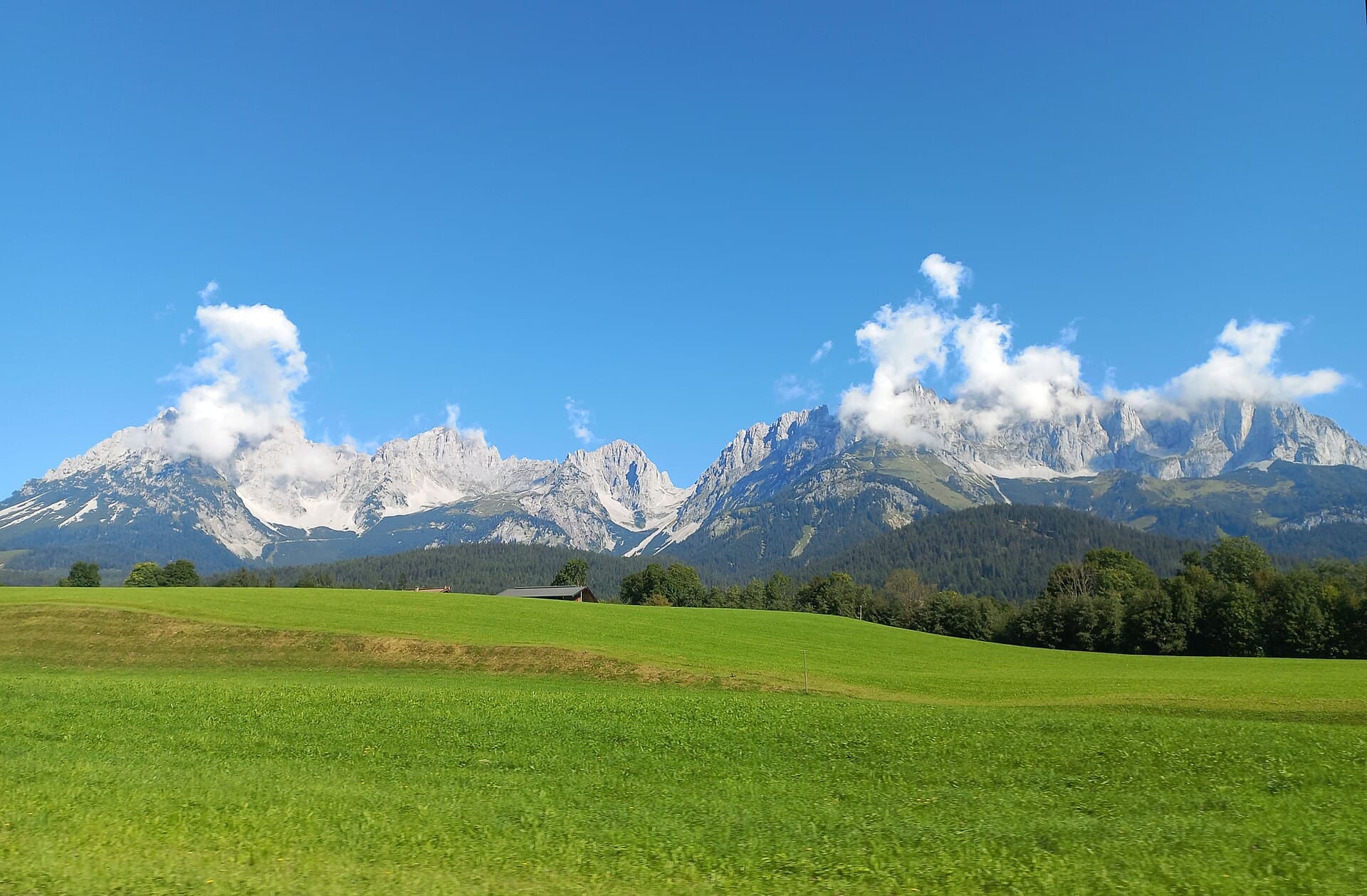
The eastern approach through dramatic limestone towers. The Wilder Kaiser range is one of the most recognizable mountain skylines in the Alps — jagged vertical walls rising abruptly from green alpine meadows. These stages are a mix of red and black difficulty, with exposed ridge walking and views south toward the Hohe Tauern.
Karwendel traverse (Stages 7-13)
The heart of the route. The Karwendel Nature Park is one of the largest protected areas in the Northern Limestone Alps and one of the densest golden eagle habitats in the Alps, with approximately 2 breeding pairs per 100 km2. Stage 12 descends from the Karwendel ridgeline directly into Innsbruck via the Nordkette cable car — the only long-distance trail in the Alps that passes through a capital city.
This section passes through genuinely wild terrain. The Karwendel is the largest uninhabited area in the Northern Limestone Alps. Valley-to-ridge elevation changes of 1,000-1,500 meters are standard.
East Tirol wing (Stages 25-33)
The quieter, more remote section south of the main Alpine divide. East Tirol is separated from the rest of Tyrol by the Felbertauern pass and has a distinctly different character — fewer tourists, smaller huts, bigger views toward the Dolomites and the Hohe Tauern. The highest point of the entire route (Gradotzscharte, 2,848 m) is here.
Source: Tirol Tourism -- Adlerweg
The stamp program
The Adlerweg has 40 official stamp locations at huts, cable car stations, and alpine inns along the route. Collecting stamps earns the Golden Eagle pin (Goldener Adler) — a physical award available at Tirol Tourism offices upon presentation of a completed stamp booklet.
The stamp booklet can be purchased at the start of the trail or at participating huts. There is no time limit — you can collect stamps over multiple trips and years.
Source: Austria Info -- Eagle Walk
Planning this route? We're forming a founding group for Austrian Tyrol — Hut to Hut — registering interest is free, no commitment. See the expedition →
Stage-by-stage logistics
Valley access
Every stage of the Eagle Walk has valley access, meaning the route can be hiked in sections rather than as a continuous through-hike. This is a defining feature of the Adlerweg compared to more remote long-distance trails: at the end of any stage, you can descend to a valley town, take a bus or train to Innsbruck, and resume later.
Cable car shortcuts
Five cable car systems intersect the route and can shorten stages or provide emergency exit points:
- Nordkette (Stage 12): Descend from Hafelekar (2,300 m) directly into Innsbruck
- Rofan cable car (near Stage 8): Access to/from Maurach at the Achensee
- Hochfugen (near Stage 17): Zillertal connection
- Patscherkofel (near Stage 14): South-side Innsbruck access
- St. Anton lifts (near Stage 24): Western approach/exit
Accommodation
The 75 huts and alpine inns along the route range from basic mountain huts (Matratzenlager dormitory beds, EUR 15-22 for OeAV members) to valley-floor Gasthof guesthouses (EUR 60-100 for a private room). OeAV membership (EUR 75/year) is strongly recommended for the hut discount and included alpine rescue insurance.
Book huts in advance for July-August, especially weekends. Sleeping bag liner (Huttenschlafsack) mandatory at all huts. Most huts accept cash only.
Source: OeAV -- hut pricing
Practical sections for 5-7 day trips
Few hikers walk the full Adlerweg in one push. The most popular sections for a week-long trip:
Karwendel section (5-6 days)
Stages 7-13, from Erfurter Hutte to Innsbruck via the Karwendel traverse. This is the most scenic and demanding section, ending with the dramatic descent into Innsbruck. Start in Maurach (Achensee) — reachable by bus from Innsbruck in about 1 hour.
Innsbruck to Arlberg section (7-10 days)
Stages 12-24, from Innsbruck westward through the Stubai approaches, the Sellrain, and the Lechtal to St. Anton. This section offers the greatest variety — from the urban trailhead at Nordkette to remote ridge walking above the Lechtal.
East Tirol section (5-7 days)
Stages 25-33, the quieter wing south of the main divide. Start in Defereggental or St. Jakob. Less infrastructure, more solitude, views toward the Dolomites.
2026 updates
The Adlerweg celebrated its 20th anniversary in 2025. A new Eagle Walk photo point was installed at the Grubigstein summit hut for summer 2026.
The route itself is well-maintained by Tirol Tourism and the OeAV sections responsible for each trail segment. No significant route changes or closures have been reported for 2026.
Source: seefeld.com -- Eagle Walk; bookatrekking.com -- Adlerweg
Gear and preparation
The Eagle Walk does not require technical climbing gear on any stage. The equipment list:
- Hiking boots: Sturdy, ankle-supporting, broken-in. The black-rated stages involve loose rock, scree, and steep descents where running shoes or light trail shoes are insufficient.
- Trekking poles: Highly recommended for the sustained descents (Stage 12 drops 1,150 m).
- Rain gear: Waterproof jacket and pants. The afternoon thunderstorm cycle means rain is near-certain on any multi-day section.
- Warm layers: Fleece or insulated jacket. At 2,500 m in July, temperatures drop to 6-10 C during the day and near freezing at night.
- Sun protection: Hat, sunglasses, SPF 30+. UV exposure is significantly higher at altitude.
- Sleeping bag liner (Huttenschlafsack): Mandatory at all huts. Silk or cotton, lightweight. Huts provide blankets.
- Headlamp: For early morning starts and hut navigation.
- Cash: Most huts accept cash only. Carry EUR 200-300 in small bills.
- Map or GPS: The trail is well-marked, but a backup navigation tool is essential for poor visibility conditions. Kompass map #36 (Innsbruck-Brenner) and #26 (Karwendel) cover the central stages.
No ropes, harnesses, or crampons are needed. The Adlerweg is a hiking trail, not a mountaineering route.
The golden eagle connection
The trail's name and eagle-wing shape are not marketing conceits. The Karwendel Nature Park, which the route traverses in its most dramatic section (stages 7-13), is one of the densest golden eagle habitats in the European Alps. Research counts approximately 2 breeding pairs per 100 km2. The Karwendel is also the largest uninhabited area in the Northern Limestone Alps — 727 km2 of protected terrain with no permanent settlements.
The golden eagle (Steinadler, Aquila chrysaetos) nests on cliff ledges at 1,500-2,500 m and hunts across the open terrain above the treeline. Sightings are realistic on stages 7-13, particularly in the morning before thermals develop. The eagle's wingspan of 190-225 cm makes it unmistakable in flight.
Source: Naturpark Karwendel
Season and timing
Best season: early July through mid-September. All huts on the route are open by late June. Early closures begin in mid-October depending on weather.
The critical weather pattern: afternoon thunderstorms develop between 14:00 and 17:00 on most summer days, particularly July-August. Above treeline on exposed ridges — which is much of the Adlerweg — lightning is the primary danger. Start each stage by 07:00-08:00 and plan to reach your hut or shelter by 13:00-14:00.
Full season breakdown: When to trek Austrian Tyrol
Getting there
The natural hub for the Adlerweg is Innsbruck, which sits at Stage 12 — roughly the midpoint of the North Tirol wing. The eastern start at St. Johann is reachable by train from Innsbruck (about 1.5 hours). The western finish at St. Christoph am Arlberg is reachable by train via St. Anton (about 1.25 hours from Innsbruck).
Innsbruck Airport (INN) has direct flights from Vienna, London, and Amsterdam. Munich Airport (MUC) connects to Innsbruck via OBB Railjet in approximately 2.5 hours. Munich-to-Innsbruck advance rail tickets start at EUR 10.
Full logistics: Getting to Austrian Tyrol
Source: Innsbruck Airport; OBB -- Munich connections
Budget
A 5-day section of the Eagle Walk, staying in hut dormitories with half-board:
| Category | OeAV Member | Non-Member |
|---|---|---|
| Hut nights (5) | EUR 75-115 | EUR 135-195 |
| Half-board supplement (5) | EUR 90-125 | EUR 90-125 |
| Transport to/from Innsbruck | EUR 20-40 | EUR 20-40 |
| OeAV membership | EUR 75 (annual) | -- |
| 5-day total | EUR 260-355 | EUR 245-360 |
The non-member price is marginally similar for a 5-day trip, but the OeAV membership includes worldwide rescue insurance (otherwise EUR 36+ separately) and applies to future trips. Over 5+ nights, the member discount is unambiguous.
Full calculator: Austrian Tyrol budget
8 Sources
- presse.tirol.atTirol Tourism Press — Eagle Walk in Numbers
- tyrol.comTyrol Tourism (official) — Eagle Walk long-distance trail
- osttirol.comOsttirol Tourismus (official) — Eagle Walk in East Tyrol / Hohe Tauern
- alpineexploratory.comAlpine Exploratory — Adlerweg trek guide
- karwendel.orgNaturpark Karwendel (official) — Steinadler (golden eagle)
- alpenverein.atÖsterreichischer Alpenverein (OeAV) — hut discount for members
- nordkette.comNordkette Cable Car Innsbruck (official)
- oebb.atÖBB (official) — train connections Munich