
The route in numbers
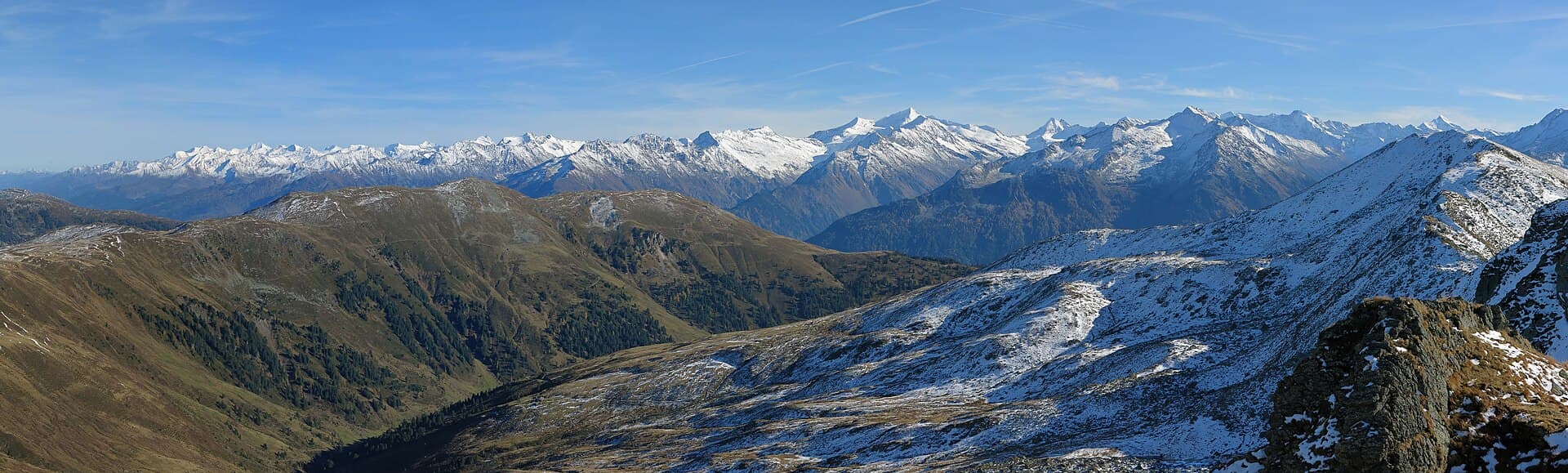
The Stubai Hohenweg (Stubai High Trail) is a high-altitude circuit ringing the Stubai Valley south of Innsbruck, connecting 8 OeAV/DAV huts through terrain between 2,100 and 2,900 meters.
| Metric | Value |
|---|---|
| Stages | 7 (8 days with approach) |
| Distance | Approximately 100 km |
| Total ascent | 4,440 m |
| Total descent | 4,230 m |
| Highest point | 2,858 m (Stage 3) |
| Difficulty | All stages rated hard |
| Season | Mid-June to late September |
Source: Stubai Tourism -- Stubai High Trail
Stage-by-stage breakdown
| Stage | Route | Distance | Ascent | Time | Key feature |
|---|---|---|---|---|---|
| 1 | Starkenburger Hutte to Franz-Senn-Hutte | 15 km | 690 m | 7 h | Panoramic ridge walk |
| 2 | Franz-Senn-Hutte to Neue Regensburger Hutte | 9 km | 603 m | 4 h | Shortest stage |
| 3 | Neue Regensburger Hutte to Dresdner Hutte | 13 km | 1,033 m | 7 h | Steepest ascent (900 m); highest point at 2,858 m |
| 4 | Dresdner Hutte to Sulzenau Hutte | 5 km | 419 m | 3 h | Glacier views, shortest distance |
| 5 | Sulzenau Hutte to Nurnberger Hutte | 4.4 km | 461 m | 4 h | Technical terrain, fixed ropes |
| 6 | Nurnberger Hutte to Bremer Hutte | 6 km | 642 m | 4 h | Remote alpine terrain |
| 7 | Bremer Hutte to Innsbrucker Hutte | 9.5 km | 839 m | 7 h | Long final stage |
Source: Stubai Tourism -- Stages
Stage 1: Starkenburger Hutte to Franz-Senn-Hutte
The longest stage at 15 km and 7 hours. The route follows a panoramic ridge with views across the Stubai glacier system to the south and the Inn Valley to the north. The Franz-Senn-Hutte (2,147 m) is one of the largest huts on the circuit and a mountaineering base for the surrounding peaks.
Stage 2: Franz-Senn-Hutte to Neue Regensburger Hutte
The shortest and most manageable day at 9 km and 4 hours. A good recovery stage after the long first day. The route traverses alpine meadows and crosses several streams. The Neue Regensburger Hutte (2,286 m) sits on a rocky terrace with views toward the Stubai Glacier.
Stage 3: Neue Regensburger Hutte to Dresdner Hutte
The crux day of the circuit. A 900-meter ascent to the highest point at 2,858 meters, followed by a descent to the Dresdner Hutte (2,302 m) at the Stubai Glacier ski area. This stage has the most sustained climbing and the most exposure. Clear conditions essential.
Stage 4: Dresdner Hutte to Sulzenau Hutte
Short and scenic at 5 km and 3 hours. The route passes below the Stubai Glacier, providing the trek's most direct glacier views. The Sulzenau Hutte (2,191 m) sits above the Sulzenau waterfall. This is the stage where the glacier retreat is most visible — the ice has receded significantly from where older maps show it.
Stage 5: Sulzenau Hutte to Nurnberger Hutte
The most technical stage. Fixed steel ropes assist on the steepest sections. The terrain is rough — scree fields, rocky steps, and sections requiring hands. Sure-footedness (Trittsicherheit) and a head for heights (Schwindelfreiheit) are mandatory, not optional. The Nurnberger Hutte (2,277 m) is relatively remote.
Stage 6: Nurnberger Hutte to Bremer Hutte
Exposed alpine terrain with minimal infrastructure between the two huts. The 642 meters of ascent are sustained. The Bremer Hutte (2,413 m) is one of the smaller huts on the circuit.
Stage 7: Bremer Hutte to Innsbrucker Hutte
The final stage is long (9.5 km, 7 hours) with 839 meters of climbing. A demanding finish. The Innsbrucker Hutte (2,369 m) is the departure point for the descent into the valley. From the hut, descend to Neder in the Stubaital (about 2.5 hours) and take the bus back to Innsbruck.
Continue reading Hut-to-hut gear for the Austrian Alps — the Tyrol packing list →
Technical requirements
- Surefootedness and head for heights: Mandatory on all stages. This is not a trail for casual hikers.
- No glacier crossings: The main route does not cross glacier ice. Glacier views only.
- Fixed steel cables: Some sections, particularly Stage 5, have fixed ropes. No via ferrata equipment required — the cables are for balance and security, not climbing.
- Valley escape: Every hut has a descent option into the Stubai Valley, enabling sectional hiking. If weather turns or fitness fails, you can descend on any day.
- Sleeping bag liner: Mandatory in all huts (Huttenschlafsack).
- Cash: Most huts accept cash only. Some newer huts accept cards but this should not be relied upon.
Source: Stubai Tourism -- Stubai High Trail
2026 hut opening dates
Huts on the Stubai Hohenweg open on a staggered schedule in June:
| Hut | Opening date 2026 |
|---|---|
| Starkenburger Hutte | 4 June |
| Neue Regensburger Hutte | 11 June |
| Nurnberger Hut | 18 June |
| Bremer Hutte | 19 June |
| Innsbrucker Hutte | 18 June |
All huts close in late September or early October depending on weather conditions. The Franz-Senn-Hutte and Dresdner Hutte typically open earlier than the smaller huts.
Source: Stubai Tourism -- Huts
Booking: Reservations through hut-reservation.org or directly with each hut. Free cancellation up to 7 days before arrival (travel credits). For July-August weekends, book weeks in advance. Overnight stays without reservation cannot be guaranteed.
Source: huttohuthikingaustria.com -- Stubai
Planning this route? We're forming a founding group for Austrian Tyrol — Hut to Hut — registering interest is free, no commitment. See the expedition →
The glacier window
The Stubai Glacier is projected to disappear within this decade. Between 2006 and 2017/18, the Stubai and Otztal ranges lost 34.8 km2 of glacier area — roughly 19% of the 2006 extent. Under the current warming trajectory (+2.7 C), less than 1% of 2017 glacier volume will remain by 2100, with near-complete deglaciation expected before 2075.
Stage 4 (Dresdner Hutte to Sulzenau Hutte) passes directly below the Stubai Glacier and provides the trek's most dramatic glacier views. Every year, the ice recedes further. The visual impact of the glacier is already substantially diminished compared to photographs from even ten years ago.
The practical impact extends beyond aesthetics. Glacier retreat exposes unstable moraine and degrades permafrost, increasing rockfall risk on surrounding peaks. The classic summer route on the Zuckerhutl (3,507 m, highest Stubai peak) faces increasing rockfall from destabilized terrain. OeAV sections report the summit may become winter-only.
Source: The Cryosphere, 19, 1431, 2025; Euronews, September 2024
Guided vs self-guided
Self-guided
The Stubai Hohenweg is well-marked and does not require a guide for experienced mountain hikers. The trail is maintained by OeAV sections. Waymarks are reliable. Each stage ends at a staffed hut with meals. The primary requirements are mountain experience, fitness for sustained 4-7 hour days at altitude, and the ability to navigate in poor visibility.
Guided packages
Self-guided packages (hut bookings, digital guidebook, GPS navigation, tour organization but no guide walking with you) start at EUR 1,095 per person for 5 days (4 nights half-board in huts).
Source: huttohuthikingaustria.com -- Stubai 5 days
Access from Innsbruck
The Stubai Valley is the most accessible high-altitude trekking valley from a major city in the Alps.
From Innsbruck Hauptbahnhof, the Stubaitalbahn tram runs to Fulpmes (gateway to the Stubai Valley) in approximately 45 minutes. From Fulpmes, the Stubai bus (STB) continues to Neustift im Stubaital (994 m), the main trailhead village, in about 15 minutes.
The approach to the first hut (Starkenburger Hutte, 2,237 m) from the valley typically takes 3-4 hours of hiking. Alternatively, the Kreuzjoch gondola from Schlick 2000 ski area shortens the approach significantly.
Source: Innsbruck Info -- Stubai
Key peaks accessible from the circuit
The Stubai Hohenweg is a hiking route, not a mountaineering route. But several huts on the circuit serve as launch points for peak ascents that require glacier equipment and alpine experience:
Habicht (3,277 m) from Innsbrucker Hutte: Often called the "gateway 3,000er" — a popular first high-alpine peak. PD- grade involving scrambling and a short glacier crossing. Crampons and an ice axe required. Allow 4-5 hours from the hut to summit.
Wilder Freiger (3,418 m) from Nurnberger Hutte or Sulzenau Hutte: PD grade via the SW ridge (UIAA II). The Wilder Freiger Ferner glacier requires crampons and rope. A significant step up from Habicht.
Zuckerhutl (3,507 m): The highest peak in the Stubai Alps, visible from multiple stages of the Hohenweg. PD+ grade with glacier travel and UIAA I rock. The classic summer route via Pfaffensattel faces increasing rockfall from destabilized terrain — OeAV sections report the summit may become winter-only.
These are optional additions for experienced mountaineers, not part of the Hohenweg itself. The circuit can be completed entirely as a hiking route without glacier equipment.
Source: OeAV -- Zuckerhutl route
Gear checklist
- Hiking boots: Sturdy, ankle-supporting. Stages 5 and 7 involve rough, rocky terrain where lightweight shoes are inadequate.
- Trekking poles: Strongly recommended. The total descent of 4,230 m over 7 stages is knee-intensive.
- Rain gear: Waterproof jacket and pants. Essential for the afternoon thunderstorm cycle.
- Warm layers: Temperatures at 2,500-2,800 m drop to near freezing overnight, even in July-August.
- Sleeping bag liner (Huttenschlafsack): Mandatory at all huts.
- Cash: EUR 200-300 in small bills. Most huts accept cash only.
- Sun protection and headlamp: Standard high-altitude essentials.
- No ropes, crampons, or climbing gear needed for the main Hohenweg route.
Season and weather
Best months: Late June through mid-September.
Late June offers wildflower peaks, maximum waterfall flow, and the opening of the last huts. Snow may still linger above 2,500 meters. July provides maximum weather stability but also the afternoon thunderstorm cycle — storms develop between 14:00 and 17:00 on most days, requiring early starts. August has the most stable trail conditions but is the busiest month. September brings crystal-clear air, fewer crowds, and lower prices, but shorter days and colder temperatures at altitude.
At 2,500-2,800 meters in July, expect daytime highs of 6-10 degrees C even when valleys reach 24 degrees C. Temperature drops approximately 6 degrees per 1,000 meters of elevation gain. Rain gear, warm layers, and sun protection are required on every stage.
Full season guide: When to trek Austrian Tyrol
Budget
A 7-day Stubai Hohenweg with half-board at all huts:
| Category | OeAV Member | Non-Member |
|---|---|---|
| Hut nights (7) | EUR 105-161 | EUR 189-273 |
| Half-board supplement (7) | EUR 126-175 | EUR 126-175 |
| Transport (Innsbruck round trip) | EUR 20-30 | EUR 20-30 |
| OeAV membership | EUR 75 (annual) | -- |
| 7-day total | EUR 326-441 | EUR 335-478 |
The OeAV membership pays for itself on the Stubai Hohenweg alone — 7 nights of dormitory discounts save approximately EUR 70-112, nearly the full membership cost. The included worldwide alpine rescue insurance is an additional benefit worth EUR 36+ if purchased separately.
Full calculator: Austrian Tyrol budget
9 Sources
- stubai.atStubai Tourism — Stubai High Trail: the 7 stages
- stubai.atStubai Tourism — Stubai High Trail overview
- tc.copernicus.orgThe Cryosphere 19, 1431–1452 (2025), Hartl et al. — near-complete glacier loss in the Ötztal and Stubai range
- euronews.comEuronews (Sept 2024) — How melting Alpine glaciers impact valleys
- innsbrucker-huette.atInnsbrucker Hütte — official hut website
- alpenverein.atÖsterreichischer Alpenverein — membership fees
- huttohuthikingaustria.comHut-to-Hut Hiking Austria — Stubai High Trail self-guided tour
- stubai.atStubai Tourism — Stubaitalbahn tram
- hut-reservation.orgAlpine Club hut reservation portal (hut-reservation.org)