
The inversion
Packing for a Tyrol hut-to-hut route is an exercise in subtraction. On the Stubai Hohenweg or the Berliner Hohenweg, every night ends at a staffed Alpenverein hut with mattresses, blankets, pillows, and a cooked dinner. The four heaviest items in a classic backpacking load — tent, sleeping bag, stove, multi-day food — stay home.
What replaces them is a short list of items the hut system requires, plus clothing for terrain between 2,000 and 2,900 meters where the weather does not care what month it is. Get the list right and a full week between huts fits in a 30-40 liter pack at 7-9 kg including water. Get it wrong in either direction — too much and the 5,000+ meters of cumulative ascent punish every gram; too little and a July snow squall at 2,800 meters becomes dangerous rather than inconvenient.
This list covers the standard high routes (Hohenwege) between staffed huts. It deliberately does not cover glacier travel — that distinction gets its own section below.
What the huts provide — and what they demand
Austrian Alpenverein (OeAV) and German Alpenverein (DAV) huts operate on a consistent set of norms. Knowing them is half the packing list.
Provided: mattress, blankets, and pillow in the dormitory (Matratzenlager) or smaller rooms; cooked meals with a half-board option; drinking water in most huts. You carry no sleeping bag, no shelter, and no more than a day of food.
Demanded:
- Huttenschlafsack (sleeping bag liner) — mandatory. Alpenverein hygiene rules require a liner between you and the hut bedding at every hut. Silk versions weigh 120-180 g and pack to fist size; cotton is cheaper but three times the weight. Huts can refuse a bed without one, and some sell overpriced disposables at the door.
- Boots off at the door. Mountain boots stay on racks in the entrance. Most staffed huts keep loaner hut shoes, but supply and sizes are not guaranteed on a full August night — lightweight sandals or foam clogs (200-300 g) are a standard item in Tyrol packs and double as shower footwear.
- Cash. Most huts accept cash only. Budget EUR 200-300 in small bills for a week; do not rely on cards even where newer huts advertise them.
- Reservations. Book through hut-reservation.org or directly with each hut. A bed without a reservation cannot be guaranteed in July-August.
Source: OeAV -- Huts and trails portal; OeAV -- Hut finder; hut-reservation.org
Continue reading Getting to Austrian Tyrol — Innsbruck, Munich trains, and the Brenner Pass →
The membership card is gear
Treat the Alpenverein membership card as the highest-value item in the pack at zero grams. OeAV membership (EUR 75 per year for adults) roughly halves dormitory rates at OeAV/DAV huts — a saving of EUR 10-16 per night — and includes worldwide alpine rescue insurance.
Over a 7-night Stubai Hohenweg the dormitory discount recovers most of the fee; over the 8-stage Berliner Hohenweg, all of it. Anyone trekking more than about five hut nights in a season is losing money without the card. Order it before you travel — it must be shown at check-in.
Source: OeAV -- Membership
Full cost breakdown: Austrian Tyrol budget
Weather between 2,000 and 2,900 meters
The Tyrol high routes live in a band where valley forecasts are close to useless. Temperature drops roughly 6 degrees C per 1,000 meters of elevation: a 24-degree afternoon in Innsbruck is 6-10 degrees at 2,500-2,800 meters, before wind. Overnight lows near the higher huts touch freezing even in July and August, and snowfall is possible above 2,500 meters in any summer month. Early-season trekkers (June into early July) should expect lingering snowfields on north-facing slopes and passes.
The other fixed feature is the afternoon thunderstorm cycle: on most stable summer days, convective storms build between 14:00 and 17:00. The standard response is logistical, not gear-based — start early, be at the hut by early afternoon — but it means the rain shell rides at the top of the pack, not the bottom.
Source: Stubai Tourism -- Stubai High Trail; Tirol Tourism -- Berliner Hohenweg
The clothing answer is a strict layering system, carried on every stage regardless of forecast:
- Base layer (synthetic or merino, 2 sets — one to hike, one dry for the hut)
- Midlayer (fleece or light active insulation)
- Insulated jacket (light down or synthetic — for passes and unheated dormitories)
- Waterproof shell jacket and rain pants (non-negotiable; the storm cycle finds everyone eventually)
- Warm hat, light gloves, sun hat, buff
A proper hardshell is where quality matters most and where seasonal deals on shells and rain gear pay off — a leaky jacket at 2,800 meters in a 15:00 thunderstorm is the worst equipment failure available on these routes.
Full season guide: When to trek Austrian Tyrol
Planning this route? We're forming a founding group for Austrian Tyrol — Hut to Hut — registering interest is free, no commitment. See the expedition →
Footwear and pack
Boots. The Hohenweg stages cross scree fields, rock steps, fixed-cable sections, and early-season snow patches. Sturdy, ankle-supporting boots with a stiff sole are the correct tool; lightweight trail shoes are inadequate on stages like Stubai's Sulzenau-Nurnberger traverse. Break them in before day one — a week of 4-7 hour stages is no place to discover hot spots. Boots are a significant spend, which is why it pays to check current deals on hiking footwear before the season rather than buying at full price in a valley shop the day before.
Pack. 30-40 liters is the correct size — large enough for the layers and hut kit, small enough to force discipline. Look for a supportive hipbelt and add a pack liner; rain covers fail in wind-driven Alpine rain. If your current pack is a 60-liter expedition hauler, a dedicated hut pack is a worthwhile investment — pack deals surface regularly outside peak season.
Poles. Strongly recommended. The Stubai circuit descends 4,230 meters; the Berliner Hohenweg descends 5,000. Poles are knee insurance and double as balance aids on snow patches.
Source: Stubai Tourism -- Stubai High Trail
Glacier-adjacent is not glacier travel
This is the point most generic Alpine packing lists get wrong, in one of two directions.
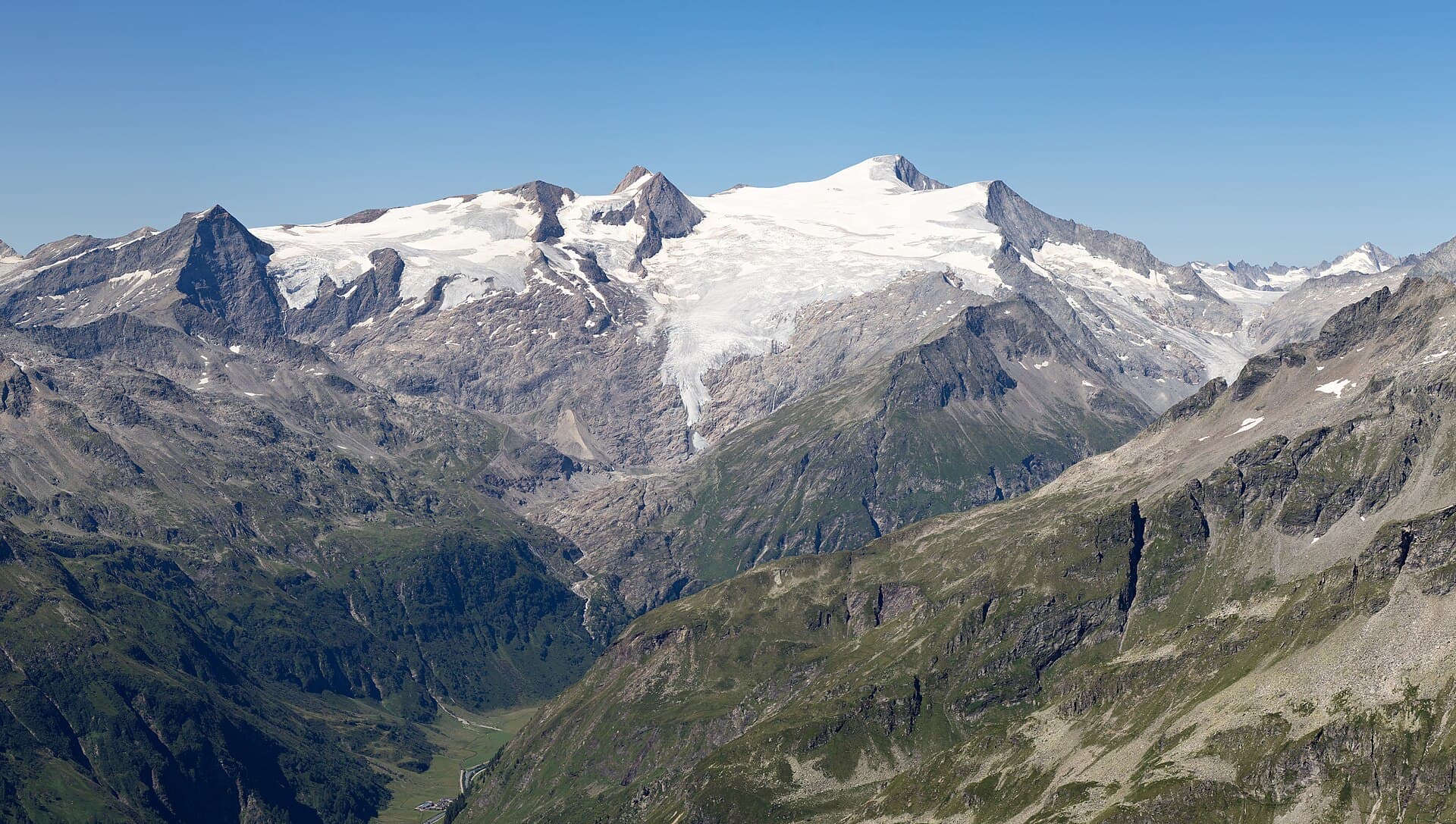
What the standard routes are. The main routes of the Stubai Hohenweg and Berliner Hohenweg are hiking trails. They pass close to glaciers — Stubai's Stage 4 runs directly below the Stubai Glacier, and the Berliner Hohenweg traverses the Zillertal glacier basin — but they do not cross glacier ice. No rope, no crampons, no ice axe, no harness, and no via ferrata set are required for the standard Hohenwege. The fixed steel cables on steeper sections (Stubai Stage 5 is the best-known) are handrails for balance, not climbing aids.
What glacier-adjacent still means. Proximity to ice has real packing consequences short of glacier gear: early-season snow bridges and snowfields can extend onto the trail into July; moraine is loose and hard on ankles; and cold air draining off the ice makes glacier-facing stages noticeably colder. Gaiters are a reasonable early-season addition, and some trekkers carry light microspikes in June for firm morning snow — a comfort choice, not a requirement.
Where the list changes completely. Add a summit like the Habicht or Wilder Freiger from a hut and you have left hiking for alpinism: those ascents involve glacier travel and demand crampons, ice axe, rope, and the skills to use them. That is a different trip with a different list — do not let a summit ambition quietly inflate a hut-to-hut pack, and do not let hut minimalism talk you onto a glacier.
Source: Stubai Tourism -- Stubai High Trail; Tirol Tourism -- Berliner Hohenweg
The weight budget
A working target for a 5-8 day Tyrol hut-to-hut, total on your back:
| Category | Target weight |
|---|---|
| Pack (30-40 L) + liner | 1.0-1.4 kg |
| Clothing carried (not worn) | 1.8-2.4 kg |
| Hut kit (liner, sandals, towel, earplugs) | 0.6-0.8 kg |
| Safety, navigation, first aid, headlamp | 0.6-0.8 kg |
| Toiletries and sun protection | 0.3-0.5 kg |
| Water (1.5 L) + day snacks | 1.7-2.0 kg |
| Documents, cash, phone, power bank | 0.4-0.5 kg |
| Total | 6.4-8.4 kg |
Over 9 kg, start removing things. The huts sell meals and snacks, the valleys are never more than a descent away, and every kilogram gets carried up 4,400-5,300 meters over the week.
The printable checklist
| # | Item | Notes |
|---|---|---|
| 1 | Pack, 30-40 L, with liner or drybag | Rain covers fail in wind; line the inside |
| 2 | Broken-in ankle-support boots | Stiff sole for scree and rock steps |
| 3 | Hut sandals or foam clogs | Boots off at the door; doubles for showers |
| 4 | Hiking socks x 2-3 | One pair always dry |
| 5 | Base layers x 2 (top), 1-2 (bottom) | One hiking set, one dry hut set |
| 6 | Trekking trousers | Zip-off or with shorts as sleepwear |
| 7 | Fleece or light midlayer | Worn most mornings |
| 8 | Insulated jacket (light down/synthetic) | Freezing is possible any month |
| 9 | Waterproof shell jacket | The non-negotiable item |
| 10 | Rain pants | For the 14:00-17:00 storm cycle |
| 11 | Warm hat + light gloves | Passes and glacier-facing stages |
| 12 | Sun hat + sunglasses (high UV) | Altitude UV plus snowfield glare |
| 13 | Huttenschlafsack (sleeping liner) | Mandatory at all Alpenverein huts |
| 14 | Earplugs | Dormitories. Trust this one |
| 15 | Headlamp | Early starts; dark hut corridors |
| 16 | Travel towel + minimal toiletries | Showers often coin-operated |
| 17 | Sunscreen SPF 50 + lip balm | Reapply at altitude |
| 18 | Blister kit + personal first aid | Tape hot spots immediately |
| 19 | Emergency blanket + whistle | Standard alpine minimum |
| 20 | Map/GPX offline + power bank | No reliable signal between huts |
| 21 | Water capacity 1.5-2 L | Refill at huts |
| 22 | Snack bag (bars, nuts) | Huts sell lunch packets too |
| 23 | Cash EUR 200-300, small bills | Most huts are cash-only |
| 24 | Alpenverein card + ID + reservations | Card shown at check-in |
| 25 | Trekking poles | Knee insurance on 4,000+ m of descent |
| 26 | Optional, June: gaiters, light microspikes | Early-season snowfields — comfort, not requirement |
What to leave behind
The subtraction list matters as much as the packing list: no tent, no sleeping bag (the liner replaces it), no stove or cookware, no more than one day of food, no second footwear beyond hut sandals, and — for the standard Hohenwege — no rope, crampons, ice axe, or via ferrata set.
Commercial operators running supported trips on these routes converge on the same discipline: hut-based logistics, small packs, layering over bulk. A century of Alpenverein hut culture refined the system. The gear list is short because the infrastructure is long.
Source: huttohuthikingaustria.com -- Stubai; Stubai Tourism -- Huts
8 Sources
- alpenverein.atÖAV/DAV — Hut and Tariff Regulations for Alpenverein Huts (HÜOTO), 2024 (English)
- alpenverein.atÖsterreichischer Alpenverein — Membership (Mitgliedschaft) benefits
- club-arc-alpin.euClub Arc Alpin — Online hut reservation system
- stubai.atStubai Tourism — Stubai High Trail (official)
- tirol.atTirol Tourism — Berliner Höhenweg (official)
- alpenverein.deDeutscher Alpenverein — Hütten- und Tarifordnung (hut rules)
- alpenverein.atÖsterreichischer Alpenverein — Gewitter am Berg (mountain thunderstorms)
- huttohuthikingaustria.comHut to Hut Hiking Austria — Stubai High Trail (self-guided operator)