The Games are over. The concrete remains.
The Milano-Cortina 2026 Winter Olympics ran from 6 to 22 February 2026. The alpine skiing events took place in Cortina d'Ampezzo. The sliding events — bobsled, luge, skeleton — took place on a brand-new track built on the site of the demolished 1956 Eugenio Monti facility. The biathlon went to Anterselva/Antholz in South Tyrol. The Nordic events to Predazzo and Tesero in Trentino. The ice events to Milan.
Two months later, the construction fences are coming down. The athletes are gone. The question that matters for anyone planning a Dolomites trek in summer 2026 is not whether the Games were a success — it is what the EUR 1.5 billion infrastructure investment actually left behind, and whether any of it helps a trekker reach a rifugio.
What was built, and at what cost
The headline number is approximately 98 projects across Lombardy, Veneto, and Trentino-Alto Adige, funded through a combination of national government allocation, regional budgets, and Olympic organizing committee (Fondazione Milano Cortina 2026) spending.
The most controversial single project: the Cortina Sliding Centre. Final cost approximately EUR 80 million — nearly double the initial estimate. Built on a forested slope above Cortina where approximately 600 larches, some over 200 years old, were felled to clear the site. Twenty Italian and international environmental organizations, including Mountain Wilderness, WWF Italia, and CAI (Club Alpino Italiano), reviewed the project portfolio and found "no evidence to certify the environmental sustainability" of the works. A protest march in Milan drew 10,000 people. Construction sabotage — a severed cooling pipe — was reported during the build phase.
The environmental assessment record is worse than the headline suggests. According to NPR's February 2026 investigation, more than 60% of the approximately 98 Olympic-related projects proceeded without a full environmental impact assessment. Italy's environmental code permits simplified screening procedures for projects classified as "urgent" or "of national interest" — a classification applied liberally to Olympic works. The result: roads widened, parking lots paved, and facilities erected in a UNESCO World Heritage buffer zone with limited formal environmental review.
This matters for the Dolomites specifically because the UNESCO inscription (2009) is geological, not cultural. It protects the carbonate rock formations and fossil record — criteria (vii) and (viii) — but the management framework coordinated by the Fondazione Dolomiti UNESCO across five provinces has limited enforcement power over national-priority construction. The Olympics tested whether UNESCO status provides meaningful protection against state-level infrastructure projects. The answer, based on the evidence, is that it does not.
Continue reading Cortina d'Ampezzo day hikes — the bus, cable car and tolls →
What actually helps summer trekkers
Strip away the controversy and look at what a trekker arriving in Cortina in July 2026 will find that was not there in July 2024.
Road improvements. The SS51 (Alemagna) between Tai di Cadore and Cortina received resurfacing, shoulder widening, and improved drainage. Several single-lane sections through the Boite Valley gorge were widened to two lanes with passing areas. The approach from Dobbiaco/Toblach via the SS51bis was similarly improved. For anyone driving from Venice Marco Polo (approximately 2.5 hours) or arriving by bus from the south, the road is measurably better.
Parking infrastructure. Cortina added approximately 1,500 structured and surface parking spaces in the town periphery — purpose-built for Olympic spectator traffic but available for summer visitors. The Fiames area north of town and the Socol area to the south received new lots. These are functional for trekkers using Cortina as a base for day hikes to Cinque Torri, Lagazuoi, or the Tre Cime approach via Misurina.
Bus connections. Dolomiti Bus, the regional operator, expanded its Cortina network for the Olympics. The Cortina-Passo Falzarego-Lagazuoi route received additional summer service frequencies. The Cortina-Misurina-Auronzo (Tre Cime toll road) connection was upgraded. A new shuttle circuit connects the peripheral parking areas to the town center and the Freccia nel Cielo cable car base station. Whether these frequencies survive beyond the first post-Olympic summer depends on Veneto regional transport funding — not guaranteed.
Accommodation stock. Cortina's hotel capacity was expanded for the Games: renovations, new boutique properties, and a significant increase in short-term rental listings. The immediate post-Olympic effect is favorable for trekkers — surplus capacity means competitive pricing through summer 2026. The medium-term effect is inflationary: Cortina was already the most expensive base in the Dolomites, and the Olympics repositioned it further upmarket. Average half-board hotel pricing in Cortina now runs EUR 120-200/night — roughly 30-50% above equivalent accommodation in Bolzano or the Val Gardena villages.
Digital infrastructure. The Olympic venues required high-speed telecommunications. 5G coverage in central Cortina and along the SS51 corridor improved substantially. Cell coverage on trails remains unchanged — the mountains block signals the same way they always have.
What does not help summer trekkers at all
The Sliding Centre. It is a bobsled track. It has no trail connectivity, no summer recreation function announced to date, and no value to a trekker. What it cost — EUR 80 million and 600 mature larches — is a loss. The larches were part of the forest canopy on the slope above Cortina, visible from the valley floor. Their absence is visible. The sliding centre's post-Olympic use plan remains undefined; similar facilities at Sochi (2014) and PyeongChang (2018) have struggled with maintenance costs and low utilization.
The Olympic Village temporary structures. Housing blocks built for athletes in Cortina are being decommissioned. Some will convert to residential or hospitality use. None are positioned for trail access.
The media and broadcast infrastructure. Gone.
Planning this route? We're forming a founding group for Alta Via 2 — Dolomites — registering interest is free, no commitment. See the expedition →
The environmental cost — a full accounting
The 600 larches are the symbol, but they are not the full picture.
Construction traffic through the Boite Valley between 2023 and early 2026 was heavy — concrete trucks, earthmovers, and construction crews on roads that also serve as the primary approach to Passo Falzarego and Passo Giau. Trail disruptions were reported on the lower sections of paths crossing Olympic construction zones, particularly around the Rumerlo and Ronco areas near the sliding centre site.
The broader environmental audit, per CleanTechnica's post-Games analysis, found that the "sustainability" branding of the Games relied heavily on carbon offset purchases rather than emissions reductions. The concrete used for the sliding centre, the road widening, and the parking construction represents embedded carbon that no offset meaningfully reverses.
The Dolomiti Belluno DMO's own March 2026 overtourism report acknowledged the tension: the same infrastructure that improves access for visitors accelerates the overcrowding that is degrading the visitor experience and prompting restrictive interventions. Cortina already sits in a valley that funnels all traffic through a single corridor. Making that corridor wider and adding parking does not solve congestion — it induces demand.
The projected figure — 9 million additional visitors by 2030 attributed to the Olympic brand effect — may prove optimistic or conservative, but the direction is unambiguous. The Olympics put Cortina on the global map for an audience that previously associated the Dolomites with mountaineering, not mass tourism.
Cortina as AV1 gateway — still viable, but the math changed
Cortina d'Ampezzo sits in the middle of Alta Via 1, not at either terminus. Lago di Braies (north) is the traditional start; Belluno (south) is the finish. But Cortina is the most accessible town on the route — the point where a trekker can resupply, rest, and access the most concentrated cluster of Dolomites highlights: Lagazuoi, Cinque Torri, Averau, Nuvolau, and the Tre Cime approach via Misurina.
That geographic logic has not changed. What changed is the cost structure and the crowd dynamics.
The cost argument against Cortina. A trekker using Cortina as a base for acclimatization or day-hiking before starting AV1 will pay the premium. Half-board at EUR 150/night is not unusual. A coffee in the corso costs EUR 3-4. Parking in the new Olympic-era lots runs EUR 15-20/day. None of this is ruinous, but it adds up — and the same money buys substantially more in Bolzano, Bressanone, or the Val Gardena villages.
The crowd argument against Cortina. The Olympics amplified Cortina's name recognition. Summer 2026 will be the first post-Olympic season, and destination curiosity will drive visitors who might previously have gone to Chamonix or Zermatt. The Cortina town center, Corso Italia, was already congested in August 2024. It will be worse in August 2026.
The access argument for Cortina. Despite the cost and crowds, Cortina remains the single best-connected point in the Dolomites for a trekker arriving without a car. Dolomiti Bus connects Cortina to the Venice corridor. The improved road makes car rental approaches faster. The bus connections to Passo Falzarego and Misurina are the most direct public-transport links to AV1's middle stages. If you are flying into Venice and heading for Alta Via 1, Cortina is still the logical first stop.
The contrarian question: should you base elsewhere?
The Olympics gave Cortina global visibility. The contrarian move is to use a different base entirely and avoid the Olympic premium.
Bolzano. The South Tyrolean capital. Direct trains from Verona and Innsbruck. The Sudtirol Guest Pass (free from participating accommodations) covers all public buses and trains in the province. Accommodation runs 30-40% below Cortina. Bolzano is not on AV1, but it is the gateway to the Alpe di Siusi, Seceda, and the Val Gardena approaches. For a trekker doing the Sella Ronda, the Puez-Odle circuit, or day hikes before an Alta Via, Bolzano is a stronger value base.
Val Gardena (Ortisei / St. Ulrich). Ladin-speaking. Beautiful. Well-connected by bus to Bolzano and the passes. The Seceda cable car departs from here. Accommodation is mid-range. The Guest Pass works. Val Gardena sits in South Tyrol's autonomous budget zone — meaning trail maintenance, signage, and rescue infrastructure are funded at a higher level than Cortina's Veneto-administered equivalents. This is not theoretical: the "two Dolomites" quality gap between South Tyrol and Belluno province is visible on the ground.
Dobbiaco / Toblach. Closer to Lago di Braies (AV1 start) than Cortina. South Tyrolean. Quieter. Connected by the Val Pusteria railway. If your plan is to start AV1 from the northern terminus, Dobbiaco puts you 20 minutes from Lago di Braies by bus — without transiting Cortina at all.
The short answer. Cortina is not "ruined." The town itself remains architecturally handsome, the surrounding mountains are unchanged, and the improved bus links are genuinely useful. But the Olympics shifted the cost-benefit ratio. A trekker whose primary goal is Alta Via 1 or multi-day hut trekking — not town-based tourism — gets better value, less congestion, and equivalent or superior trail infrastructure by basing in South Tyrol. The autonomous province's EUR 8+ billion annual budget, independent tourism policy, and German-efficiency trail maintenance create a visitor experience that Veneto's Belluno province, where Cortina sits, structurally cannot match.
What the legacy actually is
Every Winter Olympics leaves two legacies: the infrastructure and the narrative.
The infrastructure legacy in Cortina is mixed. Better roads, more parking, expanded bus service — these help. A sliding centre that cost EUR 80 million and 600 ancient trees, with no clear summer use — this does not. The environmental cost of proceeding without full impact assessments on more than 60% of projects is a governance failure that will be cited in future Olympic bid controversies.
The narrative legacy is more consequential. Cortina is now positioned globally as a luxury winter-sports destination with Summer Olympics-grade infrastructure. This attracts a visitor profile that is wealthier, less trail-focused, and more concentrated in the town center. For the trekking community — the people who actually use the rifugi, the via ferrata, and the high routes — this is a mixed signal. The infrastructure spend was not directed at trails. It was directed at spectacle.
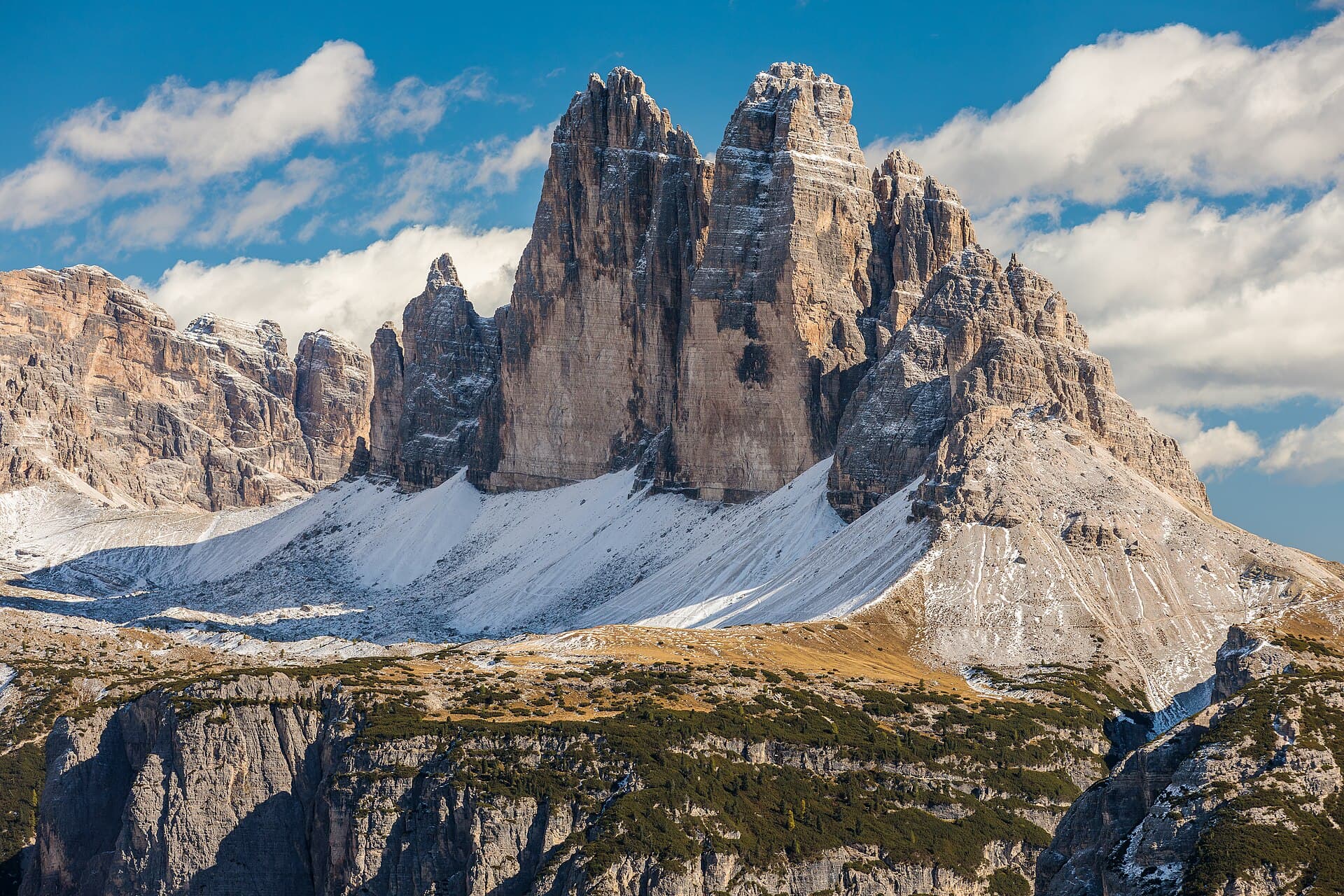
The mountains do not care about the Olympics. The Tofane still rise 3,000 meters above Cortina. Lagazuoi's WWI tunnels are still free to enter. The via ferrata cables that Austrian and Italian soldiers installed a century ago still hold. The rifugi still serve Knodel and strudel. The enrosadira still turns the towers pink at sunset.
What changed is the approach — the cost of reaching the trailhead, the density of people in the valley, and the brand premium attached to the name "Cortina." For a trekker who plans ahead, books early, and considers alternative bases, none of this is an obstacle. For a trekker who shows up in August without reservations, expecting the Cortina of 2019, everything has changed.
14 Sources
- npr.orgNPR, "2026 Olympics in Italy Worry Environmentalists" — February 2026
- cleantechnica.comCleanTechnica, "How Sustainable Were the 2026 Olympics, Really?" — February 2026
- euronews.comEuronews, "Winter Olympics Will Increase Pressure on Overtouristed Dolomites" — January 2026
- dolomitibelluno.itDolomiti Belluno DMO, "Overtourism in the Dolomites" — March 2026
- en.wikipedia.orgWikipedia, "Concerns and Controversies at the 2026 Winter Olympics"
- travelandtourworld.comTravel and Tour World, "Dolomites Tourism Cracks Down"
- whc.unesco.orgUNESCO WHC, "The Dolomites" — inscription 1237
- autonomyexperience.orgAutonomy Experience Sudtirol, policy brief 2025
- dolomitiunesco.infoFondazione Dolomiti UNESCO, "Outstanding Universal Value"
- wildconnectionsphotography.comWild Connections Photography, "2026 Access Restrictions in the Dolomites"
- mountainmaps.itMountain Maps, "Tre Cime di Lavaredo New Rules Summer 2025"
- huttohuthikingdolomites.comHut to Hut Hiking Dolomites, "Alta Via 1 Ultimate Guide"
- aiut-alpin-dolomites.comAiut Alpin Dolomites, "Membership"
- guidedolomiti.comGuida Dolomiti, "Dolomites Mountain Rescue"