The correction that has to come first
Almost every itinerary for the Luxor West Bank still sells the same image: walk into the Valley of the Kings, then climb over the ridge on the old tomb-builders' path and look down onto Hatshepsut's temple at Deir el-Bahari. It reads as the perfect half-day trek — ancient route, surreal view, no ticket line on the back side.
That walk is closed. It has been closed and actively enforced since the 1997 Deir el-Bahari massacre, in which gunmen killed 62 people — most of them tourists — at the Hatshepsut temple, having approached and escaped through exactly those Theban mountain paths (Wikipedia: Luxor massacre). The direct ridge crossing from the Valley of the Kings over to Deir el-Bahari is not a tolerated grey area. Walkers who attempt it are reported being stopped, shouted at, and having police called; there is also a genuine physical hazard of falling into an open tomb shaft on the unmarked plateau above the necropolis (Tripadvisor forum: "Path from Seti I to Hatshepsut"; Tripadvisor forum: "Hiking around VoK / Deir el-Bahari").
Even the legitimate historical route — the El Qurn ascent from the artisans' village at Deir el-Medina — is now reported restricted and patrolled, with staffed guard posts, cameras, and motion sensors, and the standing advice to "check with local authorities before attempting" (Wikipedia: El Qurn). The much-shared trip reports describing the walk as a casual independent objective trace back to accounts written around the year 2000, before the modern closures hardened.
So the honest frame for 2026 is this: the Theban crossing is history, not an instruction. Any walking on that mountain should be treated as a guided, permission-dependent objective, arranged with a licensed West Bank guide who confirms access on the day — never as an independent traverse. The rest of this article is built around what the West Bank actually is once you accept that: a cluster of tombs and temples best done at dawn, with card-only gates and a heat clock you cannot argue with.
What the West Bank actually is
The east bank of Luxor is the living city — Karnak, the temple of Luxor, the corniche, the hotels. The west bank is the necropolis, the land of the dead in the ancient cosmology, where the sun set and the pharaohs were buried. It is a band of cultivated green along the Nile, then a strip of villages, then the desert and the limestone cliffs that hold the tombs. The Valley of the Kings sits in a dry wadi behind those cliffs; Hatshepsut's temple is terraced into the rock face a little to the east; Deir el-Medina, the workers' village, is tucked into a side valley between them.
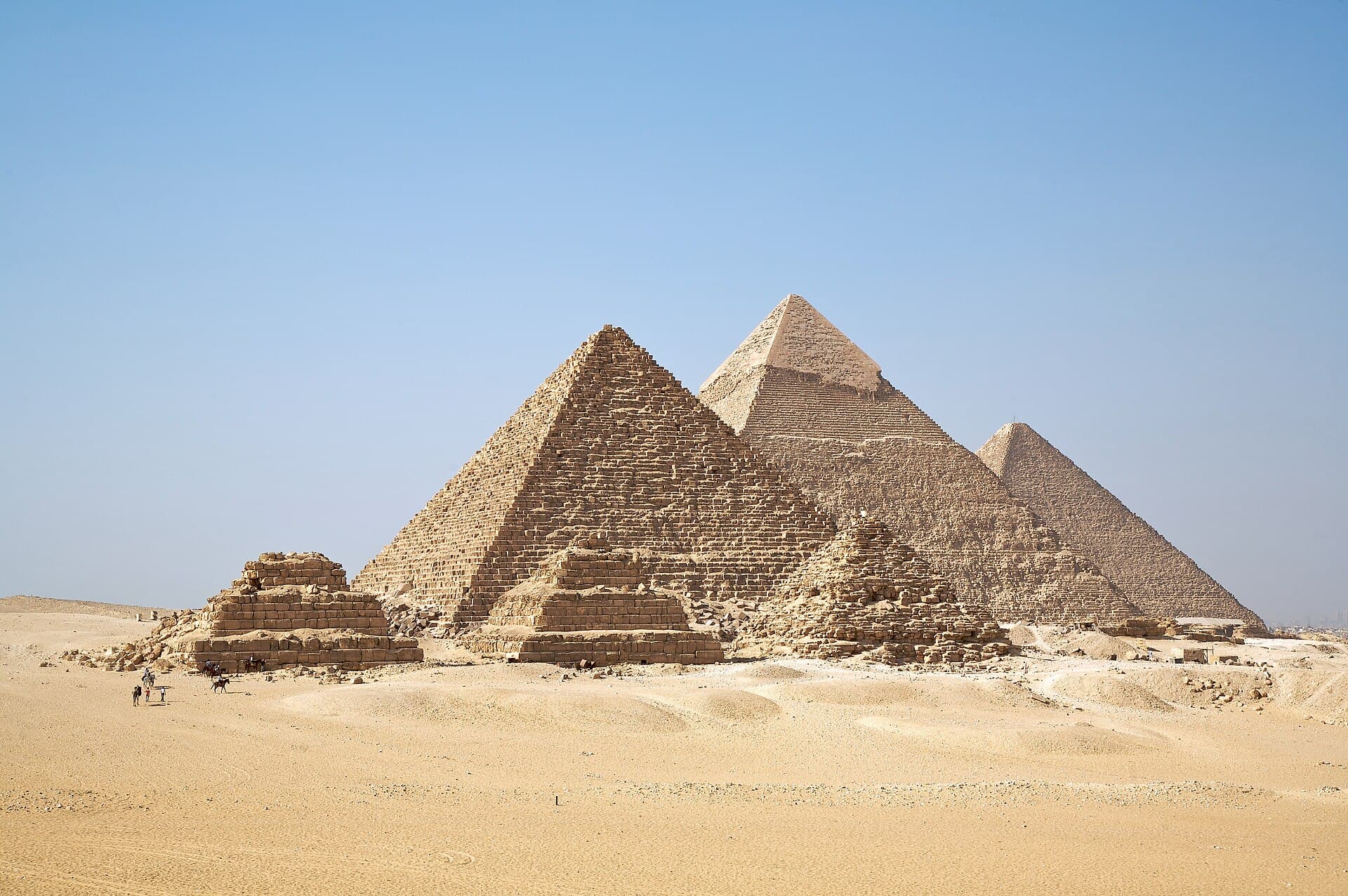
The peak that ties the whole landscape together is El Qurn — the natural pyramid that rises above the necropolis. The ancient Egyptians did not need to build a pyramid here because the mountain already was one. They made El Qurn sacred to Meretseger, "She Who Loves Silence," the cobra-goddess who guarded the necropolis and was believed to strike tomb-robbers blind or kill them with snakebite (Wikipedia: Meretseger). The summit sits at 25.736417, 32.596039, roughly 450 m (Wikipedia: El Qurn). That single coordinate is the only hard-published GPS point for the high ground; the footpaths threading the necropolis exist on the map but carry no names, no grades, and no maintained route — another reason the mountain is a guided objective, not a self-navigated one.
Continue reading Cairo to Luxor: sleeper train vs bus vs flight (2026) →
The history that makes the tombs worth the heat
You can walk into the Valley of the Kings, look at painted walls, and feel nothing if you do not know who painted them. The answer is the most human part of the whole site.
Deir el-Medina was a purpose-built village for the tomb-builders — the draughtsmen, sculptors, and painters who carved and decorated the royal tombs for roughly four centuries across the 18th to 20th Dynasties. They were a hereditary professional community, literate, paid in grain, occasionally on strike, and they lived in a walled village within walking distance of the tombs they were cutting. Their commute to work was the mountain path: up out of their village, over the shoulder of El Qurn — the peak sacred to the goddess who could see everything they did inside the king's tomb — and down into the Valley of the Kings. That path is the thing every modern itinerary wants to romanticize as "the crossing." It was a 3,500-year-old working route, and it is precisely the ground now closed and patrolled. The romance is real; the access is not.
The single most spectacular thing you can pay to see on the West Bank is the tomb of Seti I, KV17, discovered by Giovanni Belzoni in October 1817. It is the longest and deepest tomb in the valley — carved over 100 m into the bedrock and descending more than 30 m — and the first to be decorated along its entire length (Egyptian Ministry of Tourism and Antiquities: Tomb of Sety I, KV17; Wikipedia: Tomb of Seti I). For years it was closed to the public for conservation; it now reopens behind a separate, expensive special ticket, and the painted reliefs inside are, by broad agreement, the finest in the valley.
Tickets: card-only at the gate since 2025
The change that catches the most travelers off guard is mundane: state monument tickets are now card-only at the gate. Cash is no longer accepted at the major West Bank sites; bring a working Visa or Mastercard chip card (Nile Empire: Egypt attractions entrance fees, updated 1 Apr 2026). This is part of a broader shift — the Grand Egyptian Museum in Cairo went ticket-online-only when it fully opened in November 2025 — and it means the old advice to "carry small bills for the ticket window" is dead. Students with a valid ID get 50% off.
Prices are in Egyptian pounds; the USD figures below use the working anchor of 1 USD ≈ 50 EGP (the pound floated in March 2024 and has hovered around 50–52 to the dollar through 2026, so treat the EGP number as the real one and the dollar as approximate) (Nile Empire: entrance fees).
| Site / tomb | Ticket | EGP | ≈ USD |
|---|---|---|---|
| Valley of the Kings | General — any 3 tombs | 750 | 15.50 |
| Valley of the Kings | Seti I (KV17) special ticket | 2,000 | 41.50 |
| Valley of the Kings | Tutankhamun (KV62) | 700 | 14.50 |
| Hatshepsut (Deir el-Bahari) | General entry | 440 | 10 |
Source: Nile Empire entrance fees, updated 1 Apr 2026. These are aggregator figures cross-checked across sources; re-verify at the gate, as Egypt has raised monument prices repeatedly. Where other 2025 listings show the Seti I supplement as low as 1,400 EGP, the current figure is reported at 2,000 — publish the range, expect the higher number (Audiala: KV17 visiting hours and tickets).
The general Valley ticket admits you to any three open tombs — the rotation of which tombs are open changes to spread wear, so you do not pick from a fixed list, you pick from whatever is open that morning. Tutankhamun (KV62) and Seti I (KV17) are always separate, extra tickets on top of the general one.
Planning this route? We're forming a founding group for White Desert — Bahariya Overnight — registering interest is free, no commitment. See the expedition →
The dawn window is the whole logistical answer
Luxor in June runs to highs around 41 °C with a UV index of about 12 — "extreme" — roughly 27% humidity and zero rain (Weather Atlas: Luxor weather in June). This is not a comfort footnote; on the open, shadeless, blinding-white limestone of the West Bank it is the controlling hazard of the trip, more dangerous than anything on any government advisory.
The mitigation is built into the opening hours. The Valley of the Kings opens at 06:00 (last entry 17:00 in summer), which makes it one of the few major Egyptian sites with a genuine dawn option — the Giza plateau, by contrast, does not open until 08:00 (Valley of the Kings official-style listing). Arrive at opening and you get the tombs in the cool, before the tour buses, before the rock has soaked up the day's heat. The working rule for June is blunt: do all walking and all open-air sites between roughly 05:30 and 10:00, then retreat indoors — a tomb interior, a shaded hotel, the Nile — for the worst of the afternoon. The schedule is the real piece of gear. Carry at least 4 litres of water per person, electrolytes, SPF 50+, a wide-brim hat, and light long sleeves.
Getting around the West Bank
The West Bank is a working agricultural district, not a resort, and moving around it is cheap and improvised. None of the local-transport prices below come from an official tariff — they are negotiated, vary with haggling and season, and are best treated as ranges (Explore Luxor: getting around Luxor; Machu Picchu org: Luxor budget guide 2026).
- East ↔ West public ferry: the cheap, atmospheric crossing of the Nile. Locals pay roughly EGP 5–10; tourists are commonly asked for around EGP 20 one-way. Runs from early morning until late.
- Bicycle: rentable for roughly EGP 100–150/day (some report less). Tempting and flexible — and a real heat hazard in June. If you bike, it only works paired with strict dawn discipline; do not cycle the West Bank in the afternoon.
- Tuk-tuk: the standard local shuttle for short hops between sites.
- Private taxi, full day: a negotiated EGP 600–1,000 for a driver who waits at each site. For a June day on the West Bank — tombs at dawn, indoors at noon — a half-day private taxi from the ferry is the sane default.
A useful contrarian note carried over from the wider Egypt research: you do not legally need a guide for the monuments. The Valley of the Kings, Hatshepsut, and Karnak are all self-guidable with a ticket; the "you must hire a guide for everything" line is operator sales mythology for the monuments. The genuine exception in Egypt is the Western Desert, where a permit and licensed guide are mandatory by law — but that is a different trip. On the West Bank, the only thing a guide is genuinely required for is the patrolled mountain, where the value is access and route-finding, not interpretation.
Where to sleep — stay on the West Bank
Most visitors base on the east bank and ferry across each morning. For a dawn-disciplined trip, staying on the West Bank itself is the stronger move — you are already on the right side of the river when the Valley opens at 06:00, with no ferry to catch first. The West Bank guesthouses are also some of the most characterful lodging in Luxor.
- Marsam Hotel — the historic archaeologists' house near the Colossi of Memnon, where excavation teams have lodged for generations. Roughly EUR 35–160 including breakfast (≈ USD 38–175 across room types) (Marsam Hotel Luxor).
- Beit Sabée — a small, well-regarded guesthouse near Medinet Habu, from about USD 41 per night (Ready to Trip: Beit Sabée).
- El Gezira Hotel — a long-running budget West Bank guesthouse with a rooftop Nile view.
- West Bank Guest House — budget, near the ferry landing.
Which tombs to pick, and why
The general ticket gives you three tombs from whatever is open. The honest hierarchy:
- Seti I (KV17), if it is open and you can stomach the price. The special ticket is about USD 41.50 — the single most expensive monument decision on the West Bank short of a balloon ride — and it is worth it. It is the longest, deepest, and most completely decorated tomb in the valley, the standard against which the others are measured. Visitor numbers are capped for conservation, so it can be closed or sold out; if it is open, it is the one to prioritize (Egyptian Ministry of Tourism: KV17).
- Whatever large 19th- or 20th-Dynasty tomb is open on the general ticket — Ramesses III, Ramesses VI, Merenptah, and Seti's son Ramesses I rotate through the open list. The Ramesses VI tomb (KV9) in particular is frequently singled out as the best value on the general ticket.
- Tutankhamun (KV62) — manage your expectations. It costs an extra EGP 700 and the tomb itself is small and relatively plain; what you are paying to stand in is the most famous room in archaeology, with the mummy still on site. It is a fame ticket, not an art ticket. Spend the money on Seti I first.
If your budget allows exactly one supplement, it is Seti I. If it allows two, add the best open general-ticket tomb rather than Tutankhamun, unless seeing Tut's actual burial chamber is the point of the trip for you.
The one sentence
The Valley of the Kings is still the centerpiece of the Luxor West Bank, but the trek you came for — over the mountain to Hatshepsut — is closed and patrolled, so plan the trip you can actually do: a card-paid, dawn-first morning of tombs anchored on Seti I, with the mountain left to the history books and to a licensed guide who can tell you, on the day, what is allowed.
13 Sources
- en.wikipedia.orgWikipedia — Luxor massacre (1997 Deir el-Bahari attack)
- tripadvisor.comTripadvisor forum — "Path from Seti I tomb to Hatshepsut temple" (closed-crossing enforcement, forum-corroborated)
- tripadvisor.comTripadvisor forum — "Hiking around Valley of the Kings / Deir el-Bahari"
- en.wikipedia.orgWikipedia — El Qurn (summit coordinate 25.736417, 32.596039, ~450 m; patrolled-access note)
- en.wikipedia.orgWikipedia — Meretseger (cobra-goddess of the Theban peak)
- egymonuments.gov.egEgyptian Ministry of Tourism and Antiquities — Tomb of Sety I (KV17) (Tier-1; Belzoni 1817, longest/deepest)
- en.wikipedia.orgWikipedia — Tomb of Seti I
- audiala.comAudiala — KV17 Tomb of Seti I: hours, tickets, significance (Seti I supplement price range)
- nileempire.comNile Empire — Egypt attractions entrance fees, updated 1 Apr 2026 (card-only gates; 2026 fee table; student discount)
- valleyofthekingsegypt.orgValley of the Kings — opening hours (06:00, last entry 17:00 summer)
- weather-atlas.comWeather Atlas — Luxor weather in June (≈41 °C, UV ~12)
- exploreluxor.orgExplore Luxor — getting around Luxor (ferry, bike, tuk-tuk)
- machupicchu.orgMachu Picchu org — Luxor budget guide 2026 (transport and lodging costs); West Bank lodging: Marsam Hotel, Beit Sabée