A seafloor at 3,700 m: the Andean puzzle beneath the Inca capital
Andean orogeny (Central Andes / Altiplano phase)Subduction-driven orogeny active through the Cenozoic; Altiplano uplift from ~25 Ma (ongoing)Nazca Plate subducting beneath the South American Plate🌋 Extinct Quaternary andesites (Rumicolca Formation) near the city; the Cusco department's only Holocene centre is Quimsachata-Oroscocha (Canchis Province, ~100 km SE) — No historically active or monitored volcano near Cusco. The department's only Holocene volcano, Quimsachata-Oroscocha (Canchis Province, Smithsonian GVP #354000), last erupted around 4450 BCE and is currently unmonitored. Peru's officially monitored active volcanoes (Sabancaya, Ubinas, Misti and others) lie in the southern arc across the Ayacucho, Arequipa, Moquegua and Tacna regions, monitored by the Instituto Geofísico del Perú (IGP) through CENVUL, with INGEMMET's volcano observatory.
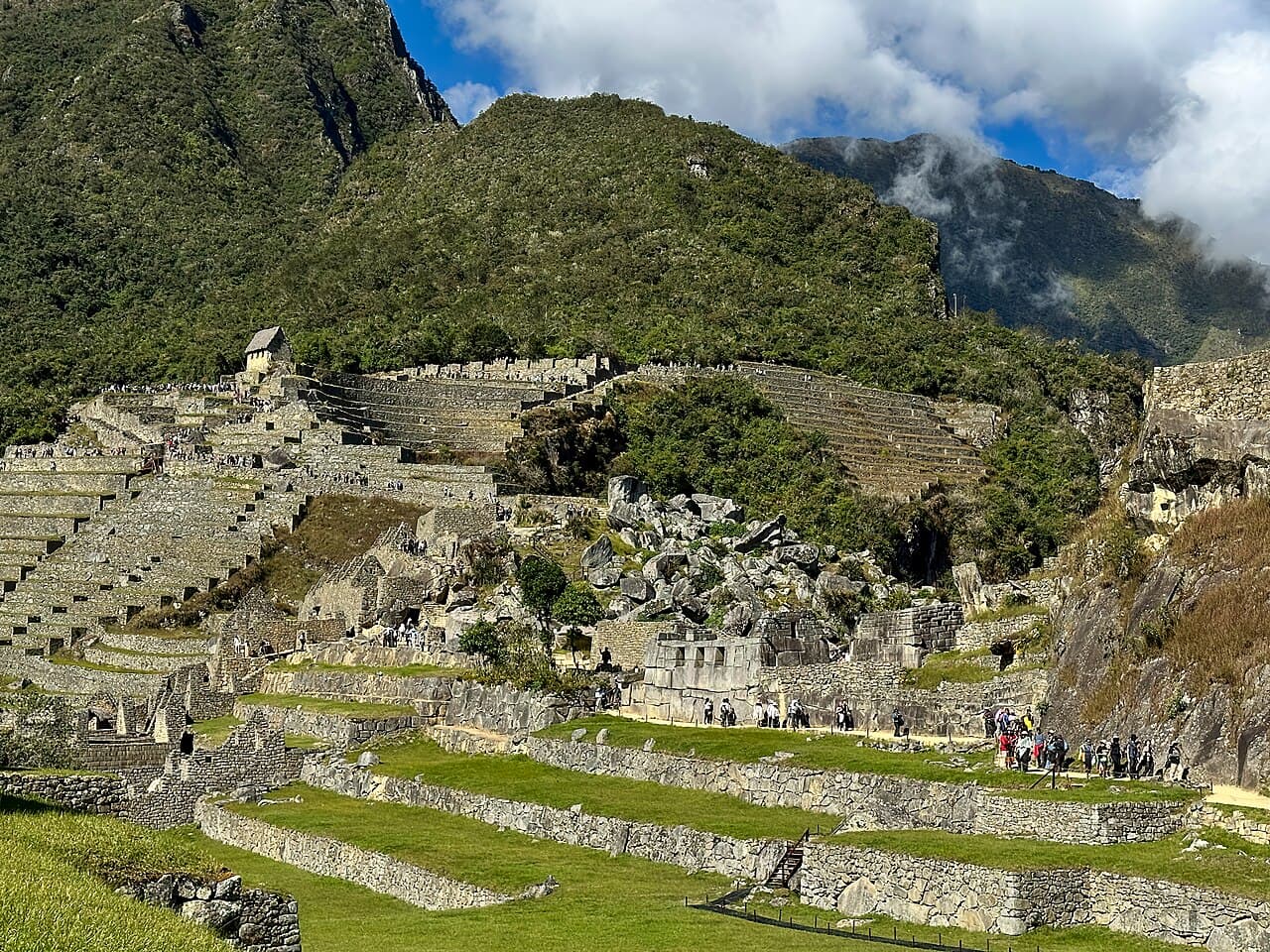
Machu Picchu's quarry exposes local granite: the same bedrock that controls much of the Inca Trail landscape.
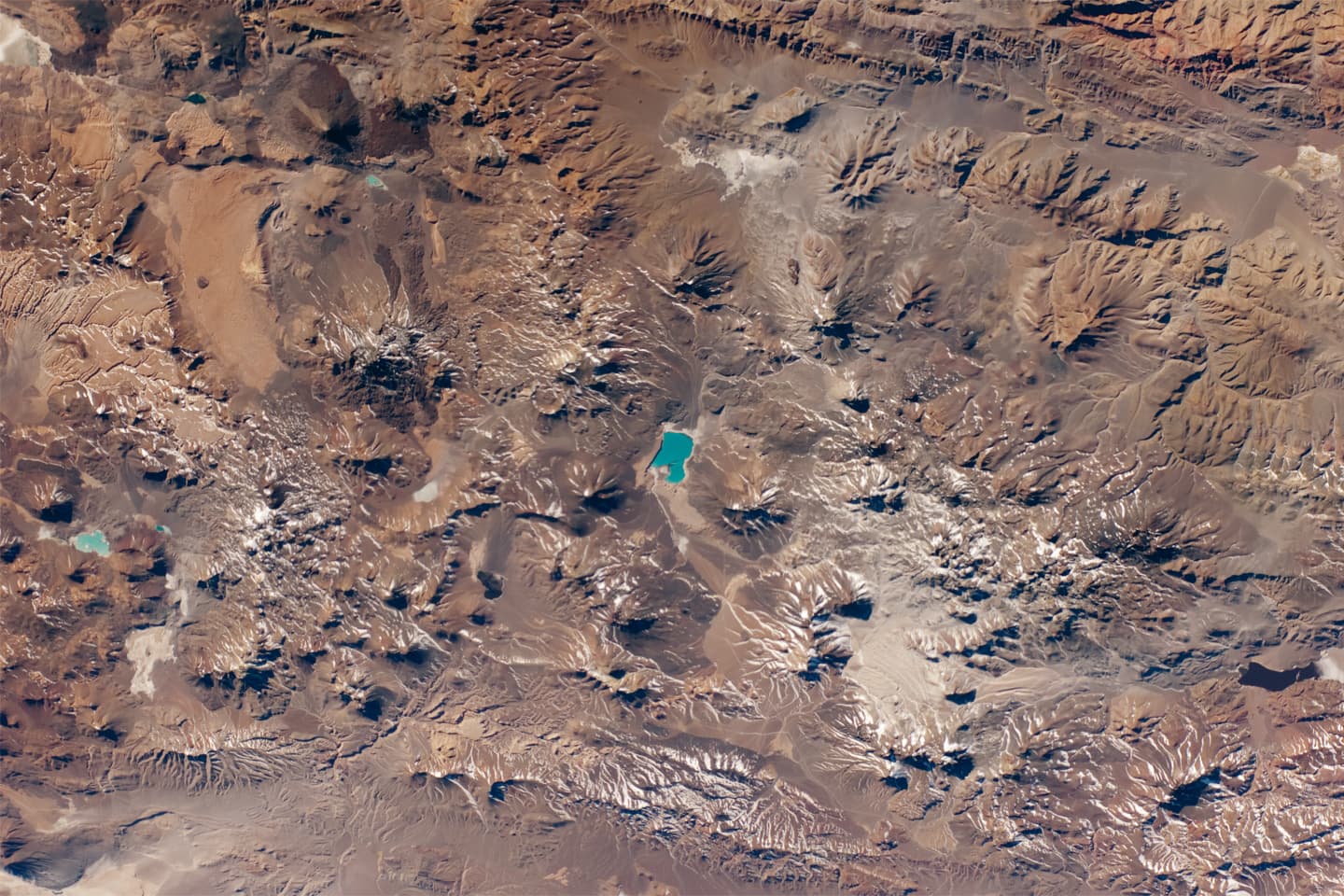
Cusco sits at ~3,400 m in the Peruvian Andes, a mountain belt with a peculiarity trekkers rarely notice: no continents collided here. The Andes are the type example of an ocean–continent orogeny — the Nazca Plate has been sliding beneath South America for tens of millions of years, and the compression, magmatism and crustal thickening above that subduction zone built the second-highest mountain range on Earth. The Andean orogeny's main Cenozoic pulse raised the Central Andes, and geologists date the onset of Altiplano uplift to around 25 million years ago.
Why a vast plateau — the Altiplano — rather than a narrow ridge is one of geology's live controversies, and Cusco sits right on its northern edge. Measured crustal shortening accounts for only about 70–80% of the observed crustal thickening, so something else helped: candidates include magmatic addition and, most dramatically, wholesale loss of the dense lithospheric root. In the delamination model, thickened mantle lithosphere grew heavier than the asthenosphere beneath it and peeled away, letting the plateau bob upward. A 2022 study argued that surface uplift and crustal flow in southern Peru — Cusco's own backyard — are controlled by exactly this kind of 'lithospheric drip'. The plateau you acclimatize on is, in part, a raft that lost its keel.
The rocks around the city tell the older chapters. Sacsayhuamán's zigzag megaliths stand on Cretaceous marine limestone of the Yuncaypata Formation — an ancient seabed, complete with marine fossils such as sea urchins and bivalve shells, now hoisted to ~3,700 m. Rainwater has done what rainwater does to limestone: dissolved it into karst. The caves and eerie tunnels ('chincanas') at Qenqo and Sacsayhuamán that guides love to dramatize are natural karst dissolution features, and the Incas carved shrines directly into them. Next to the fortress, the Rodadero (Suchuna) hill is a body of igneous rock polished into gleaming natural slides along fault surfaces — slickensides you can literally ride down, as Cusco's children have for centuries.
Machu Picchu is built on something far older than the Andes themselves. The citadel and the final days of the Inca Trail cross the Machu Picchu granite of the Vilcabamba batholith, a Permo-Triassic intrusion with a biotite Rb-Sr age of 246 ± 10 million years — magma that solidified deep in the crust a quarter of a billion years ago, long before the modern Andes rose, then was exhumed as the Urubamba River sawed its gorge. Inca masons exploited the granite's natural joint sets, splitting blocks along planes the cooling magma had already prepared for them.
One volcanic footnote: Cusco has no historically active volcano — the department's only Holocene centre, Quimsachata in Canchis province (~100 km southeast of the city), last erupted around 6,400 years ago and is currently unmonitored — but the Incas knew good lava when they saw it. The finest imperial walls in the city — Coricancha included — use andesite hauled ~35 km from the Rumiqolqa quarry, part of the Quaternary Rumicolca Formation, with K-Ar ages around 0.59 million years. Peru's officially monitored active volcanoes (Sabancaya, Ubinas, Misti and others), watched by the Instituto Geofísico del Perú through its CENVUL volcanological center, all lie in the arc far to the south, across the Ayacucho, Arequipa, Moquegua and Tacna regions.
What you can see on the trail
Karst caves, 'chincana' tunnels and marine fossils in Yuncaypata limestone
📍 Sacsayhuamán and Qenqo, on the walking route above Cusco's Plaza de Armas (start of the city acclimatization circuit)
The bedrock here is Cretaceous sea floor lifted ~3,700 m by the Andean orogeny, and rainwater has dissolved it into natural caves and tunnels the Incas turned into shrines. Look closely at the limestone and you can find fossil sea urchins and shells.
The Rodadero (Suchuna) — natural fault-polished rock slides
📍 The smooth hill directly facing Sacsayhuamán's zigzag ramparts
Those gleaming grooved chutes were not carved by anyone: they are slickensides, rock surfaces polished and striated by fault movement as the Andes deformed. It is one of the world's most enjoyable pieces of structural geology — you slide down a fault plane.
Machu Picchu granite — 246-million-year-old bedrock and the 'granite chaos'
📍 Inca Trail final stretch (Intipunku descent) and throughout the citadel; the quarry sector inside Machu Picchu shows half-split boulders
The whole citadel stands on a Permo-Triassic granite dome (246 ± 10 Ma) far older than the Andes, and the jumbled white boulders are blocks dropped along the granite's natural fracture planes. In the quarry sector you can see how Inca masons split stone along those same joints.
Vinicunca's tilted mineral stripes — Andean compression in cross-section
📍 Rainbow Mountain viewpoint (~5,000 m), on the Ausangate trek circuit or the day route from Cusipata
The stripes are stacked sedimentary layers — red beds stained by iron oxides alternating with paler and greenish bands — that Andean compression tilted on end like a shelf of books pushed over. Each band is a different ancient environment, now standing nearly vertical at 5,000 m.
Fun fact
Cusco's finest Inca walls are carved from 590,000-year-old lava hauled ~35 km from the Rumiqolqa quarry — while the ramparts of Sacsayhuamán, high above the city, contain fossils of sea urchins from a Cretaceous ocean.