The Basics
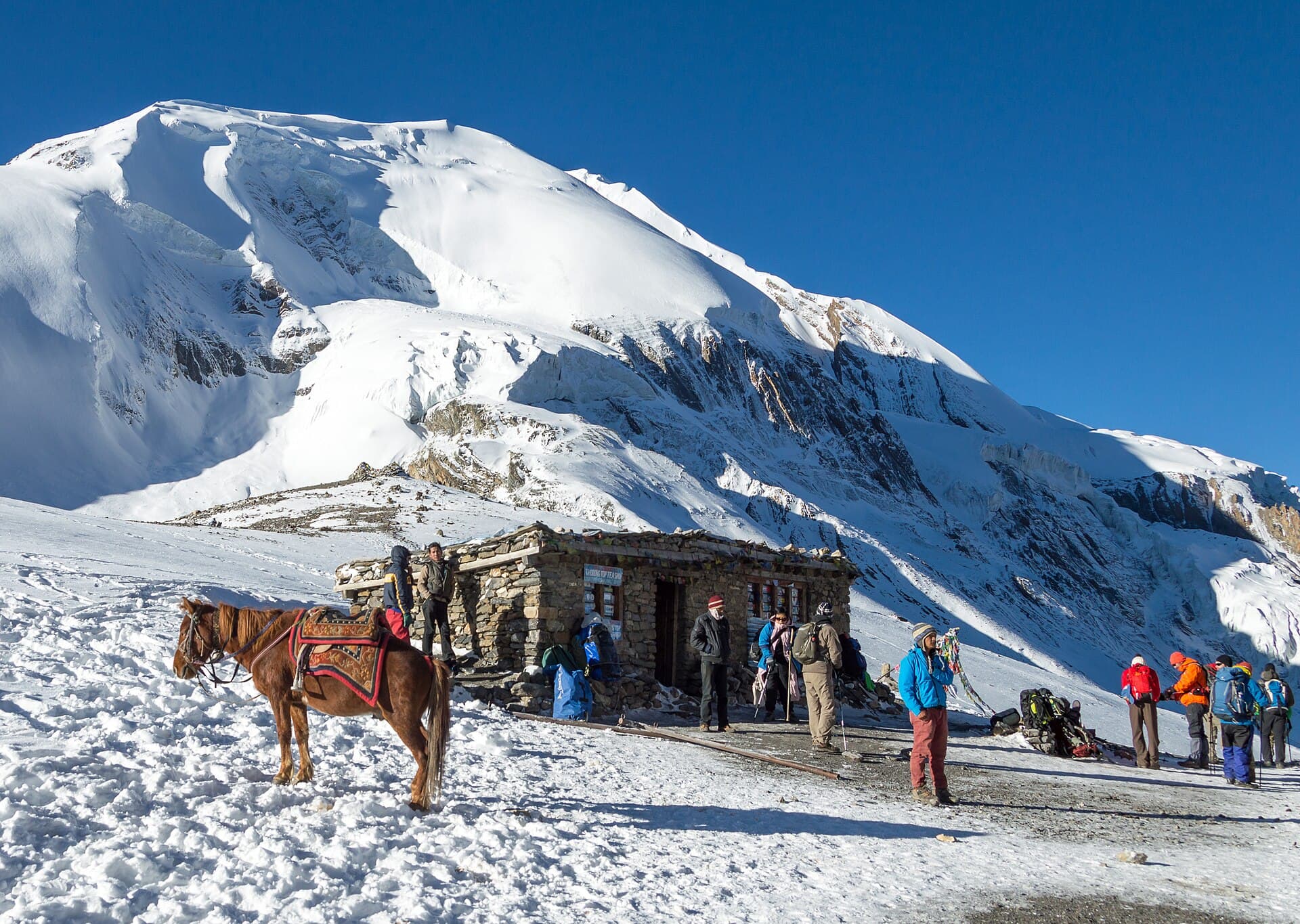
Lhotse stands at 8,516 meters (27,940 feet), making it the fourth-highest mountain in the world and the third-highest in Nepal. It is located in the Khumbu region of the Mahalangur Himal, directly south of Mount Everest. The two mountains are connected by the South Col, a saddle at 7,906 meters that serves as high camp for both peaks. In Tibetan, Lhotse means simply "South Peak" — a name that reflects how early surveyors saw it as a subsidiary summit of Everest rather than a mountain in its own right.
Lhotse has three summits: Lhotse Main (8,516 m), Lhotse Middle (8,414 m), and Lhotse Shar (8,383 m). Lhotse Middle held the distinction of being the highest unclimbed summit on Earth until a Russian team reached it in 2001.
First Ascent
Swiss climbers Ernst Reiss and Fritz Luchsinger made the first ascent on May 18, 1956, as part of a Swiss expedition that also put a team on Everest's summit the same week. From Camp VI on the Lhotse Face, Reiss and Luchsinger climbed through a steep snow couloir — now called the Reiss Couloir — that leads directly to the summit ridge. They battled high winds and temperatures well below minus 30 Celsius.
The climb came just three years after Everest's first ascent and demonstrated that the South Col approach could serve as a launching point for multiple objectives.
Continue reading Ama Dablam — The Matterhorn of the Himalayas →
Routes and Difficulty
The standard route on Lhotse shares its lower sections with Everest's South Col route. Climbers follow the same path through the Khumbu Icefall, up the Western Cwm, and onto the Lhotse Face — a 1,125-meter wall of glacial blue ice angled at 40-50 degrees. This is where the routes diverge. Everest-bound climbers turn left at the Yellow Band toward the Geneva Spur and the South Col. Lhotse climbers turn right and continue up the face.
The upper section is what makes Lhotse its own mountain. Above approximately 8,000 meters, the route enters the Reiss Couloir, a narrow and steep gully that funnels rockfall and spindrift. The couloir is the crux of the climb — sustained steep terrain at extreme altitude with limited protection. The final push to the summit is a knife-edge ridge exposed to wind from both sides.
The Lhotse South Face is one of the great unfinished problems in Himalayan climbing. At 3,300 meters, it is one of the tallest rock faces on Earth. Jerzy Kukuczka attempted it in 1989 and fell to his death. Russian climbers completed the first ascent of the face in 1990, but it has seen very few repeats.
Three routes exist to the summit: the West Face (standard), through Lhotse Main from the north, and the South Face. The South Face remains one of the most dangerous climbs in the Himalayas.
Death Rate
Lhotse has a death rate of approximately 2.5%. As of recent data, about 20 climbers have died on the mountain against roughly 600 successful summits. This makes it one of the safer 8,000-meter peaks in statistical terms — a function of the shared infrastructure with Everest (fixed ropes, established camps, Sherpa support) and the relatively straightforward lower route.
That said, the Reiss Couloir above 8,000 meters is genuinely dangerous. Rockfall is constant during warm afternoons, and the steepness of the terrain means a slip can be unrecoverable. Several deaths have occurred in this section from falls and from climbers being struck by falling rock and ice.
From the Trail
From the Everest Base Camp trek, Lhotse dominates the view from Dingboche (4,410 m) and Chhukung (4,730 m). Its massive south face — a wall of dark rock banded with ice — is one of the most impressive sights in the Khumbu. From Kala Patthar, Lhotse appears as Everest's shoulder, the two mountains merging into a single massif.
The Lhotse Face is visible from the Western Cwm and is a defining feature of every Everest expedition photo. Its blue ice glinting in the sun is unmistakable.
Why It Matters
Lhotse is the peak that proves proximity does not mean similarity. It shares a base camp, an icefall, and a glacier with Everest, yet the upper mountain is a fundamentally different challenge. The Reiss Couloir demands technical ice climbing at an altitude where most people can barely walk. The South Face remains one of the last great problems in Himalayan mountaineering.
Many climbers now combine Everest and Lhotse in a single expedition — summiting Everest first, descending to the South Col, then traversing to Lhotse's summit. It is one of the most demanding doubles in high-altitude climbing.
8 Sources
- ntb.gov.npNepal Tourism Board — Lhotse (official)
- whc.unesco.orgUNESCO World Heritage Centre — Sagarmatha National Park
- explorersweb.comExplorersWeb — The 70th Anniversary of the First Ascent of Lhotse
- explorersweb.comExplorersWeb — Through the Unknown to the Impossible: Lhotse Middle
- publications.americanalpineclub.orgAmerican Alpine Journal 1991 — Lhotse, South Face Direttissima
- explorersweb.comExplorersWeb — Remembering Jerzy Kukuczka
- alanarnette.comAlan Arnette — Lhotse: the Other Everest
- himalayandatabase.comThe Himalayan Database — Expedition Archives (online reports)