The Basics
Makalu stands at 8,485 meters (27,838 feet), making it the fifth-highest mountain in the world and the fourth-highest in Nepal. It is located in the Mahalangur Himal, about 19 kilometers southeast of Mount Everest, straddling the border between Nepal's Sankhuwasabha District and Tibet. The mountain is an isolated peak — unlike Lhotse, which leans on Everest's massif, Makalu stands alone, a four-sided pyramid of rock and ice that is widely considered one of the most striking mountains in the Himalayas.
The name likely derives from the Sanskrit "Maha Kala," meaning "Great Black One," a reference to Shiva. The mountain's dark, exposed rock faces are visible from enormous distances, and its symmetry gives it an almost geometric appearance.
First Ascent
Lionel Terray and Jean Couzy reached the summit on May 15, 1955, as part of a French expedition led by Jean Franco. What made this expedition remarkable was its success rate: over the following two days, seven more team members also reached the summit. Nine out of the expedition's climbing members stood on top — an extraordinary achievement for a peak of this difficulty, reflecting meticulous planning and favorable weather.
The route followed the North Face and the Northeast Ridge, approaching from the Makalu La (a col at 7,410 m between Makalu and its neighbor Kangchungtse). The French had reconnoitered the mountain in 1954, identifying the route and establishing the approach.
Continue reading Ama Dablam — The Matterhorn of the Himalayas →
Routes and Difficulty
Makalu has a summit success rate of roughly 34%, making it one of the hardest 8,000-meter peaks to climb. The standard route follows the original French path: up the Makalu La to the Northeast Ridge, then along an increasingly exposed ridge to the summit pyramid. The final section is a knife-edge ridge battered by wind, with steep drops on both sides and no room for error.
Unlike Everest or Cho Oyu, Makalu does not have fixed ropes along the entire route in most seasons. Climbers must rely on their own technical ability for significant stretches. The mountain demands proficiency in mixed climbing — rock, ice, and snow in rapid succession — at altitudes above 7,500 meters.
The West Pillar, first climbed in 1971, is a more direct and more technical alternative. The Southeast Ridge and the West Face have also been climbed, but these routes see very few attempts due to their extreme difficulty and objective danger.
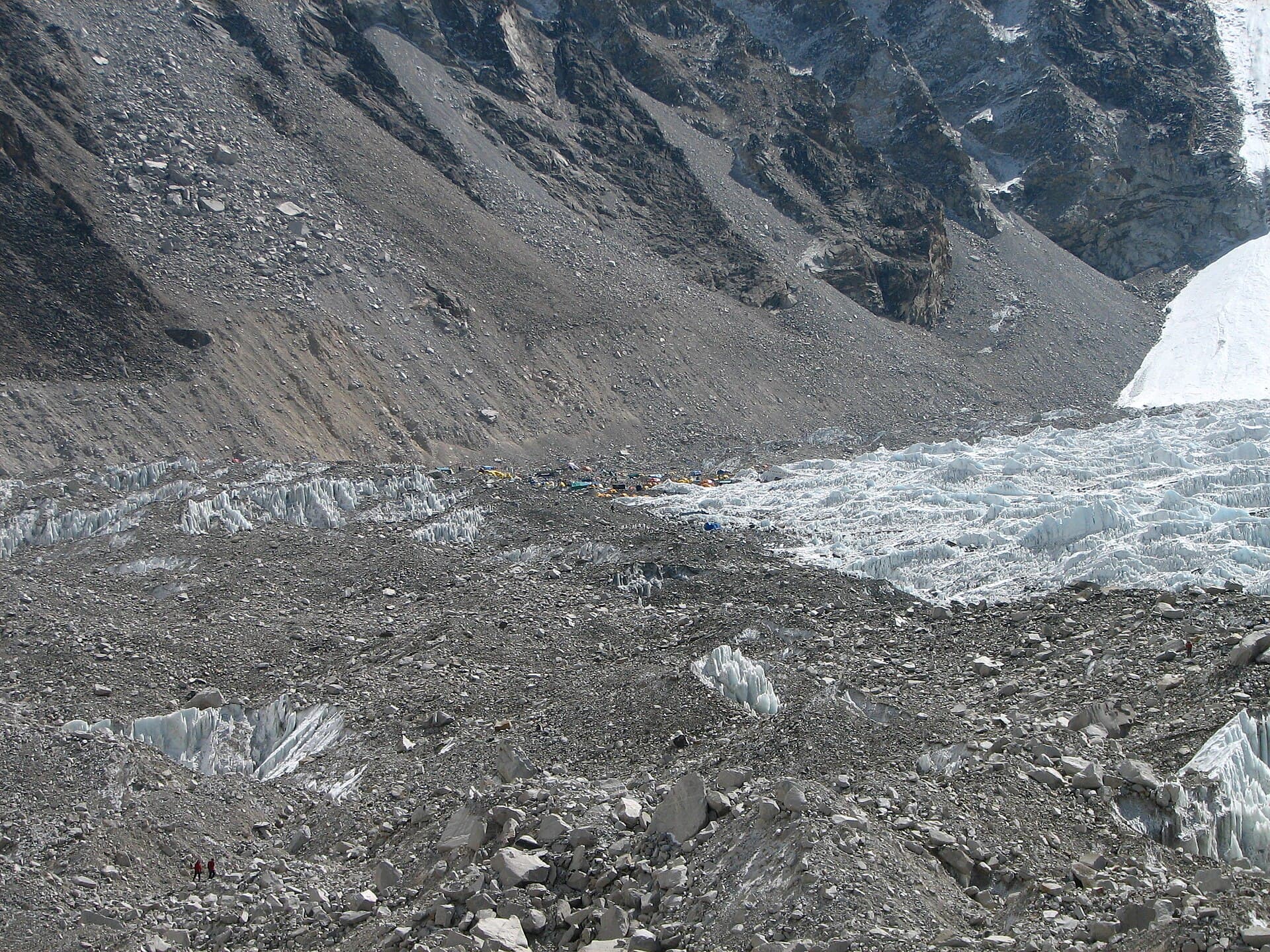
Makalu's isolation compounds the challenge. The approach trek takes about 10 days from the nearest airstrip at Tumlingtar. Base Camp sits at approximately 5,650 meters on the Barun Glacier, in one of the more remote valleys in the Nepal Himalaya.
Death Rate
Approximately 35-40 climbers have died on Makalu against roughly 390-500 successful summits. This produces a fatality rate in the range of 8-10%, placing it among the deadlier 8,000-meter peaks — behind Annapurna I and Kangchenjunga, but well ahead of Everest or Cho Oyu.
The deaths cluster in the upper sections of the mountain. The Northeast Ridge above 7,800 meters is exposed to violent winds that can pin climbers down for days. The summit pyramid's steep, mixed terrain is where most fatal falls occur. Frostbite rates are notably high, even among successful summiteers, due to the extended time spent on exposed ridgelines.
The mountain's remoteness means that evacuation is slow. A helicopter rescue from base camp is possible in good weather, but above the lower camps, a stricken climber is essentially on their own.
From the Trail
The Makalu Base Camp trek is one of Nepal's finest and least-traveled routes. From the upper Barun Valley, the mountain's east face rises directly above the glacier in an unbroken sweep of rock and ice. The pyramid shape is most pronounced from the southeast, where the mountain's four ridges converge symmetrically toward the summit.
From the Everest region, Makalu is visible as a dark, sharp pyramid on the southeastern horizon — instantly recognizable by its isolation and geometric precision. From the summit of nearby Island Peak (6,189 m), Makalu's profile is one of the defining features of the panorama.
Why It Matters
Makalu tests what Everest's commercial infrastructure has made optional: genuine mountaineering skill. There are no Sherpa-fixed ropes above certain elevations in most years, no supplemental oxygen caches pre-positioned by guide services, and no queue of climbers breaking trail ahead of you. The mountain rewards self-reliance.
Its aesthetic perfection matters too. Among climbers who have seen all the 8,000-meter peaks, Makalu is frequently cited as the most beautiful. The pyramid is almost too symmetrical to be real — a mountain that looks like a mountain is supposed to look. That it is also one of the hardest to climb makes it the peak that best embodies the original spirit of high-altitude mountaineering: beauty and difficulty, inseparable.
7 Sources
- 8000ers.com8000ers.com (E. Jurgalski) — Makalu General Info
- ntb.gov.npNepal Tourism Board — Makalu
- publications.americanalpineclub.orgAmerican Alpine Journal (1958) — Makalu (review of Franco's expedition account)
- guinnessworldrecords.comGuinness World Records — First ascent of Makalu
- himalayandatabase.comThe Himalayan Database (Elizabeth Hawley archive)
- ntb.gov.npNepal Tourism Board — Makalu Barun National Park
- protectedplanet.netProtected Planet (UNEP-WCMC/IUCN) — Makalu-Barun