
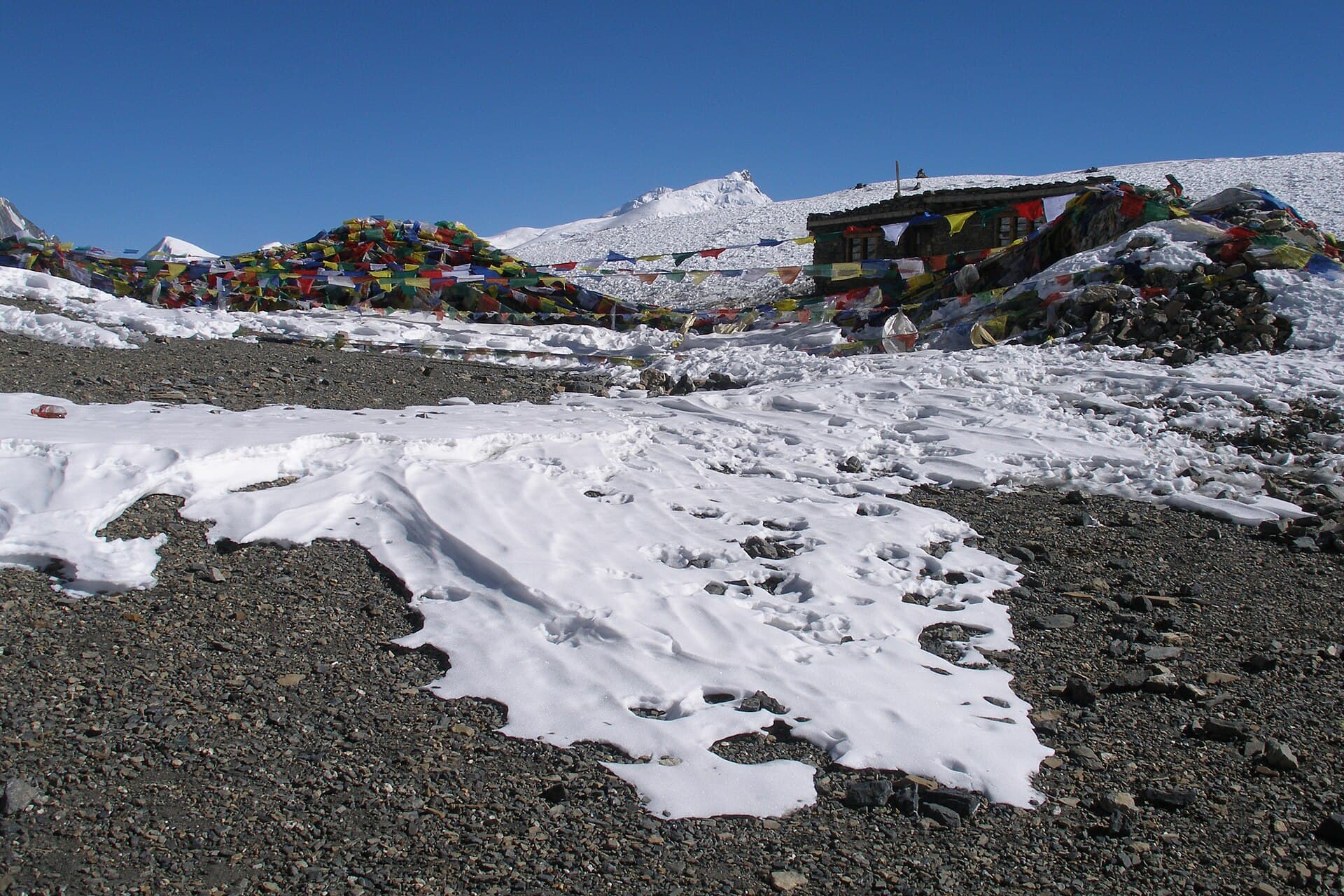
The Spirit Mountain
Manaslu rises to 8,163 meters in the Mansiri Himal range of north-central Nepal, making it the eighth-highest mountain in the world. Its name derives from the Sanskrit word manasa, meaning intellect or spirit. The Nepali name carries the same weight -- this is the Mountain of the Spirit, and everything about its presence suggests why.
The massif sits about 64 kilometers east of Annapurna. From the south, Manaslu presents a broad, heavily glaciated face. From the north, it appears as a more classic pyramidal peak. The Budhi Gandaki river carves a deep gorge around the massif's base, and the villages strung along its banks are among the most culturally intact in Nepal, home to Tibetan-influenced communities that have changed little in centuries.
First Ascent: A Japanese Achievement
Manaslu has deep ties to Japanese mountaineering. After reconnaissance expeditions in 1952 and 1953, and failed attempts in 1954 and 1955, a Japanese expedition led by Maki Yuko finally succeeded on May 9, 1956. Toshio Imanishi and Sherpa Gyalzen Norbu reached the summit. It was the first 8,000-meter peak claimed by a Japanese team, and the achievement became a source of national pride.
The early attempts were complicated not only by the mountain's difficulty but by local resistance. Villagers in Sama Gaon blamed a 1954 Japanese expedition for a subsequent avalanche that destroyed a monastery, and the 1955 team was turned back by community opposition. Diplomatic efforts resolved the tensions, and the 1956 expedition proceeded with local cooperation.
Continue reading Ama Dablam — The Matterhorn of the Himalayas →
Climbing Today
Since that first ascent, over 3,300 climbers have reached the summit, though the true summit point has been a subject of debate -- some ascents may have stopped short at a subsidiary top. A total of 90 climbers have died on the mountain, with fatalities split roughly evenly between spring and autumn seasons.
The standard route follows the Northeast Face. Autumn is the dominant season: of the 775 expeditions through 2023, 568 were in autumn, 182 in spring, and just 24 in winter. The mountain sees heavy commercial traffic during the post-monsoon window of September and October, when conditions on the upper slopes are generally most stable.
Manaslu has become particularly popular in recent years as a stepping stone for Everest aspirants. Its altitude and technical demands -- sustained snow and ice climbing with avalanche-prone slopes -- make it a realistic proving ground for those aiming higher.
The Circuit Trek
The Manaslu Circuit Trek is the main reason most visitors come to the region, and it is increasingly cited as the best long trek in Nepal. The 177-kilometer route takes 14 to 18 days and circumnavigates the entire massif, crossing the Larkya La pass at 5,160 meters.
The trek passes through dramatically shifting landscapes: subtropical forests give way to alpine meadows, then to the stark, dry terrain of the rain shadow on the mountain's northern side. Villages along the route -- Jagat, Deng, Namrung, Sama Gaon, Samdo -- retain a Tibetan character, with stone houses, prayer flags, and monasteries that feel far removed from the teahouse bustle of the Annapurna Circuit.
Restricted area permits are still required, which keeps numbers lower than on comparable treks. The infrastructure is more basic -- fewer lodges, simpler food, less reliable communication. For many trekkers, that is precisely the appeal.
Why It Matters
Manaslu occupies a middle ground that makes it distinctive. It is not as famous as Everest, not as accessible as Annapurna, and not as remote as Kangchenjunga. But for climbers and trekkers who want serious altitude without overwhelming crowds, it offers something increasingly rare in the Himalaya: the sense that you are somewhere few others have been. The Mountain of the Spirit earns its name through isolation as much as elevation.
8 Sources
- guinnessworldrecords.comGuinness World Records — First ascent of Manaslu
- himalayanclub.orgHimalayan Journal Vol. 20 — 'The Ascent of Manaslu' (first-hand account)
- himalayandatabase.comThe Himalayan Database — Online Expedition Archives (Elizabeth Hawley)
- explorersweb.comExplorersWeb — Backgrounder: Manaslu's Climbing History
- alanarnette.comAlan Arnette — Manaslu (8000m climb report/guide)
- ntnc.org.npNTNC — Manaslu Conservation Area Project (MCAP)
- ntb.gov.npNepal Tourism Board — Trekking Permit (fees and restricted areas)
- bookatrekking.comBookatrekking — Manaslu Circuit Trek itinerary