The standard Aconcagua itinerary treats acclimatization as something that happens on the mountain — rest days at Plaza de Mulas, carries to Nido de Cóndores. Mendoza's climbing community adds a step before that.
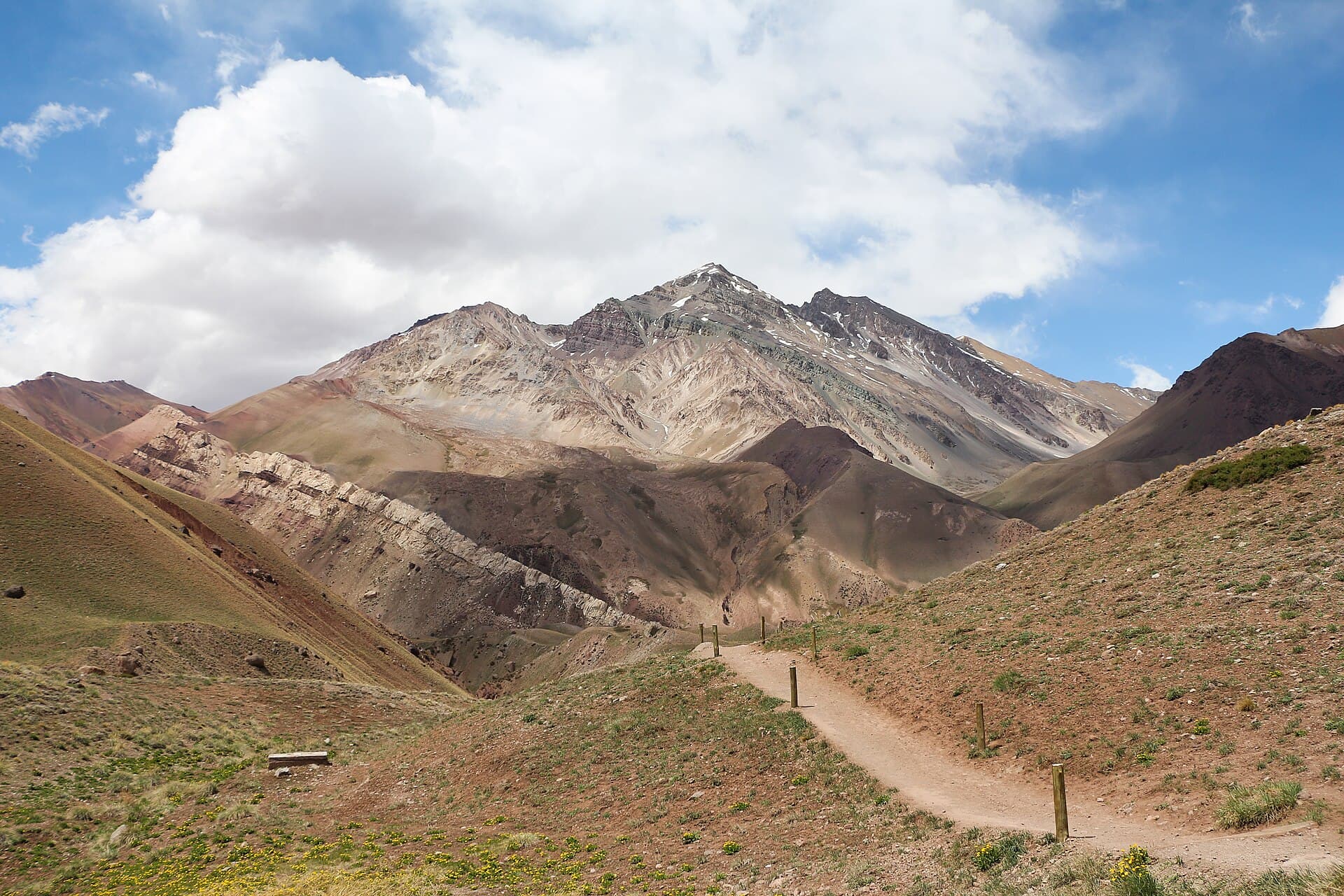
Cordon del Plata, a sub-range of the Andes roughly 80km west of Mendoza city, is the primary training and acclimatization ground for Mendoza's andinistas. Its peaks reach above 5,000m, and Cerro Plata reaches 5,968m — close enough to be serious high-altitude exposure without needing an Aconcagua permit or the associated costs.
Why acclimatize here first
The logic is straightforward: spending 3–5 days at 4,000–5,000m in Cordon del Plata before starting the Aconcagua permit clock gives your body a head start on acclimatization without burning expedition days. By the time you reach Plaza de Mulas (4,370m), you've already adapted to similar altitude.
The practical benefits:
- No permit required for Cordon del Plata access
- Lower cost — no park fees, simpler logistics
- Less crowded — a fraction of Aconcagua's traffic
- Flexible schedule — go at your own pace without an expedition timeline
Continue reading The 461-meter trap: which insurance actually covers Aconcagua →
Access: Vallecitos
The main access point is Vallecitos, a small ski and mountaineering area at approximately 2,900m elevation. It's reached by road from Mendoza via Potrerillos — roughly 90km, about 2 hours by car.
Vallecitos has basic infrastructure: a ski lodge (operational in winter), a few refugios, and parking. In summer (December–March), it functions as a mountaineering basecamp rather than a ski resort.
Refugio San Bernardo (approximately 3,200m) serves as the primary staging point for Cordon del Plata hikes. It's a basic mountain refuge — bring your own food and sleeping bag, or plan to camp nearby.
Day hikes and short treks
Cerro Lomas Amarillas (~4,200m)
A straightforward acclimatization hike from Vallecitos. Roughly 6–8 hours round trip, gaining about 1,300m from the road. Good trail conditions. Ideal as a first-day altitude test.
Cerro Vallecitos (~5,450m)
A more serious objective. Typically done as an overnight with a camp at approximately 4,500m, then a summit push. No technical climbing on the normal route, but sustained effort at altitude. A strong test of how your body handles 5,000m+.
Cerro Plata (5,968m)
The highest peak in the Cordon del Plata. Requires 2–3 days from Vallecitos with camps at approximately 4,500m and 5,200m. Non-technical via the normal route, but at just under 6,000m the altitude demands respect.
Summiting Cerro Plata before attempting Aconcagua provides near-6,000m acclimatization that supplements the standard Plaza de Mulas rest-day approach.
Planning this route? We're forming a founding group for Aconcagua — Ruta 360 Traverse — registering interest is free, no commitment. See the expedition →
The Cordon del Plata traverse
A 3–4 day traverse linking several peaks along the range. The typical route follows the ridge system between Vallecitos and Quebrada de Matienzo, with camps at 4,200–4,800m. This traverse is a common training route among Mendoza's andinistas before Aconcagua expeditions.
The traverse is not technically difficult but involves sustained time above 4,000m, route-finding on scree and mixed terrain, and exposure to the same weather patterns (including wind) that affect Aconcagua.
Costs compared to Aconcagua approach
| Item | Cordon del Plata | Aconcagua approach |
|---|---|---|
| Permit | None | 2026-27 tariff pending; recent foreign ascent permits range from high hundreds to low thousands of USD |
| Mule service | Not applicable | $300–$700 |
| Transport from Mendoza | $30–50 (taxi/transfer to Vallecitos) | $50–100 (bus to Puente del Inca) |
| Accommodation | Free (camping) or refugio ($10–20/night) | Base camp services $50–200+/night |
| Duration | 3–5 days | 14–21 days |
The cost difference is significant. A 4-day acclimatization circuit in Cordon del Plata can cost under $200, while the equivalent time on Aconcagua involves permit fees and base camp service charges.
Practical logistics
Getting there from Mendoza
- By car: Take Ruta 7 west toward Potrerillos, then turn south on RP 89 to Vallecitos. Roughly 90km, 2 hours.
- Transfer services: Several Mendoza-based mountain operators offer transfers to Vallecitos. Expect $40–80 USD round trip.
- No public bus runs directly to Vallecitos. You'll need private transport or a transfer arranged through your accommodation.
When to go
The Cordon del Plata hiking season aligns with Aconcagua's: November through March. December and January offer the most stable conditions.
What to bring
Standard high-altitude trekking gear: layers for sub-zero temperatures, sun protection (UV is intense above 4,000m), camping equipment if not using refugios, and enough food and water for your planned duration. There are no shops or supply points beyond Vallecitos.
Potrerillos as a base
Potrerillos, 30km east of Vallecitos on the road from Mendoza, is a small town built around a reservoir created by a dam completed in the early 2000s. It offers cabañas, hostels, and restaurants — more comfortable than Vallecitos for pre- or post-hike rest days.
Potrerillos also serves as a hub for other activities: rafting on the Río Mendoza, kayaking on the reservoir, and shorter day hikes in the surrounding hills. It's a reasonable base for a rest day between a Cordon del Plata acclimatization block and the drive to Aconcagua.
Summary
Adding 3–5 days in Cordon del Plata before Aconcagua extends your total trip but meaningfully improves your acclimatization profile. The cost is minimal, the logistics are simple, and the altitude is real.
7 Sources
- mendoza.gov.arGobierno de Mendoza — Permisos Parque Provincial Aconcagua, temporada 2025-2026
- lujandecuyo.tur.arTurismo Luján de Cuyo (municipal) — Parque Provincial Cordón del Plata
- losandes.com.arLos Andes (Mendoza daily) — Vallecitos: from ski center to natural school of andinismo
- iloveski.orgI Love Ski — Vallecitos ski station (Cordón del Plata, Mendoza)
- aconcaguaexpeditions.comAconcagua Expeditions — Campamentos ruta normal (Plaza de Mulas, Nido de Cóndores)
- mendoza.gov.arGobierno de Mendoza — Accesibilidad en el Parque Provincial Cordón del Plata
- lujandecuyo.tur.arTurismo Luján de Cuyo — Cerro El Plata, 5.968 msnm