The mountains are free. Everything else is not.
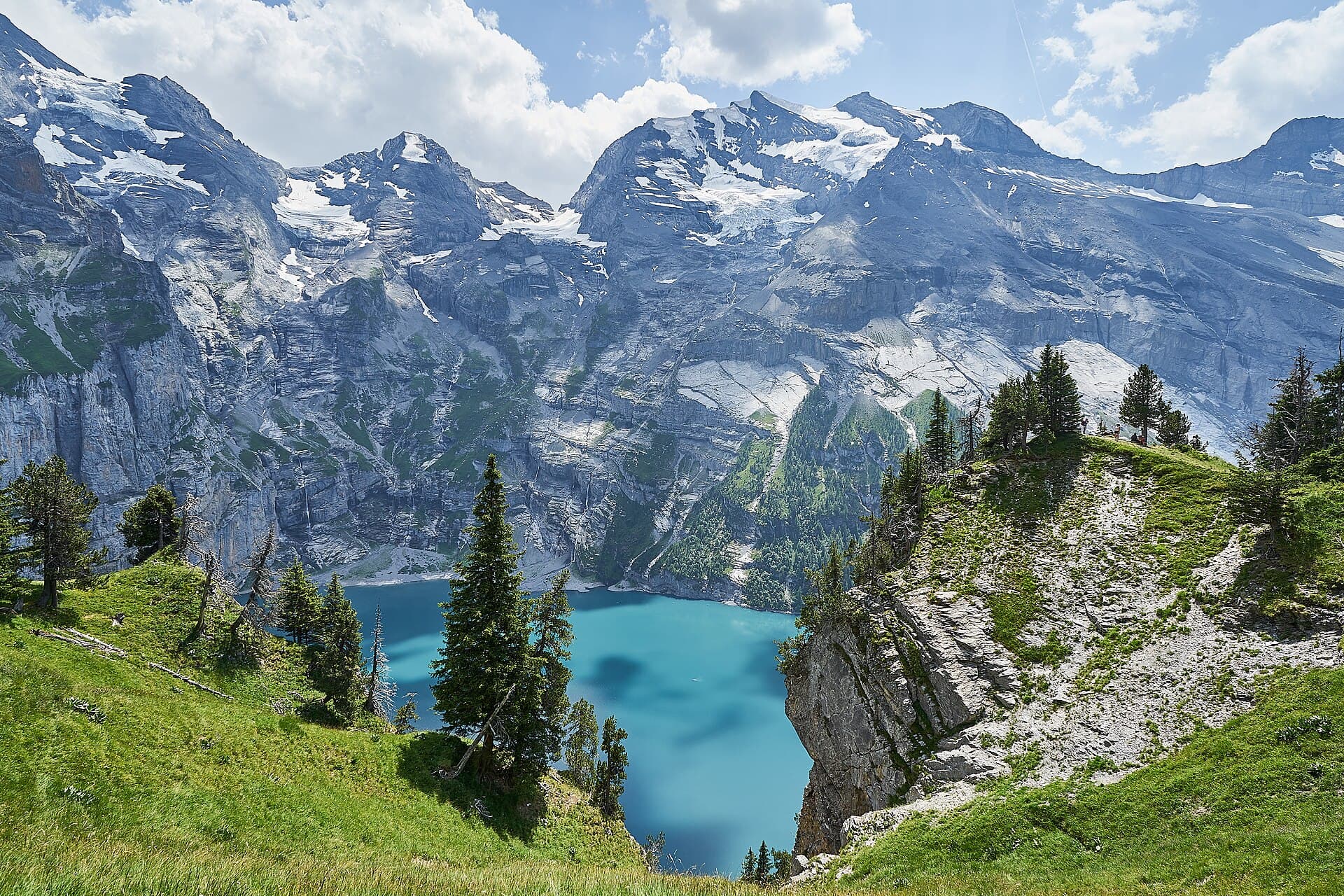
Switzerland has a constitutionally protected right to roam (Betretungsrecht). Every marked hiking trail in the Bernese Oberland is free to walk. The Eiger Trail beneath the Nordwand, the ridge walk from Faulhorn to Schynige Platte, the Via Alpina over the Hohtürli at 2,778 m — no admission fee, no tollgate, no reservation.
The cost is in getting to the trailhead.
Every price in this article is the operator's own published 2026 tariff, read on 14 August 2026. Mountain fares are Season 2 (1 May – 31 October 2026), 2nd class, full fare, CHF including 8.1% VAT, and the whole tariff sheet expires on 12 December 2026.
A return ticket on the Jungfrau Railway from Interlaken Ost to the Jungfraujoch — Europe's highest railway station at 3,454 m — costs CHF 261.20, plus a compulsory CHF 10 seat reservation that the tariff sheet states explicitly is not included in the printed price. A couple therefore pays CHF 542.40 for a five-hour round trip, of which two hours are spent at the summit. (No half-fare figure is given here. The Jungfraubahnen tariff sheet lists full fares only — it has no half-fare column at all — and the marketing site's "from CHF 129.60" is not exactly half of CHF 261.20. This article previously printed CHF 127 as the half-fare price; that number was not published by the operator and has been removed.)
A return cable car from Stechelberg to the Schilthorn — Piz Gloria, the revolving restaurant from On Her Majesty's Secret Service — costs CHF 115.00 full fare, CHF 57.50 with a Half-Fare Card. The Schilthornbahn is the one operator in the region that publishes half fares openly, and they are exactly half.
The Grindelwald-First gondola to the Bachalpsee trailhead: CHF 76 return. The Schynige Platte heritage rack railway: CHF 68 return from Wilderswil, CHF 75.60 from Interlaken Ost. Männlichen from Grindelwald Terminal: CHF 74. Harder Kulm from Interlaken Ost: CHF 44.
A day of hiking that uses two mountain transports costs between CHF 112 (Harder Kulm plus Schynige Platte) and CHF 150 (First plus Männlichen) in lift tickets alone — before food, accommodation, or the train that brought you to Interlaken in the first place. And Alliance SwissPass has already announced an average +3.9% national fare increase from the December 2026 timetable change.
This is the structural reality that budget guides either bury or omit. The Bernese Oberland is 60-80% more expensive than the Dolomites for an equivalent hiking trip. The gap is not driven by food or beds — it is driven by mountain railways and cable cars that collectively represent the densest vertical transport network in the world.
130 years of engineering into the rock
The infrastructure is not a tourist overlay. It is the product of a 130-year engineering project that turned the Bernese Oberland from a landscape that required mountaineering skills into one accessible to anyone with a train ticket.
1893 — Two railways in one year. The Wengernalp Railway (Lauterbrunnen/Grindelwald to Kleine Scheidegg) and the Schynige Platte Railway (Wilderswil to 1,967 m) both opened in 1893. Together, they established the model: rack railways climbing through impossible gradients to deliver passengers above treeline, where views previously required hours of steep ascent.
1896-1912 — The Jungfrau Railway. Swiss industrialist Adolf Guyer-Zeller conceived a railway to the Jungfraujoch after watching sunset from Schynige Platte in 1893. Construction began on 27 July 1896. Workers — predominantly Italian guest labourers — spent sixteen years boring 7 km of tunnel through the Eiger and Mönch using pick-axes and dynamite at altitude, contending with avalanches, oxygen deprivation, and sub-zero temperatures. The tunnel approach was deliberate: an exposed surface line would have been destroyed by avalanches within a season. The first train with approximately fifty passengers reached the Jungfraujoch on 1 August 1912 — Swiss National Day. (en.wikipedia.org/wiki/Jungfrau_Railway)
2020 — Eiger Express. The V-Cableway tricable gondola from Grindelwald Terminal to Eigergletscher (2,320 m) opened in December 2020, cutting the Jungfraujoch journey from over two hours to 45 minutes. It is the most significant addition to the network in a century. It also made the Eiger Trail — the 6 km path directly beneath the Nordwand — accessible in 15 minutes from the valley floor.
2024 — Steepest cable car in the world. The rebuilt lower section of the Schilthorn cable car (Stechelberg to Mürren) set the world record for steepest cable car gradient: 159.4%. The investment was partly funded by Bond tourism — Piz Gloria's revolving restaurant draws visitors who have never laced a hiking boot.
The density is extraordinary. Within a 20 km radius of Grindelwald, there are more than 25 mountain railways, gondolas, cable cars, and funiculars. No other mountain region on Earth concentrates this much vertical transport in this small an area. The Swiss did not build this infrastructure for tourists — they built it because the terrain demanded it, and then tourists followed. But the maintenance and operation of a network this dense requires revenue, and that revenue comes from ticket prices that reflect Swiss labour costs.
Continue reading The CHF reality — what the Bernese Oberland actually costs in 2026 →
The CHF reality
Switzerland's cost of living is among the highest in the world, and the Bernese Oberland sits at the top end of Swiss pricing.
A basic restaurant meal in Interlaken costs CHF 31 (Numbeo crowdsourced average). A three-course dinner for two at a mid-range restaurant: CHF 80. A McDonald's combo meal: CHF 16.90. A cappuccino: CHF 4.50. A half-litre of draft beer: CHF 6.75.
At altitude, add a 30-50% premium. A Rösti with bratwurst at Kleine Scheidegg or Piz Gloria: CHF 25-35. A coffee at the Jungfraujoch: CHF 6-8.
Accommodation is where this article used to overreach, and it no longer does. We previously printed a full ladder — hostel dormitories at CHF 35-55, budget hotels at CHF 80-140, three-star hotels at CHF 150-280, the Victoria-Jungfrau from CHF 500, and SAC huts at CHF 76-93 for members. Those bands came from travel blogs and aggregators, and the hut figures contradicted the ones in our own cost guide. They have been removed rather than re-estimated.
The reason no honest table exists is structural. The Swiss federal tourism statistics publish no price indicator at all for accommodation — only establishments, rooms, beds, arrivals, overnight stays and occupancy. The Interlaken, Lauterbrunnen and Grindelwald destination sites render their listings client-side and emit no CHF figures. Operator rate pages either 404 or price only through a booking engine.
The one operator rate we could read and verify, cited as an operator rate and nothing more: Mountain Hostel Gimmelwald, dormitory CHF 48 per person per night including breakfast buffet, double from CHF 135 for two people per night. (mountainhostel.com)
For SAC hut pricing, see the cost guide, which carries a single set of figures rather than two conflicting ones.
The same problem sank the daily budget comparison table that used to sit here, pitting Bernese Oberland all-in day rates against the Dolomites, Pyrenees and Austrian Tyrol. Every one of those rows was dominated by lodging bands that nobody publishes, so the table has been deleted.
What survives the deletion is the direction of the finding, and it got stronger, not weaker. The Bernese Oberland is materially more expensive than the Dolomites and the Pyrenees, and the gap is structural: Swiss wages, Swiss maintenance costs, and the Swiss franc. Note that the correction to this region's transport tier ran upward — First, Männlichen, Schynige Platte and the Jungfraujoch all turned out to cost more than we had them, so any comparison built on the old numbers understated the gap rather than exaggerating it.
The wall that watches over everything
The Eiger (3,967 m) stands at the centre of the Bernese Oberland skyline. Its north face — 1,800 vertical metres of fractured limestone, black ice, and rockfall — is the defining wall in European mountaineering history.
The face's proper German name is Nordwand (north wall). Climbers rechristened it Mordwand — "murder wall" — after the early attempts produced nothing but corpses.
In 1935, Max Sedlmayr and Karl Mehringer made the first serious attempt and died of exposure high on the face. Their bodies were visible through the telescopes at Kleine Scheidegg for years. In 1936, four climbers — Germans Toni Kurz and Andreas Hinterstoisser, Austrians Willy Angerer and Edi Rainer — perished in what remains mountaineering's most harrowing rescue failure. Kurz survived three days on the face, one arm completely frozen, only to die metres from rescuers when a knot in his rope jammed in his carabiner. (en.wikipedia.org/wiki/1936_Eiger_climbing_disaster)
On 24 July 1938, the German-Austrian team of Anderl Heckmair, Ludwig Vörg, Heinrich Harrer, and Fritz Kasparek succeeded via what is now called the Heckmair Route. Since 1935, at least 64 climbers have died on the Nordwand. The face continues to claim lives — rockfall events in 2024 forced temporary closures. (en.wikipedia.org/wiki/Eiger)
The Eiger Trail runs directly beneath the face. From the trail, the Nordwand looms 1,800 m overhead. You walk through scree deposited by rockfall from the face. In early season, avalanche debris fields are visible. The Eigerwand station viewing window — at 2,866 m, inside the mountain — appears as a dark spot in the cliff above. It is a T2 hike: moderate difficulty, no technical gear, 2-2.5 hours. The contrast between the gentleness of the trail and the lethality of the wall above it is the most powerful juxtaposition in Alpine hiking.
Planning this route? We're forming a founding group for Via Alpina Bernese — 5-Day Cohort — registering interest is free, no commitment. See the expedition →
Lauterbrunnen: the Instagram village and its consequences
Lauterbrunnen's U-shaped glacial valley — sheer 1,000 m cliffs, Staubbach Falls cascading 297 m past wooden chalets — is one of the most photographed landscapes on Earth. Lord Byron described the Staubbach in 1816 as "neither mist nor water but a something between both" with "an immense height of nine hundred feet." The experience directly influenced his dramatic poem Manfred (1817). Mary Shelley's Frankenstein, conceived that same Geneva summer, drew on the same mountain landscapes. (panoramajournal.org)
The village has 2,400 residents. On peak summer days, 6,000+ tourists arrive — most by car, most staying less than a day, most walking to the Staubbach viewpoint and leaving. Parking is functionally impossible by mid-morning in July-August. The single main road becomes a slow queue of rental cars, tour buses, and pedestrians. A village priest told SWI swissinfo.ch that residents feel "like employees in an amusement park."
"Lauterbrunnen introduced a tourist entry fee" is false, and this article should say so plainly. A 2024 proposal for a CHF 5-10 daily charge on day-trippers arriving by car — administered by app, exempting hotel guests and public-transport arrivals — was widely reported and never enacted. The mayor said at the time that no such drastic measure would be introduced that summer.
What the municipality has actually enacted is parking pricing. Its parking ordinance, in force since 1 October 2025, charges Fr. 6.00 for one hour at the church car park rising to Fr. 15.00 for 24 hours, then Fr. 15.00/day for days 1-7 and Fr. 10.00/day from day 8; the Adler süd lot runs Fr. 1.00 per 30 minutes to a Fr. 2.50 two-hour maximum, and coach reservations from ten places incur a Fr. 50 on-site fee plus Fr. 30 administration. (Gemeinde Lauterbrunnen parking ordinance, PDF)
As of 14 August 2026, the live proposal has narrowed to a paid entry to the Staubbachfall specifically, not the village — reportedly around 25,000 visitors a day, with a geological assessment concluding that a rockfall protection net is needed first. Residents vote in early 2027 on the net, and only then could admission be charged. That account comes from a single tabloid report and no official Gemeinde Lauterbrunnen statement of the plan could be verified, so treat it as reported rather than settled. (20 Minuten, 14 August 2026)
The only pay-to-enter measure actually operating in the valley system is nine kilometres away: a CHF 5 fee on Iseltwald's boat pier, payable in Swiss coins or by card. (Gemeinde Iseltwald)
The practical move for hikers: arrive by train (BLS Lötschberger from Interlaken, every 30 minutes, 20-minute ride), skip the village floor entirely, take the cable car to Grütschalp, and walk the panoramic trail to Mürren. The valley is a transit point to the trails above it, not a destination in itself.
The SAC hut system: 163 years old, still the backbone
On 19 April 1863, 35 men gathered at the Olten railway station buffet and founded the Swiss Alpine Club — the second alpine club in the world after London's Alpine Club (1857). That same year, the Todi section built the Grünhornhütte — the SAC's first mountain hut. (sac-cas.ch)
Today the SAC operates 151 huts with approximately 9,000 beds across the Swiss Alps. In the Bernese Oberland, key huts include the Blüemlisalphütte (2,840 m, on the Via Alpina's Hohtürli crossing), the Mönchsjochhütte (3,658 m, the highest staffed hut in Switzerland), and the Konkordiahütte (2,850 m, on the Aletsch Glacier).
SAC hut pricing for 2026: dormitory with half-board runs CHF 60-75 for members, CHF 85-106 for non-members. SAC annual membership is CHF 80-110 depending on the section. The break-even is 4-5 nights — after that, every hut night saves CHF 20-30. For any multi-day trek, membership pays for itself. Foreign hikers can join any section, and reciprocal membership from DAV (Germany), OeAV (Austria), CAI (Italy), or FFCAM (France) provides equivalent member pricing. (sac-cas.ch/en/membership)
The SAC's modernised Online Hut Reservation System (OHRS) — winner of the Best of Swiss Software 2025 Gold Award — now covers 500+ huts with integrated ePayment. Cancellations are free up to two days before arrival. Popular Bernese Oberland huts should be booked 2-4 weeks ahead for July-August weekends. (elca.ch)
The Bond villain's lair at 2,970 m
In 1968, production manager Hubert Fröhlich spent three weeks scouting locations in France and Switzerland for On Her Majesty's Secret Service before discovering the Schilthorn (2,970 m) above Mürren. The revolving restaurant at the summit was still under construction. The Bond producers financed the completion of its electrical systems and aerial lift in exchange for filming rights. The restaurant was christened Piz Gloria — Blofeld's Alpine allergy clinic. (jamesbond.fandom.com/wiki/Piz_Gloria)
Released in 1969, the film starred George Lazenby as Bond. The ski chase sequences were shot on runs around the Schilthorn and near Wengen; the Christmas festival scene was filmed in Grindelwald. Production ran 56 days over schedule due to poor snowfall.
Piz Gloria still revolves at the summit, completing one rotation every 45 minutes. The 360-degree panorama includes the Jungfrau, Mönch, Eiger, Mont Blanc, and on clear days, the Vosges and Black Forest. The "Bond World 007" exhibition is a permanent attraction. A return cable car ticket from Stechelberg costs CHF 115.00 full fare or CHF 57.50 with a Half-Fare Card — and it is free with the Berner Oberland Pass, which covers the entire route from Lauterbrunnen via Stechelberg or Grütschalp/Mürren. This article previously said CHF 54 with a Half-Fare Card and CHF 42.80 with the Berner Oberland Pass; the first was slightly low and the second was wrong in kind, because the pass does not discount the Schilthorn, it includes it. (Schilthornbahn tariffs, BO Pass FAQ)
The pass that saves CHF 400
The single most actionable cost-reduction strategy for the Bernese Oberland is the Half-Fare Card plus Berner Oberland Pass combination.
The Half-Fare Card costs CHF 150 for one month and gives up to 50% off journeys throughout Switzerland by train, bus and boat, plus panorama trains, mountain railways and gondola lifts. Note the "up to": the Schilthornbahn publishes half fares and they are exactly half, but the Jungfraubahnen tariff sheet has no half-fare column at all, so do not assume 50% on that network.
The Berner Oberland Pass, purchased at the reduced rate, costs CHF 254 for six days — CHF 350 without a Half-Fare Card, Swiss Travel Pass or GA. It is valid all year with no seasonal pricing, which contradicts most write-ups of it, this one included until now.
Combined: CHF 404. What that genuinely buys is all regional base transit, the Schynige Platte railway free, the entire Schilthorn route free, both lakes' boats, and the GoldenPass Express. What it does not buy, contrary to what this article said before: Grindelwald-First is 50% off, not free; the Jungfraujoch is 25% off on the pass alone and 50% only if you also hold a Half-Fare Card; the Kandersteg-Oeschinensee gondola was removed for 2026; and Harder Kulm and Männlichen are not named in the operator's free list at all.
The saving is still real, and the arithmetic is now honest. Four headline lifts at full 2026 Season 2 fares — Schynige Platte CHF 68, First CHF 76, Männlichen CHF 74, Harder Kulm CHF 44 — come to CHF 262 before you add the Jungfraujoch at CHF 261.20 plus its CHF 10 reservation, or the Schilthorn at CHF 115. Against that, CHF 404 buys the pass pair outright. It still beats the Swiss Travel Pass for trips focused on this region — though note that the Swiss Travel Pass's own per-mountain discounts here are not published by anyone, so the two cannot be compared to the franc. (BO Pass FAQ, BO Pass News 2026, Jungfraubahnen tariff PDF)
Full cost breakdown: The CHF reality — what the Bernese Oberland actually costs in 2026.
How to use this region
The Bernese Oberland is not a budget destination. Pretending otherwise wastes your planning time. It is a premium mountain experience — the most accessible high-alpine landscape in the world — and the cost of that accessibility is baked into every cable car ticket, every hut night, every CHF 31 restaurant meal. It is also, on the operators' own 2026 numbers, meaningfully more expensive than the figures circulating in most guides, including the ones this article carried until 14 August 2026.
The question is not whether it is expensive. The question is whether the experience justifies the cost. Walking beneath the Eiger Nordwand, standing on the Aletsch Glacier at 3,454 m, crossing the Hohtürli at 2,778 m with the Blüemlisalp glacier below — these experiences are available nowhere else, and the infrastructure to reach them exists nowhere else.
26 Sources
Prices, pass coverage and the Lauterbrunnen situation verified against operator, communal or federal sources on 14 August 2026. Mountain fares are Season 2 (1 May – 31 October 2026), 2nd class, full fare, valid to 12 December 2026.
- cdn.jungfrau.chJungfrau Railways, 2026 tariff list (PDF) — cdn.jungfrau.ch
- schilthorn.chSchilthornbahn, timetable and tariffs — schilthorn.ch
- berneseoberlandpass.chBerner Oberland Pass, FAQ — berneseoberlandpass.ch
- berneseoberlandpass.chBerner Oberland Pass, News 2026 — berneseoberlandpass.ch
- berneseoberlandpass.chBerner Oberland Pass, prices & tickets — berneseoberlandpass.ch
- sbb.chSBB, Swiss Half Fare Card — sbb.ch
- allianceswisspass.chAlliance SwissPass, +3.9% average fare increase from December 2026 — allianceswisspass.ch
- lauterbrunnen.chGemeinde Lauterbrunnen, parking ordinance in force 01.10.2025 (PDF) — lauterbrunnen.ch
- iseltwald.chGemeinde Iseltwald, boat pier fee — iseltwald.ch
- 20min.ch20 Minuten, Staubbachfall admission proposal, 14 August 2026 (tabloid — reported, not official) — 20min.ch
- swissinfo.chSWI swissinfo.ch, Lauterbrunnen entry-charge proposal, 28 May 2024 — swissinfo.ch
- mountainhostel.comMountain Hostel Gimmelwald, room rates — mountainhostel.com
- sac-cas.chSwiss Alpine Club — sac-cas.ch
- elca.chELCA, SAC online hut reservation system — elca.ch
- numbeo.comNumbeo, Interlaken cost of living (crowdsourced — food figures only) — numbeo.com
- nb.admin.chJungfrau Railway history — nb.admin.ch
- en.wikipedia.orgWengernalp Railway — en.wikipedia.org
- en.wikipedia.orgSchynige Platte Railway — en.wikipedia.org
- en.wikipedia.org1936 Eiger climbing disaster — en.wikipedia.org
- jamesbond.fandom.comPiz Gloria / On Her Majesty's Secret Service — jamesbond.fandom.com
Corrected 14 August 2026. The previous version priced the Jungfraujoch at CHF 234.80 (CHF 127 with a Half-Fare Card), the Schilthorn at CHF 54 half-fare and CHF 42.80 with the Berner Oberland Pass, the First gondola at CHF 66, and the Schynige Platte railway at CHF 35-50; it described the Berner Oberland Pass as covering 25+ mountain railways free and the Jungfraujoch and Schilthorn as 50% off. All are corrected above against the operators' own 2026 tariffs and the pass's own FAQ. Deleted rather than re-estimated: the Half-Fare Card prices for Jungfraubahnen services (the operator publishes none), the accommodation price ladder, the SAC hut band that conflicted with our own cost guide, the Wengernalp Railway fare range, and the cross-region daily-budget table. The Lauterbrunnen section has been rewritten: the entry fee was never enacted.
Start here:
- Eiger Trail guide — the single best day hike in the region
- Via Alpina through the Bernese Oberland — 5 stages, Meiringen to Kandersteg
- Day hikes — Bachalpsee, Faulhorn, Oeschinensee
- Cost guide — full 7-day budget table, three tiers
- When to go — season, weather, föhn
- Getting there — rail, passes, car-free villages