Why Ladakh is dry when the rest of India is wet
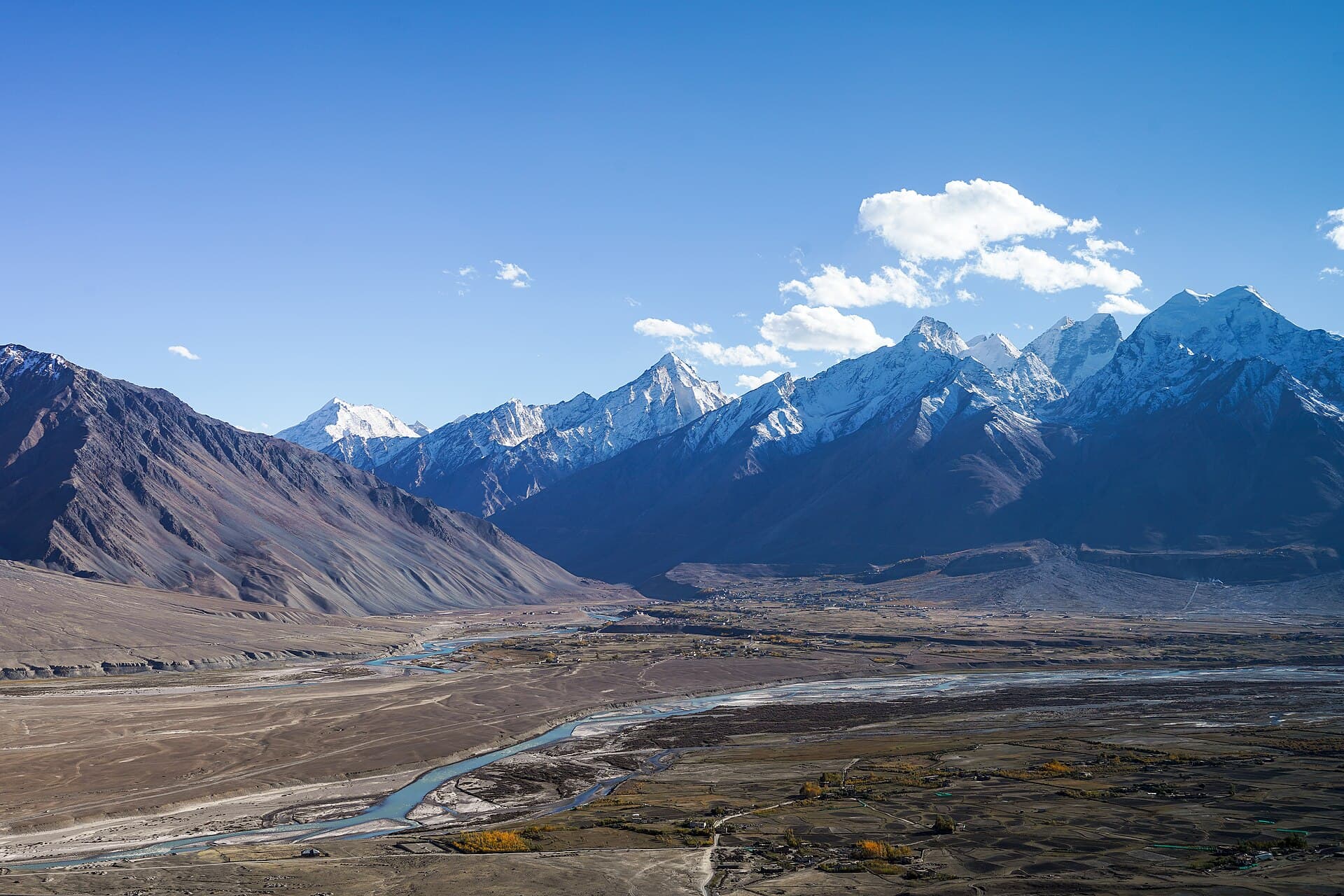
Ladakh sits in the rain shadow of the Greater Himalaya. During the Indian monsoon (July-September), humid air masses from the Bay of Bengal and Arabian Sea move north. They hit the southern slopes of the Himalayas and dump their moisture as rain — the monsoon that floods Delhi, drenches Nepal, and makes most of northern India impassable for trekking.
By the time the air crosses the Himalayan divide and reaches Ladakh on the northern side, it is dry. Leh receives approximately 100mm of precipitation per year — less than most deserts. Some parts of Ladakh receive even less.
This means the Indian monsoon season is Ladakh's best trekking window. When Nepal shuts down, when Kashmir is soaked, when Himachal Pradesh's trails turn to mud — Ladakh has clear skies and 300+ days of sunshine per year. The timing is inverted relative to the rest of the Himalaya.
Source: Himalayan Ecotourism — best time to visit; ClimatestoTravel — Leh.
Month-by-month
January
Leh: -2C day / -14C night. At 4,500-5,000m: -20C to -30C.
This is the Chadar window — when it works. The frozen Zanskar River trek runs January to mid-February, requiring 30-35 km of continuous solid ice. In 2026, it did not freeze at all. In 2025, the start was delayed by a week. The Chadar is increasingly unreliable. Snow Leopard treks in Hemis NP begin late in the month.
Roads: Manali-Leh closed. Srinagar-Leh historically closed, but BRO kept Zoji La open through winter 2025-26 for the first time. Access by air only (weather permitting — flights cancel frequently in winter).
February
Leh: 0C day / -12C night. At altitude: -18C to -25C.
Peak Snow Leopard trek season. Hemis National Park hosts 9-12 regularly sighted individuals. Top operators claim near-100% sighting rates on multi-day expeditions. These are specialist trips — expensive, cold, and magnificent.
The Chadar window closes mid-February. Road access remains limited.
March
Leh: 6C day / -5C night. Pre-season. All high passes are closed under snow. No trekking. The Srinagar-Leh Highway may begin to open late in the month depending on snowfall.
April
Leh: 12C day / 0C night. Transition month. Roads are being cleared. BRO crews work around the clock on Manali-Leh and Srinagar-Leh. No trekking — passes remain snow-covered. Early cultural tourism is possible in the Indus Valley (Leh, Thiksey, Hemis) if you can get there.
May
Leh: 17C day / 4C night. At 4,500-5,000m: 0C to -5C.
The Srinagar-Leh Highway typically opens in May, making road access possible. The Manali-Leh Highway opens late May — in 2025, civilian traffic was permitted from May 27; in 2024, from May 19.
Early-season trekking is technically possible but not recommended. High passes still carry significant snow. River crossings are swollen with snowmelt. The safe trekking window has not yet opened.
Source: Discover Leh Ladakh — Manali-Leh status 2026.
June
Leh: 22C day / 8C night. At altitude: 2C to -3C.
The trekking season begins, but June carries a specific hazard: snowmelt river crossings. On the Markha Valley trek, day 1 from Chilling involves 20+ river crossings that multiple sources describe as "extremely dangerous" during June snowmelt. Water levels are high, currents are strong, and the crossings are unavoidable on the standard route.
June is quieter than July-August. If you choose June, start from the Spituk/Ganda La approach to the Markha (which avoids the worst river crossings) or wait until late June when melt volumes decrease.
The Hemis Festival (Cham mask dances) typically falls in late June or early July — one of Ladakh's most significant cultural events.
Source: Against the Compass — Markha Valley guide.
July
Leh: 25C day / 12C night. At altitude: 5C to 0C.
Peak season. All passes are open. River crossings are manageable. Weather is warm and mostly clear with occasional brief rain (the monsoon's faint overflow). This is the most popular month for Markha Valley, Lamayuru-Alchi, and Rumtse-Tso Moriri.
Crowds on the Markha Valley are at their highest. Homestays fill up in popular villages. Parachute cafes (canvas shelters selling tea and noodles) appear along the route.
July is the hottest month in Leh. At altitude, temperatures are comfortable for trekking — warm enough during the day that you shed layers, cold enough at night to remind you of the elevation.
August
Leh: 25C day / 11C night. At altitude: 5C to 0C.
Still peak season, with slightly more cloud cover than July. August is the peak tourist month overall — Pangong, Nubra, and the road circuits are packed with domestic tourists. On the treks, crowds thin slightly compared to July.
The Rumtse to Tso Moriri trek and the Zanskar traverse (Padum to Lamayuru) are at their best in August, with all high passes clear and rivers fordable.
Late August can bring occasional heavier rain — August 2025 saw 80.3mm, the highest rainfall in 15 years, an indicator of destabilized weather patterns. This is still well within manageable limits for trekking, but flash flooding in narrow valleys is a risk.
Source: NewsGram — climate data.
September
Leh: 20C day / 6C night. At altitude: 0C to -5C.
The sweet spot. September delivers the best combination of clear skies, quiet trails, and comfortable temperatures. Late September sees only 3-5 foreign trekkers per village on the Markha. Parachute cafes close. Homestay families have time to talk.
High passes remain open through mid-September. Kongmaru La (5,260m) and Ganda La (4,960m) are clear. The Zanskar traverse is feasible until mid-September. Nights are cold — bring a -10C sleeping bag for camps above 4,500m.
The downside: shorter days. By late September, you lose an hour of usable light compared to July.
Source: Against the Compass; Ride and Fire — Ladakh weather 2026.
October
Leh: 12C day / -2C night. At altitude: -5C to -10C.
Season ending. Some high passes begin closing under early snow. The Manali-Leh Highway closes around late October to mid-November (2025: November 20). Lower-altitude routes (Sham Valley, Lamayuru) are still feasible in early October. Upper Markha and anything above 5,000m is a gamble.
November-December
Leh: 5C to -1C day / -8C to -12C night.
Roads close. Winter sets in. The Srinagar-Leh Highway historically closes. The Manali-Leh Highway is impassable. Access is by air only. No trekking unless you are a Snow Leopard expedition preparing for a February departure.
Continue reading Chadar Trek — the frozen river that didn't freeze in 2026 →
Temperature at altitude — the numbers that matter
Leh temperatures are misleading for trekkers. You are not staying in Leh. You are sleeping at 4,500-5,000m.
| Month | Leh (3,524m) | At 4,500-5,000m | Notes |
|---|---|---|---|
| June | 22C / 8C | 2C to -3C | Season opens. Cold nights at altitude |
| July | 25C / 12C | 5C to 0C | Warmest. Comfortable trekking |
| August | 25C / 11C | 5C to 0C | Similar to July, slightly more cloud |
| September | 20C / 6C | 0C to -5C | Cold nights. Clear days |
| January (Chadar) | -2C / -14C | -20C to -30C | Survival conditions. Specialized gear |
A three-season sleeping bag rated to -5C is insufficient for camps above 4,500m in September. Bring a bag rated to -10C minimum. For the Chadar, -30C rated gear is standard.
Source: ClimatestoTravel — Leh; Lehladakhindia.com — climate.
Road openings — the access calendar
Your trekking season is constrained by road access unless you fly.
| Road | Typical opening | 2025 opening | Typical closure | Notes |
|---|---|---|---|---|
| Srinagar-Leh (NH1) via Zoji La | May | Early May | November-December | BRO kept Zoji La open through winter 2025-26 for the first time |
| Manali-Leh (NH3) | Late May | May 27 (civilians) | Mid-November (Nov 20 in 2025) | Atal Tunnel open year-round to Keylong |
| Nimmu-Padum-Darcha (Zanskar) | June | June (estimated) | October | Closed March 15, 2026 due to snow |
The Atal Tunnel (9.02 km, opened October 2020) bypasses Rohtang Pass and keeps the Manali-Keylong section open year-round. But the passes beyond Keylong — Baralacha La, Lachulung La, Tanglang La — still close under snow from November to May.
The Zoji La Tunnel (14.15 km, 66.5% complete as of May 2026, target February 2028) will eventually make the Srinagar-Leh route all-weather. When it opens, Ladakh will have year-round road access for the first time in history. This changes everything — pricing, crowding, cultural preservation, winter tourism economics.
Source: Discover Leh Ladakh — road status; Wikipedia — Zoji-la Tunnel.
The Chadar window — and why it is closing
The Chadar trek on the frozen Zanskar River operates in a January to mid-February window, when the river's surface freezes thick enough to walk on. The required minimum is 30-35 km of continuous solid ice, reportedly 6-10 feet thick [operator sources; no official standard published].
Recent history:
| Year | Status | Notes |
|---|---|---|
| 2024 | Truncated | Route shortened due to NPD road construction debris. 584 trekkers total |
| 2025 | Delayed | Scheduled January 7, postponed to January 13 due to delayed freeze |
| 2026 | Cancelled entirely | River never froze. First total cancellation in living memory |
Two forces are compressing the Chadar window simultaneously:
- Climate change. Winter 2025-26 was the warmest in eight years. Average December-February temperature was -8.6C — significantly above the -20C to -30C peaks needed for reliable ice formation.
- The Nimmu-Padum-Darcha road. Construction debris entering the Zanskar River disrupted ice formation patterns. The road that will eventually provide year-round access to Zanskar is simultaneously destroying the frozen river route that served as winter access for centuries.
If you are planning a Chadar trek, book with operators who offer full refunds or flexible rescheduling in case of cancellation. Do not treat it as guaranteed.
Source: NewsGram — Chadar cancellation 2026; Press Post India — suspension notice.
Trek-by-trek season guide
| Trek | Window | Peak month | Why |
|---|---|---|---|
| Markha Valley | Mid-June to mid-September | July-August | June river crossings dangerous. September quiet but cold |
| Rumtse to Tso Moriri | July to September | August | All four passes must be clear of snow |
| Lamayuru to Alchi | June to September | July | Tar La must be snow-free |
| Zanskar traverse (Padum to Lamayuru) | July to September | August | Multiple passes above 5,000m |
| Chadar (frozen river) | January to mid-February | Mid-January | Increasingly unreliable (see above) |
| Snow Leopard trek | February to March | February | Winter-only. Cold but clear |
Source: [Multiple operator sources cross-referenced with research lens data].
The September argument
July-August is the peak season by volume. But September deserves consideration for experienced trekkers.
Advantages: Clearer skies than July-August. Trails are empty. Homestay families are less rushed and more engaged. Prices may drop as operators try to fill late-season slots. The Markha Valley in late September has been described as hosting only 3-5 foreign trekkers per village.
Risks: Shorter days. Colder nights (you need a proper winter bag above 4,500m). Some high passes may receive early snow in late September. The Zanskar traverse becomes marginal after mid-September.
The case: If you are a strong trekker who carries good gear and does not need the social energy of peak season, September delivers a quieter, more authentic version of Ladakh. The trade-off is cold and uncertainty. For a first visit to Ladakh, July is the safer bet. For a return visit, September is where the magic sits.
Source: Against the Compass.
8 Sources
- climatestotravel.comClimates to Travel — Leh climate
- tribuneindia.comThe Tribune — Chadar trek postponed as Zanskar river fails to freeze
- journals.plos.orgPLOS ONE — Snow leopard distribution and population in Ladakh (Trans-Himalaya)
- nhidcl.comNHIDCL — Zojila Tunnel: A Gateway to Ladakh's Prosperity
- tribuneindia.comThe Tribune — BRO keeps Zoji La Pass open through winter
- downtoearth.org.inDown To Earth — Leh records highest rainfall in 52 years (August 2025)
- tribuneindia.comThe Tribune — Manali-Leh road reopens for light vehicles via Baralacha-La
- againstthecompass.comAgainst the Compass — Markha Valley trek guide