The altitude trap
Cusco sits at 3,399 meters. Lima sits at sea level. The flight between them takes 1 hour and 15 minutes. This is one of the most aggressive altitude gains in commercial aviation tourism worldwide, and the consequences are predictable.
An estimated 40-50% of travelers arriving directly in Cusco from low elevation experience some degree of acute mountain sickness (AMS) within the first 24 hours — headache, nausea, fatigue, insomnia. For the 10-15% who develop moderate symptoms, the first two days of a trip are effectively lost.
The standard advice — drink water, rest, try coca tea — is not wrong, but it obscures a structural solution that experienced operators know and first-time visitors routinely miss: start in the Sacred Valley, not Cusco.
Ollantaytambo sits at 2,792m. Urubamba at 2,850m. Pisac at 2,972m. These are 400-600 meters lower than Cusco. The difference is physiologically meaningful. Fly into Cusco, transfer immediately to the Sacred Valley (1-1.5 hours by road), spend 2-3 nights acclimatizing at lower altitude, then ascend to Cusco already partially adapted. The cost is roughly the same — Sacred Valley accommodation prices are comparable to Cusco. The return on not being bedridden is enormous.
For trekkers planning to cross passes above 4,000m — Dead Woman's Pass at 4,215m on the Inca Trail, Salkantay Pass at 4,630m — the acclimatization window is not optional. It is the difference between completing the trek and being evacuated from it.
Minimum acclimatization before trekking: 48-72 hours at altitude. Ideally 2-3 full days before any trek exceeding 4,000m.
Pharmacological options: Acetazolamide (Diamox) 125-250mg twice daily, started 24 hours before arrival. Available over-the-counter in Cusco pharmacies for approximately S/5 (~$1.50). Coca leaf tea (mate de coca) is the traditional local remedy — culturally significant, modest clinical evidence for mild symptom relief.
Four routes, four realities
Every English-language guide to "trekking to Machu Picchu" treats the decision as primarily aesthetic — which trail has the best views. The actual decision is structural: different permit systems, different cost floors, different logistics, and different levels of physical demand. The routes are not interchangeable.
Route 1: The Classic Inca Trail
43 km, 4 days, max 4,215m. Daily cap: 500 people (including guides and porters). Mandatory licensed operator. Cost: $620-$2,500.
The Classic Inca Trail is a 43-km fragment of the Qhapaq Nan, the Inca road network that once spanned 30,000-40,000 km across six modern nations. The trail passes through three mountain passes above 4,000m, cloud forest, and a sequence of Inca ruins — Llactapata, Runkurakay, Sayacmarca, Phuyupatamarca, Wiñay Wayna — before arriving at the Sun Gate (Inti Punku) overlooking Machu Picchu.
The defining feature is the permit system. SERNANP enforces a strict daily cap of 500 persons, including trekkers, guides, porters, and cooks. The effective trekker allocation is approximately 200-300 per day. Permits are non-transferable, passport-linked, and must be purchased through a licensed Peruvian operator. Independent trekking is prohibited.
For May and June, permits sell out within hours of release. For September-October, booking 4-6 weeks ahead is typically sufficient. The "impossible to get" narrative is seasonal marketing, not year-round reality.
The trail closes every February for maintenance.
Route 2: The Salkantay Trek
74 km, 5 days, max 4,630m. No daily cap. No government permit required. Cost: $250-$800.
The Salkantay passes through glacial terrain at 4,630m, descends through cloud forest, and arrives at subtropical jungle before reaching Aguas Calientes by train or foot. The ecological diversity — from ice to orchids in 5 days — is objectively greater than the Inca Trail.
No permit cap. No lottery. Book a week before if needed. The only limitation is campsite capacity at popular stops, which self-regulates through operator coordination.
Why do operators push the Inca Trail instead? Three reasons, all economic. The permit scarcity lets operators charge 50-100% more for a shorter trek with lower logistical complexity. "I hiked the Inca Trail" carries cultural cachet that "I did the Salkantay" does not. And the permit system creates customer lock-in that open-access Salkantay cannot replicate.
The Salkantay's disadvantage is singular but significant: it does not arrive at Machu Picchu through the Sun Gate. Trekkers take a bus or train from the endpoint. The Inca Trail's final morning — walking through Inti Punku at dawn to see the citadel appear in the mist — is an experience the Salkantay cannot replicate.
Route 3: Choquequirao + Machu Picchu
~93 km, 8-9 days, max ~4,600m. No trekker quota for Choquequirao. Cost: $540-$1,200.
Choquequirao is a 16th-century Inca complex three times the size of Machu Picchu, with only 30-40% excavated. It receives fewer than 30 visitors per day, compared to Machu Picchu's 5,600. The access is the filter: a 1,500-meter descent into the Apurimac canyon, then a 1,500-meter climb to the ruins. There are no trains, no buses, no shortcuts.
The combined route — Cachora to Choquequirao, over Yanama Pass (~4,600m), down to Santa Teresa, and into Machu Picchu — is the most demanding multi-day trek in the Cusco region, with cumulative ascent exceeding 7,000m. This is not a hike with ruins attached. It is an expedition that happens to pass through two Inca cities.
Route 4: Train + Day Visit
No trekking required. Cost: $80-$600 for train + S/152-200 ($44-58) entry.
Take the train from Ollantaytambo to Aguas Calientes. Bus up. Walk the circuit. Bus down. Train back. No altitude passes, no camping, no porter teams. This is how the majority of Machu Picchu's 5,600 daily visitors arrive.
The cost floor is set by two duopolies: PeruRail (owned by Belmond/LVMH) and Inca Rail control all rail access. Economy roundtrip from Ollantaytambo runs $80-100. Premium services reach $500-600. Consettur holds the sole bus concession from Aguas Calientes to the citadel: $35-36 roundtrip.
The budget alternative: the Hidroeléctrica backdoor. Bus from Cusco to Santa Maria (5 hours, $8-10), colectivo to Santa Teresa, shared taxi to Hidroeléctrica station, then walk 10 km along the railway tracks to Aguas Calientes. Total cost: $15-25 one way vs. $40-300 for the train. The walk is flat, scenic, and well-trafficked by backpackers. The trade-off: it adds a full day each direction, the road is accident-prone in wet season, and walking along active railway tracks carries inherent risk.
Continue reading The Classic Inca Trail — 43 km, Dead Woman's Pass, and the 500-person daily cap →
Bingham, "discovery," and the road system that made it possible
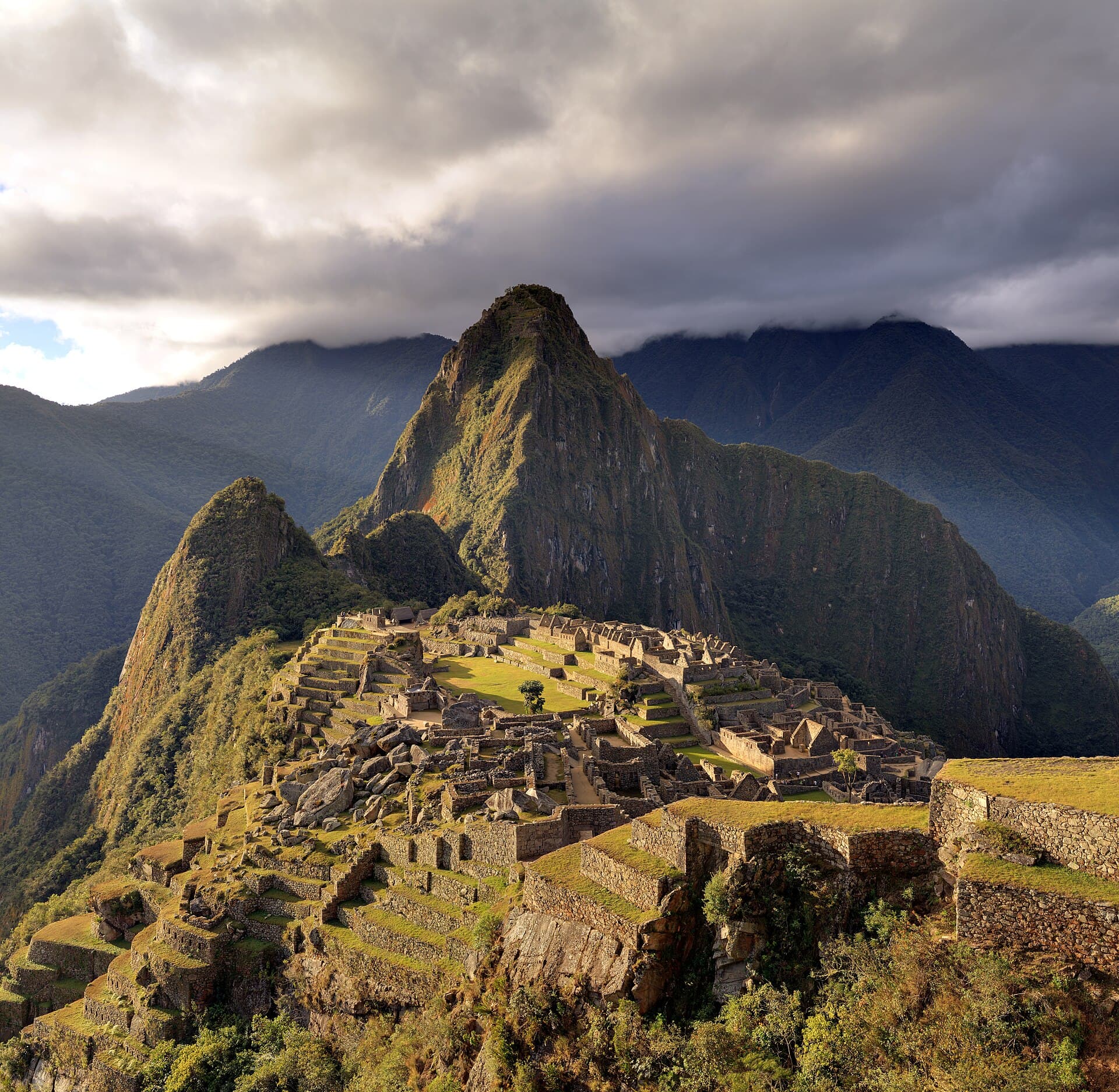
On July 24, 1911, American historian Hiram Bingham III arrived at a ridge above the Urubamba River guided by a local farmer named Melchor Arteaga. Quechua families had been living on and farming the terraces for generations. In 1902, Peruvian explorer Agustin Lizarraga had carved his name and year in charcoal on the Temple of the Three Windows — a fact Bingham knew but downplayed.
Radiocarbon dating places construction during the reign of Sapa Inca Pachacuti (~1438-1471). The site functioned as a royal estate and ceremonial center, not a "lost city" in the popular imagination. It was never lost — only unknown to Europeans.
The 43-km trail that tourists walk today is a fragment of something vastly larger. The Qhapaq Nan — the Inca road network — spanned an estimated 30,000-40,000 km across six modern nations: Peru, Bolivia, Ecuador, Colombia, Chile, and Argentina. UNESCO inscribed it in 2014 after a joint nomination by all six countries, the first multi-national submission of its kind. The inscription covers 137 component areas and 308 associated archaeological sites.
Cusco itself — "Qosqo," meaning "navel" or "center" in Quechua — was deliberately laid out in the shape of a reclining puma. Sacsayhuaman fortress formed the head. The main plaza (Huak'aypata, now Plaza de Armas) was the heart. Qorikancha, the Temple of the Sun, sat at the body's center. After the Spanish conquest of 1533, colonial authorities built churches and mansions directly atop Inca foundations. The Convent of Santo Domingo sits on Qorikancha's walls. What survives of Sacsayhuaman is the foundation layer — the stones too large (some over 120 tonnes) for the Spanish to move. Modern Cusco is literally a palimpsest: Inca precision below, baroque plaster above.
The porter law
The Inca chasqui system was a relay network of elite runners stationed at tambos every ~3 km along the Qhapaq Nan, capable of relaying a message from Cusco to Quito in approximately one week. Modern Inca Trail porters are overwhelmingly Quechua-speaking men from rural communities in the Cusco region — direct cultural descendants of the people who built and maintained these roads.
Peru enacted landmark porter protection legislation through Law No. 31624, with significant amendments via Law No. 32137 published in October 2024.
Key provisions: maximum load of 20 kg for men and 15 kg for women (including personal and company equipment). Minimum daily wage of S/138 per shift. Cook supplement of 30% above minimum. Maximum 48-hour work week. Five days mandatory rest between shifts. Minimum age raised to 18. Supplementary risk work insurance mandatory. Employer must provide clothing, footwear, sleeping accommodations, and lumbar support belts. Porters' loads are weighed at KM 82 before entry — overloaded groups are turned back.
The impact on pricing: operational costs increased 200-300% compared to 2022, driving tour prices up 50-100%. This is a net positive. It prices out exploitative budget operators and improves conditions for workers who are the backbone of the trek.
Price signal: if a 4-day Inca Trail package costs less than ~$600, question where the cost savings come from. Porter wages are often the first thing cut by budget operators.
The train duopoly
There is no road to Aguas Calientes. Every visitor who does not walk in on a multi-day trek must take the train. Two companies control all rail access: PeruRail (owned by Belmond, which is owned by LVMH) and Inca Rail.
Economy roundtrip from Ollantaytambo: $80-100 (PeruRail Expedition or Inca Rail Voyager). Panoramic service: $140-180. Premium: $250-350. Luxury (PeruRail's Hiram Bingham, named after the man whose "discovery" is contested): $500-600.
For context: a roundtrip economy train ticket represents roughly 10-15 days of minimum wage in Peru. The duopoly creates a pricing floor that makes Machu Picchu inaccessible to many Peruvians.
2026 changes
Three regulatory shifts affect planning for 2026:
1. Separate permits. Starting January 1, 2026, the Inca Trail permit no longer includes Machu Picchu citadel entry. These are now two independent booking systems with different sale dates and availability windows. Trekkers must secure both. This is the single biggest logistical change in years and has caught many operators off guard. Confirm your operator handles both, or you may arrive at the Sun Gate without a ticket to enter the citadel.
2. Huayna Picchu closure. The iconic steep peak behind Machu Picchu (normally 400 visitors/day) is closed for the entirety of June 2026 for maintenance. If Huayna Picchu is a priority, plan around this.
3. Circuit enforcement. Machu Picchu now operates 3 main circuits with 10 route variants. Rangers actively enforce circuit compliance. Straying from your assigned route results in immediate removal with no refund. No re-entry — once you exit, your visit is over. Maximum stay: 4 hours for standard circuits. Timed entry in 9 daily slots from 06:00 to 14:00.
Choquequirao: the window
This is a genuine time-sensitive opportunity.
Now: 5,000-10,000 visitors per year. Multi-day trek required. You share the ruins with 20-50 people on a busy day. 60-70% of the site remains buried under vegetation. No railings, no circuits, no time slots.
After the cable car: Projected 1.2 million visitors per year. A 20-minute ride. Machu Picchu-level crowds at a site with zero infrastructure — no restrooms, no medical care, no sanitation for mass tourism.
The cable car project has been "about to start" for a decade. But the PPP is now formally structured at $220-261 million, PROINVERSION is running the tender, and political will exists because Cusco region needs tourism revenue diversification. Even if construction takes 5-7 years from contract award, the window is finite.
The contrarian move: trek Choquequirao now, before the cable car changes what it means to visit.
What this means for planning
- Start in the Sacred Valley, not Cusco. The 400-600m altitude difference buys your body 2-3 critical acclimatization days. The cost is the same. The return on not being bedridden is enormous.
- Book the Inca Trail 6-8 months ahead for May-June. For September-October, 4-6 weeks is fine. The scarcity is real but seasonal.
- The Salkantay is the better value trek for scenery-per-dollar. The Inca Trail wins on history and the Sun Gate arrival. Know what you are paying for.
- 2026's biggest gotcha: separate permits. Inca Trail permit and Machu Picchu entry are now independent purchases. Confirm your operator handles both.
- The porter law is working. Higher prices reflect fair wages. Any operator charging under $600 for a 4-day Inca Trail should be questioned about labor practices.
- Choquequirao is a once-in-a-generation window. 30 visitors per day at a site three times the size of Machu Picchu, most of it still buried. This will not last.
- The train duopoly sets the floor. Budget $80-100 roundtrip minimum for the train, or accept the Hidroeléctrica backdoor and the extra day it costs.
18 Sources
- visitaareasnaturales.sernanp.gob.peSERNANP — Inca Trail Sector
- whc.unesco.orgUNESCO — Qhapaq Nan
- machupicchu.gob.pemachupicchu.gob.pe — Circuits
- peru-explorer.comPeru Explorer — Permits 2026
- peru-explorer.comPeru Explorer — Budget 2026
- perurail.comPeruRail
- incarail.comInca Rail
- salkantaytrekking.comSalkantay Trekking — Porter Law
- busquedas.elperuano.peEl Peruano — Law 32137
- inkayniperutours.comInkayni Peru Tours — Choquequirao Cable Car
- bnamericas.comBNAmericas — Cable Car PPP
- voyagers.travelvoyagers.travel — Altitude Sickness
- tripcusco.comtripcusco.com — Altitude Guide 2026
- adiosadventuretravel.comAdios Adventure Travel — 2026 Permits
- ticketmachupicchu.comTicket Machu Picchu — Huayna Picchu Closure
- fertur-travel.comFertur Travel — 2026 Rules
- history.comHistory.com — Bingham 1911
- tourleadersperu.comTour Leaders Peru — Discovery Debate
18 sources consulted. Prices verified May 2026. Exchange rate: 1 USD = ~3.46 PEN.