What the Inca Trail is
A 43-km section of the Qhapaq Nan — the Inca road network that once spanned 30,000-40,000 km across six nations. The Classic Inca Trail starts at KM 82 (Piscacucho, 2,600m), crosses three mountain passes above 4,000m, passes through a sequence of Inca ruins, and arrives at Machu Picchu via the Sun Gate (Inti Punku) on the morning of day 4.
This is not a wilderness hike. It is the most regulated trek in South America: a daily cap of 500 persons including guides and porters, mandatory licensed operators, passport-linked non-transferable permits, and as of 2026, a separate Machu Picchu entry ticket.
| Attribute | Detail |
|---|---|
| Distance | 43 km (26 mi) |
| Duration | 4 days / 3 nights |
| Max altitude | 4,215m — Dead Woman's Pass (Warmiwanusca) |
| Difficulty | Moderate-Hard |
| Permit required | Yes — non-transferable, passport-linked |
| Daily quota | 500 total (~200-300 trekkers + ~200-300 staff) |
| Independent trekking | Prohibited |
| Trail closed | Every February |
Day by day
Day 1: KM 82 → Wayllabamba (11 km)
Elevation: 2,600m → 3,000m. Gain: +400m. Time: 5-6 hours.
The trek begins at the KM 82 checkpoint (Piscacucho), reached by operator van from Cusco via Ollantaytambo (approximately 2.5 hours). SERNANP rangers verify permits and identity documents here — any discrepancy between your passport and the permit means denial of entry with zero recourse.
The first day is a gentle warm-up along the Urubamba River valley. The trail passes through the ruins of Llactapata (a small Inca agricultural site) and climbs gradually through eucalyptus groves and agricultural terraces. The landscape is pastoral — farmers work terraced fields much as they have for centuries.
Camp at Wayllabamba (3,000m) is the last point with significant tree cover. Enjoy the relative comfort. Day 2 is different.
Day 2: Wayllabamba → Pacaymayo (12 km)
Elevation: 3,000m → 4,215m → 3,600m. Gain: +1,215m, then -615m. Time: 7-9 hours.
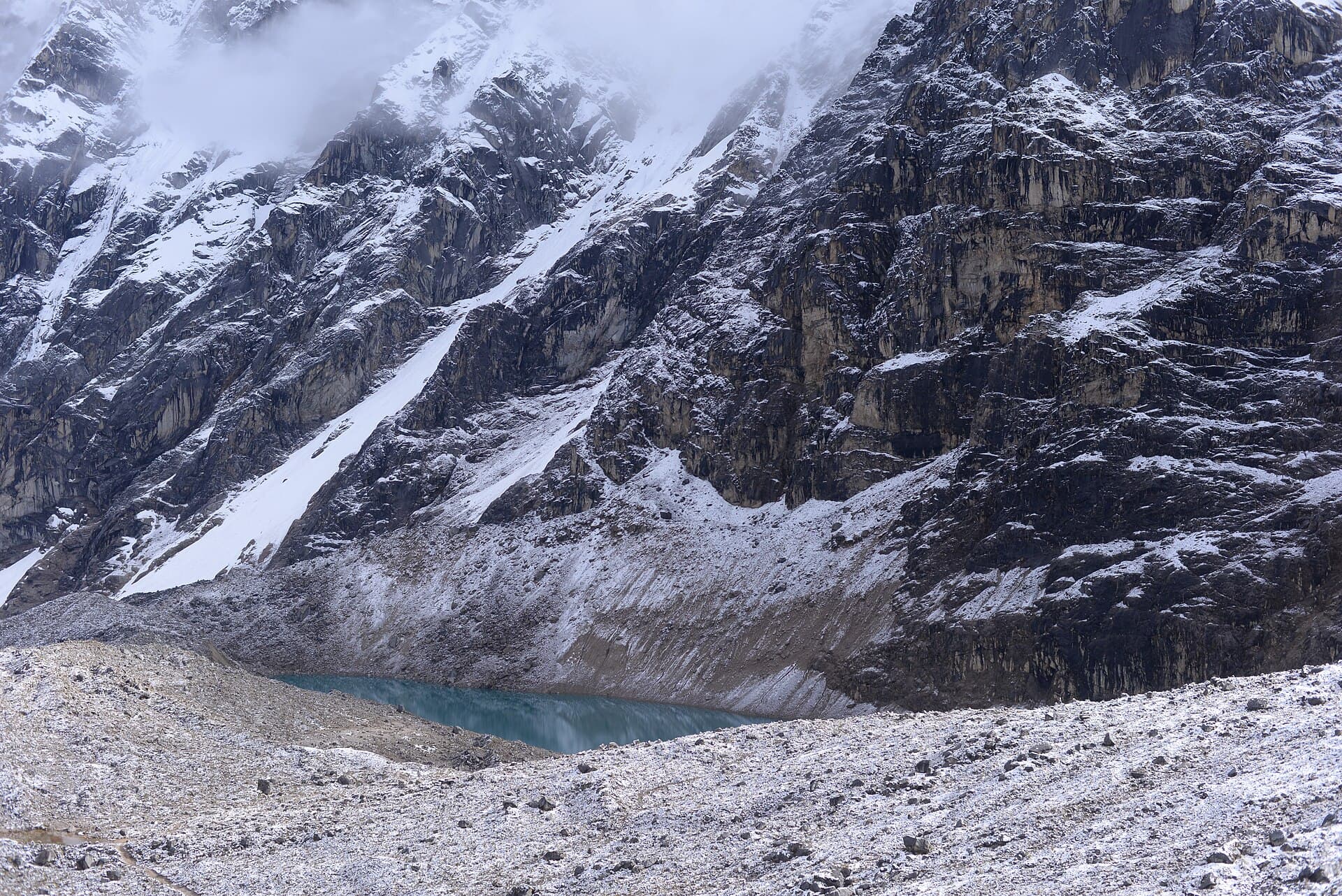
The hardest day. From Wayllabamba, the trail climbs relentlessly through cloud forest and then above the treeline into high-altitude grassland (puna). The target is Dead Woman's Pass (Warmiwanusca) at 4,215m — the highest point on the trail and for many trekkers the highest altitude they will ever reach.
The name comes from the pass's profile when viewed from certain angles, which resembles a supine woman. The final approach is a steep stone staircase that feels endless at altitude. AMS symptoms — headache, nausea, shortness of breath — are common here, even for acclimatized trekkers.
The descent from the pass to Pacaymayo camp (3,600m) is steep on Inca stone steps. Trekking poles are strongly recommended for the knees. Camp is in a sheltered valley with views back up toward the pass.
This is the day that determines whether your acclimatization was sufficient. Trekkers who skipped the recommended 2-3 days of altitude adjustment before starting often struggle here.
Day 3: Pacaymayo → Wiñay Wayna (16 km)
Elevation: 3,600m → 3,950m → 3,700m → 2,650m. Gain: +350m, -1,300m. Time: 8-10 hours.
The longest day in distance and the richest in archaeology. The trail crosses two more passes — Runkurakay Pass (~3,950m) and Phuyupatamarca Pass (~3,700m) — but neither is as demanding as Dead Woman's Pass.
The ruins along this section are the reason the Inca Trail exists as a trekking route, not just a long walk. Runkurakay is a circular watchtower with views across the Vilcabamba range. Sayacmarca ("Inaccessible Town") sits on a narrow ridge with steep drops on three sides — a defensive position with sophisticated water channels. Phuyupatamarca ("Town Above the Clouds") is an Inca ceremonial bathing complex with five cascading stone fountains, still functioning after 500+ years.
The descent from Phuyupatamarca to Wiñay Wayna drops dramatically through cloud forest on Inca stone steps — lush, mossy, and increasingly tropical. Wiñay Wayna (meaning "Forever Young" in Quechua) is the last major ruin before Machu Picchu: terraced agriculture cascading down a steep hillside with a ceremonial complex at the top. Many guides consider this site as architecturally impressive as Machu Picchu itself, minus the fame.
Camp near Wiñay Wayna. Tomorrow starts early.
Day 4: Wiñay Wayna → Sun Gate → Machu Picchu (4 km)
Elevation: 2,650m → 2,745m → 2,430m. Time: 2-3 hours.
A pre-dawn start, typically 3:30-4:30 AM. The final 4 km from Wiñay Wayna to the Sun Gate (Inti Punku) follows a gently undulating trail through cloud forest. Headlamps are standard.
The approach to the Sun Gate is the reason people choose the Inca Trail over every alternative. As you crest the final rise, Machu Picchu appears below you — stone terraces cascading down the ridge, Huayna Picchu rising behind, and often a layer of morning cloud in the valley below. On clear days, the first light hits the citadel as you arrive. On cloudy days, the ruins appear and disappear through the mist.
This moment cannot be replicated by arriving by train. It is the Inca Trail's singular advantage over every other route to Machu Picchu.
From the Sun Gate, the trail descends for approximately 45 minutes into the citadel complex. As of 2026, you need a separate Machu Picchu entry ticket for the same date — the Inca Trail permit alone does not grant citadel access.
Continue reading Four routes to Machu Picchu, four different realities — and the altitude trap that ruins 30% of first days →
The permit system
How it works
The Peruvian government (via SERNANP and the Ministerio de Cultura) enforces a strict daily cap of 500 persons. This includes trekkers, guides, porters, and cooks. The effective trekker allocation is approximately 200-300 per day.
Rules:
- No independent trekking. Every person on the trail must be part of an organized group with a licensed Peruvian operator.
- Permits are non-transferable. Issued to a specific individual with passport details. Cannot be changed, transferred, resold, or refunded.
- Passport information required at booking: full legal name (exactly as on passport), passport number, expiration date, date of birth, nationality, gender.
Booking timeline
| Season | Book ahead | Notes |
|---|---|---|
| Peak (Jun-Aug) | 6-8 months | Hours to days after release |
| Shoulder (Apr-May, Sep-Oct) | 3-5 months | Weeks to sell out |
| Wet (Nov-Jan, Mar) | 1-3 months | Rarely sells out |
| February | N/A | Trail closed for maintenance |
Permits for the following year typically open for sale in October-November. Peak season dates (June, July, August) sell out within 24-72 hours of release.
The 2026 change: separate tickets
Critical: Inca Trail permits no longer include Machu Picchu entry as of January 1, 2026. These are now two independent booking systems with different sale dates and availability windows. Trekkers must secure both for the same date.
This creates a coordination problem. Some operators were slow to adapt and have been booking trail permits without corresponding citadel tickets. Confirm explicitly that your operator is handling both.
Operator pricing
The 4-day Classic Inca Trail market segments into three clear tiers:
| Tier | Price range | Group size | What you get |
|---|---|---|---|
| Budget | $620-$900 | 12-16 | Shared tents, basic meals, minimal gear |
| Mid-range | $900-$1,400 | 8-12 | Better food, personal tents, porter welfare compliance |
| Premium | $1,500-$2,500+ | 4-8 | Gourmet meals, private tents with mattresses, sometimes hot showers |
Included in mid-range and above: Inca Trail permit, all meals on trail, camping equipment, professional bilingual guide, porter team, return train ticket, hotel pickup/dropoff in Cusco.
NOT included at any tier (2026): Machu Picchu citadel entry ticket (S/152-200), sleeping bag rental ($15-25), trekking poles ($10-15), tips, personal snacks.
Cost breakdown
| Component | Cost |
|---|---|
| Government trail permit | ~$25 (included in package) |
| KM 82-88 Inca Trail entry | S/292 (~$77) adult |
| Machu Picchu entry (foreign adult) | S/152 (~$44) standard |
| Machu Picchu + Huayna Picchu | S/200 (~$58) |
| Return train (Aguas Calientes → Ollantaytambo) | $40-60 economy |
Porter welfare
The Porter Protection Law (Law 31624, amended by Law 32137) enforces a maximum load of 20 kg, minimum daily wage of S/138, mandatory insurance, and proper equipment. Loads are weighed at KM 82. If a 4-day package costs less than $600, ask where the savings come from.
The February closure
The Inca Trail closes every February for maintenance, enforced since 2002. Conservation crews repair trail sections, maintain terraces, clear vegetation, and restore camping areas. Machu Picchu itself remains open year-round — visitors use the train during February.
What to bring
Operators provide camping equipment and meals. Personal gear list for the 4-day trek:
Essentials: Passport (original, not copy). Daypack (40x35x20cm max per Machu Picchu rules). Rain jacket and waterproof pants. Warm layers (nights at 3,600-4,200m are cold). Headlamp. Water bottles (2L minimum). Sun protection. Trekking poles (rental available for $10-15).
Recommended: Sleeping bag liner (operators provide sleeping bags, but quality varies). Blister kit. Diamox if not acclimatized. Electrolyte packets. Cash for tips (guide: $30-50, porters: $20-30, cook: $15-20 per trekker for 4 days).
Prohibited at Machu Picchu: Food, drinks, plastic bottles larger than 500ml, drones, tripods, walking poles (unless elderly/accessibility exception), backpacks larger than 40x35x20cm.
The physical reality
The Inca Trail is rated Moderate-Hard, not because any single section is technical, but because of the cumulative effect of altitude, distance, and stone stairs.
Fitness requirement: You do not need to be an athlete. You need to be comfortable walking 6-8 hours per day on uneven terrain at altitudes where breathing is measurably harder. The specific challenge is sustained uphill walking at 3,500-4,200m, where oxygen saturation drops to roughly 60-65% of sea-level values.
Knees: The descent from Dead Woman's Pass and the stone steps throughout day 3 are hard on knees. Trekking poles reduce impact by approximately 25%. Most operators offer rental poles for $10-15 — take them.
Sleeping at altitude: Camp nights at 3,000-3,600m are cold (2-8 degrees C in dry season) and uncomfortable for many. Thin air, unfamiliar sounds, and basic toilet facilities (pit latrines at designated campsites) make sleep difficult. This is normal and expected. Bring earplugs, a sleeping bag liner for warmth, and accept that you will not sleep well on night 2.
Water and food: Operators provide all meals on trail — typically breakfast, lunch, afternoon snack, and dinner, prepared by a trek cook. Food quality varies dramatically by operator tier. Budget operators serve basic rice and chicken. Premium operators serve multi-course meals at altitude that rival Cusco restaurants. Water is boiled and treated by the cook team. Bring water purification tablets as backup.
Acclimatization before starting: The 2-3 days of acclimatization before starting the trail are not a suggestion — they are the difference between completing the trek and being evacuated. Trekkers who fly into Cusco and start the trail the next day account for a disproportionate share of altitude-related medical incidents on the trail. Details in the acclimatization guide.
Safety and evacuation
The Inca Trail has limited evacuation options. There are no helicopter landing zones on most of the trail, and weather frequently prevents aerial evacuation. Standard evacuation is by stretcher or mule to the nearest accessible point, then vehicle to Cusco. This can take 12-24+ hours depending on location.
Insurance requirement: Standard travel insurance typically excludes trekking above 4,000m — which rules out Dead Woman's Pass (4,215m). Required coverage: emergency medical evacuation (helicopter + fixed-wing to Lima), high-altitude trekking endorsement covering at least 5,000m, and trip cancellation (for non-refundable permits). Cost: $80-200 for a comprehensive policy covering a 2-week Peru trip.
Common medical issues: AMS (headache, nausea, fatigue), GI illness ("Cusco belly" affects 20-30% of visitors), knee pain on descents, blisters. Serious altitude complications (HACE, HAPE) are rare but require immediate descent.
The short alternative: KM 104
The 2-day Inca Trail variant starts at KM 104 instead of KM 82. It bypasses the hard climbing days and Dead Woman's Pass, joining the classic trail at Wiñay Wayna. You get the ruins and the Sun Gate arrival without the altitude passes. Entry fee: S/222 (~$59). Requires the same licensed operator and permit, but availability is easier. Good for travelers with limited time or altitude concerns.
The KM 104 variant is sometimes dismissed as "not the real Inca Trail." This framing misses the point. The archaeological content of the final section — Wiñay Wayna, the Sun Gate, the dawn arrival at Machu Picchu — is the trail's signature experience. The first two days are the physical challenge. Depending on priorities, the 2-day variant delivers the core experience at lower physical cost and easier permit availability.
14 Sources
- visitaareasnaturales.sernanp.gob.peSERNANP — Inca Trail Sector
- peru-explorer.comPeru Explorer — Permits 2026
- peru-explorer.comPeru Explorer — Budget 2026
- whc.unesco.orgUNESCO — Qhapaq Nan
- adiosadventuretravel.comAdios Adventure Travel — 2026 Permits
- yapaexplorers.comYapa Explorers — Permit Process
- incatrailmachu.comInca Trail Machu — Prices
- salkantaytrekking.comSalkantay Trekking — Porter Law
- ticketmachupicchu.comTicket Machu Picchu — February Closure
- inkatrail.com.peInka Trail — Availability
- alpacaexpeditions.comAlpaca Expeditions — Permits
- urosexpeditions.comUros Expeditions — Porter Law
- incatrailhikers.comInca Trail Hikers — Cost
- machupicchutrek.netMachu Picchu Trek — Cost
14 sources consulted. Prices verified May 2026.