The paradox
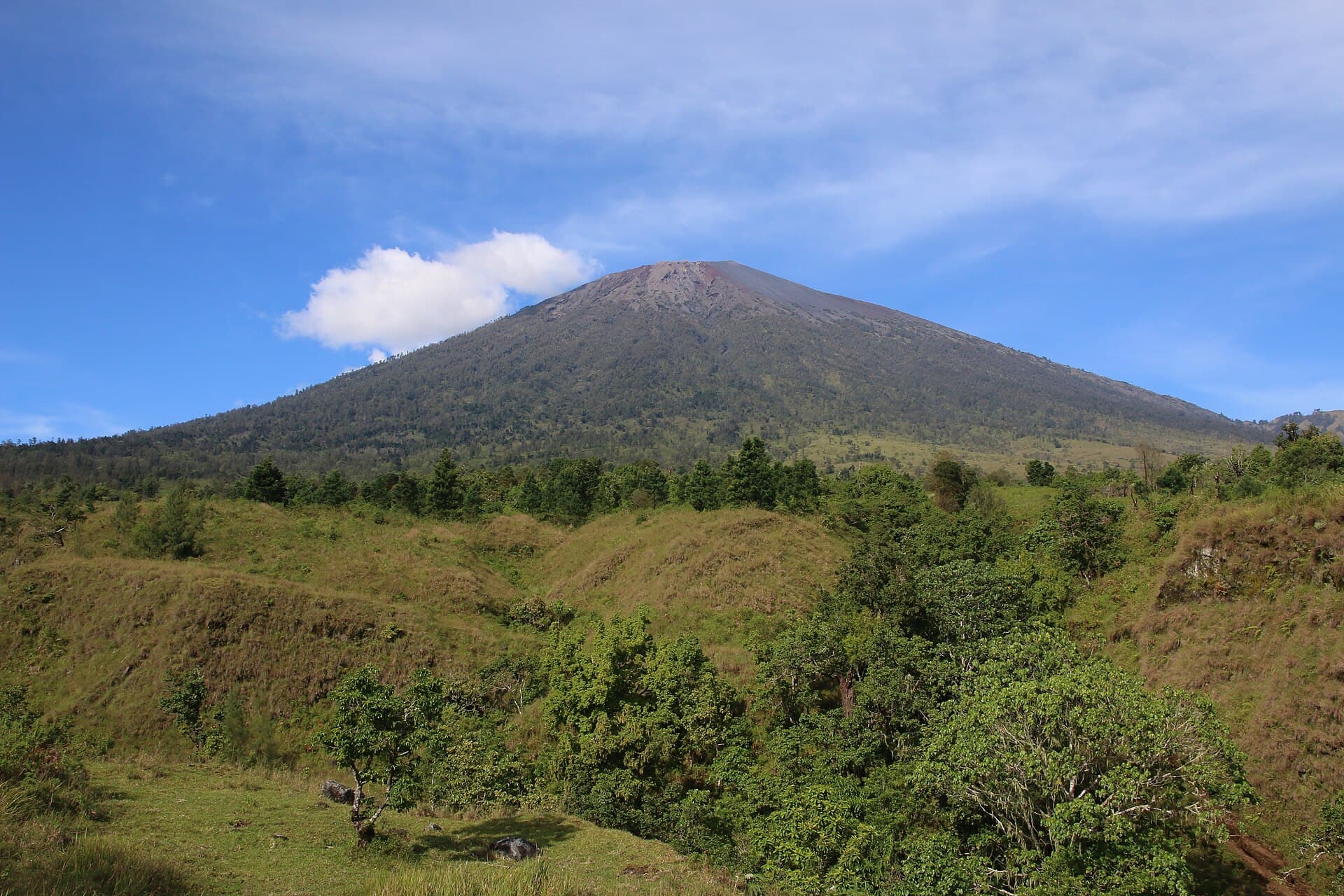
Carstensz Pyramid is 4,884 meters tall. That makes it the lowest of the Seven Summits by a wide margin — Vinson Massif in Antarctica edges it by 8 meters, and everything else towers above it. The technical climbing tops out at YDS 5.8–5.9 on fixed ropes, with a Tyrolean traverse across a gap that experienced rock climbers call moderate. The summit push from base camp takes a single day.
And yet this is what it costs:
| Mountain | Elevation | Guided expedition | Duration | Primary cost driver |
|---|---|---|---|---|
| Everest | 8,849m | $45,000–$65,000 | 60 days | Sherpa labor, permits ($11K), oxygen |
| Vinson | 4,892m | $43,800 | 14–21 days | Antarctic logistics, ALE monopoly |
| Carstensz | 4,884m | $8,700–$30,000 | 10–14 days | Permits (6 agencies), helicopter, security |
| Denali | 6,190m | $9,991 | 17–21 days | NPS permit ($400), guide labor |
| Aconcagua | 6,962m | $5,500–$11,000 | 18–21 days | Permit ($950), mule service |
| Kilimanjaro | 5,895m | $2,500–$6,000 | 5–9 days | Park fees, porter wages |
| Elbrus | 5,642m | $2,800–$4,800 | 7–10 days | Cable car, minimal permits |
Sources: Atlas and Boots; ExpedReview; One Step 4Ward
Carstensz costs more than Denali, Elbrus, and Kilimanjaro combined. The climbing itself is not why. To understand the price, you need to understand the gold mine, the war, the bureaucracy, and the glaciers.
Where the money goes
The spread between operators is enormous — $8,700 to $29,950 for what is functionally the same mountain, the same helicopter, the same permits. Here is why:
| Operator | Price | Base | Key differentiator |
|---|---|---|---|
| Ndeso / ExploreDesa | From $8,700 (4+ pax) | Indonesia | Local operator, lowest price. Minimum 3 participants. |
| Adventure Carstensz | $8,000–$15,300 | Indonesia | Sliding scale: solo $15.3K, 4 pax $8K each. |
| Adventure Peaks | GBP 14,980–17,035 (~$19K–$22K) | UK | 14-day program. Flights from London in higher tier. |
| Alpine Ascents | $26,000 | USA | 98% summit success since 1994. AMGA guides. $5K non-refundable deposit. |
| Madison Mountaineering | $26,500 | USA | $5,000 deposit. Two departures in 2026. |
| Furtenbach Adventures | Price on request | Austria | IFMGA/AMGA lead guide. EU tour operator liability. |
The cost structure, roughly:
- Helicopter charter: $3,000–$5,000 per seat round-trip (plus standby/weather-risk buffer; a single return flight costs $3,600)
- Permits and government clearances: $2,000–$4,000 (six agencies across national and provincial tiers)
- Security escorts: $1,000–$2,000 (armed military/police accompaniment is mandatory)
- Local staff, porters, tribal liaison: $1,000–$2,000
- Accommodation (Bali + Timika): $500–$1,500
- Food and base camp logistics: $1,000–$1,500
- Western guide salary + overhead: $3,000–$8,000 (the biggest variable between local and Western operators)
- Operator margin: 15–25%
What a Western operator adds for the $15,000–$20,000 premium: an AMGA-certified lead guide, trip-cancellation support, higher guide-to-client ratios, more inclusive logistics, brand insurance, and — this matters — experience navigating Papua's bureaucracy when things go wrong. What they do not add: a different mountain, a different helicopter, or different permits.
Neither choice is wrong. One trades money for comfort and institutional backup. The other trades comfort for savings and requires more self-sufficiency in a place where self-sufficiency is genuinely tested.
Continue reading Indonesia's volcanoes — the fire monopoly Nepal doesn't have →
The six-agency permit gauntlet
Climbing Carstensz requires clearance from:
- BAIS — Badan Intelijen Strategis (Indonesian Military Intelligence)
- TNI — Tentara Nasional Indonesia (Armed Forces command)
- Ministry of Foreign Affairs — Jakarta
- Ministry of Tourism — Jakarta
- Federal Police — Polri headquarters
- Provincial Government — Jayapura, Papua
Plus tribal permission from the Amungme and Dani peoples — a letter of recommendation from tribal leaders, with customary donations.
Forms must be submitted months in advance to offices in Jakarta. There is no centralized portal. Provincial authorities in Jayapura do not always honor national permits. Armed soldiers in camouflage may check your permits at base camp and at airports near the mountain. CarstenszPapua
A failed 2005 expedition paid $6,500 per person — $52,000 total for eight climbers — without ever reaching base camp because the permits were improperly processed. Climbers have been detained at the Freeport mine for 10–12 days. The permit system is not paperwork. It is the crux of the expedition.
Papua — the politics you climb through
The political history of Papua is inseparable from whether foreign climbers can reach this mountain.
The short version: The Netherlands controlled western New Guinea until 1962. Under the New York Agreement of that year — negotiated between the Netherlands and Indonesia with no Papuan participation — Indonesia assumed administration. Indonesia was obligated to hold an act of self-determination.
In 1969, the Indonesian military selected 1,025 people out of an estimated population of 800,000 and had them vote unanimously for Indonesian rule. The event is widely called the "Act of No Choice." A UN team on the ground estimated 95% of Papuans actually supported independence. Legal scholars at Cambridge University Press have called it "an egregious violation of West Papua's legal right to self-determination."
The OPM: The Organisasi Papua Merdeka (Free Papua Movement) has fought for independence for over 50 years. The conflict is ongoing. In June 2024, an Indonesian soldier was killed in an OPM ambush in Puncak, Central Papua. In February 2026, the pilot and co-pilot of a Smart Air commercial plane were shot and killed during landing — the OPM claimed the attack because "this airline often carried Indonesian security forces throughout Papua."
What this means for climbers: Armed military escorts are mandatory. The jungle trek approach — historically a grueling 5–7 day route through trackless rainforest — is prohibited due to the security situation. Climbing permits are subject to cancellation at any time. The political dimension adds $2,000–$4,000 in permits and security alone, and creates a permanent risk of trip cancellation that has no parallel in any other Seven Summits destination.
Expedition operators do not foreground this. They should. You are climbing in a conflict zone where the Indonesian government maintains military control over indigenous land. Understanding that context is not optional — it is part of what you are paying for, whether the brochure says so or not.
The Freeport mine — a Seven Summit in the shadow of the world's largest gold mine
Four kilometers west of Carstensz Pyramid sits the Grasberg mine — the world's largest gold mine and one of the largest copper deposits on Earth. The open pit is visible from the International Space Station.
PT Freeport Indonesia commenced operations in 1972. Since then, the Amungme (highlanders) and Kamoro (lowlanders) — the original indigenous landowners — have lost over 100,000 hectares of customary land. Daily deposits of more than 200,000 tonnes of mine tailings into their rivers destroyed wetlands, buried mangrove ecosystems, and reduced fish stocks along Papua's southern coast. The communities were displaced without compensation or free, prior, and informed consent. Cultural Survival; Lingkar Bumi; Corporate Accountability Lab
The mine was nationalized in December 2018 — Indonesian state-owned companies now hold 51.23%, Freeport-McMoRan 48.77%. Freeport-McMoRan
The road that doesn't work: The Freeport mine road was historically the overland approach to base camp. Some operators in the 2000s–2010s used it, either legally through Freeport authorization or — more dubiously — by attempting to transit without it. That road is now blocked. In September 2025, a catastrophic mudslide released 800,000 metric tons of material into the underground Block Cave mine, killing seven workers. The mine is undergoing remediation with a phased restart planned for Q2 2026. Mining.com
This has zero impact on helicopter climbing access, which bypasses the mine entirely. But it eliminates any remaining fantasy about driving through the mine road. Any guide, blog, or operator suggesting the mine road as an approach option is publishing illegal and outdated advice. People have been detained for it.
Helicopter — not a luxury, the minimum viable access
The helicopter from Timika to Yellow Valley base camp (4,100m) takes approximately 30–40 minutes in a B-3 type helicopter, carrying a maximum of 3 passengers plus 350 kg of cargo. Furtenbach Adventures
This is not a luxury upsell. The jungle trek (5–7 days through trackless rainforest from the south coast) was always grueling and is now prohibited due to OPM insurgency activity. The mine road is blocked. The helicopter is the only legal and safe approach in 2026.
The catch: weather. Papua's equatorial climate produces rapid cloud build-up, often by mid-morning. Helicopter flights operate in narrow weather windows. Multi-day delays are common and are the single most frequent source of expedition timeline overruns. Operators build standby days into itineraries. Furtenbach quotes the return-to-base cost at $3,600 per flight if weather forces a turnaround.
If weather closes the window for multiple days, you wait in Timika at approximately $90/day/person. Some operators include a weather buffer in their price. Others charge extra. Ask before you book.
Heinrich Harrer and the first ascent
On February 16, 1623, Dutch seafarer Jan Carstenszoon stood on the deck of his ship off Papua's southern coast and recorded seeing "a very high mountain range which was snow-white in many places" near the equator. He was ridiculed in Europe. Nobody could imagine snow-covered peaks at the equinox. It took more than 200 years before his observation was verified. Puncak Jaya — Wikipedia
The first ascent came on February 13, 1962, led by Austrian mountaineer Heinrich Harrer — the same man who wrote Seven Years in Tibet, and a former SS sergeant whose Nazi Party membership (joined after the 1938 Anschluss) was publicly revealed in 1996. After returning to Europe, Harrer was cleared of pre-war crimes, supported by Simon Wiesenthal.
The climbing team: Harrer (49), New Zealander Philip Temple (22), Australian Russell Kippax (30), and Dutch patrol officer Bert Huizenga (25). They approached through the jungle from the south — a route that no longer exists as a legal option. CarstenszPapua; Gripped Magazine
The mountain was renamed Puncak Soekarno in 1965 (after President Sukarno), then redesignated Puncak Jaya — "Victorious Peak" — a name that carries the political freight of Indonesia's incorporation of western New Guinea. The international climbing community still uses "Carstensz Pyramid," named after the Dutch colonial explorer. Both names are political statements. Neither is neutral.
The climbing — technically moderate, logistically extreme
The normal route follows the summit ridge of the Carstensz massif — a limestone spine with dramatic exposure on both sides. Most of the route is scrambling. The technical sections involve:
- Fixed ropes on all difficult pitches — the route is maintained with semi-permanent fixed lines
- Three notches on the ridge requiring rappelling down and jumaring up
- A Tyrolean traverse across a gap at the first notch
- Maximum difficulty of YDS 5.8–5.9 on the standard route; the American Direct variant offers 5.10 on steeper limestone
- Sharp limestone that shreds ungloved hands — climbing gloves are not optional
Adventure Indonesia; Explorersweb; Guided Peaks
Required gear: Climbing helmet (mandatory), harness, ascender (jumar), rappel device, climbing gloves, standard alpine harness setup. No crampons or ice axes — despite the nearby glaciers, the climbing route is entirely rock.
Required experience: Proficiency with fixed ropes, ascending and descending on jumar systems, and comfort on exposed multi-pitch rock at moderate grades. This is not a walk-up. If you cannot lead 5.6 outdoors or have never used an ascender, you need training before this expedition.
What it is not: Carstensz is not an altitude challenge. At 4,884m, altitude sickness is possible but rare for acclimatized trekkers. There is no Death Zone, no supplemental oxygen, no multi-week acclimatization schedule. The summit push is a single long day from base camp (4,100m) — roughly 800 meters of elevation gain on technical terrain. Fit climbers summit and return in 8–12 hours.
This makes Carstensz unique among the Seven Summits: it is the only one where the physical challenge is technical climbing skill rather than altitude endurance, weather survival, or logistics scale. Alpenglow Expeditions
The vanishing glaciers
The glaciers on Puncak Jaya are the last tropical glaciers in the Western Pacific Warm Pool. They are vanishing.
Total glacier surface area has decreased by more than 99% since 1850. The glacier area shrank from 7.46 km2 in 1980 to 0.19 km2 in 2024 — a 97% reduction in 44 years. Only two glaciers remain. Four others — Ngga Pilimsit, Meren, Southwall Hanging, and West Northwall Firn — have already disappeared. The Cryosphere
Indonesia's BMKG reported in early 2026 that ice thickness had shrunk to 4 meters, down from 6 meters in December and a steep drop from 32 meters when instruments were installed in 2010.
At current retreat rates, Puncak Jaya's glaciers will disappear around 2030 — possibly sooner. El Nino events accelerate the process. NASA Earth Observatory has documented the retreat with satellite imagery spanning decades.
Climbers attempting Carstensz today are among the last humans who will ever see equatorial glaciers in the Western Pacific. By the time a child born today is old enough to climb, this geological feature will exist only in photographs. The climbing route itself is not on glacial ice, but the glaciers are visible from the ridge — a diminishing white presence on black limestone that will not be there much longer.
The 2019–2024 closure and what reopening means
Carstensz Pyramid was closed to international climbers for approximately five years (2019–2024) due to escalating conflict between the Indonesian military and the Free Papua Movement. The mountain reopened in September–October 2024 with a restricted number of operators receiving authorization.
As of 2026, climbing seasons continue but with no long-term guarantee of sustained access. The security situation in Papua is fluid — the February 2026 shooting of commercial pilots demonstrates that the conflict is active, not resolved. Operators emphasize that the climbing area itself has remained safe during the current open period. That assessment is accurate as of this writing but could change.
For Seven Summits aspirants, the access uncertainty adds strategic pressure. Carstensz may close again. Climbers who defer indefinitely may find the window shut when they're ready. This is not fear-mongering — it is the demonstrated pattern of the past decade.
Seven Summits context — where Carstensz fits
The "Seven Summits" concept was popularized by Dick Bass (who summited all seven by 1985, using the Kosciuszko list) and Reinhold Messner (who proposed Carstensz replace Kosciuszko as the Oceanian summit). The two lists differ only on this point: Bass counts Australia's Mount Kosciuszko (2,228m, a gentle walk); Messner counts Carstensz Pyramid (4,884m, a technical rock climb in a conflict zone).
The Messner list is now standard in the mountaineering community. This means every serious Seven Summits aspirant must contend with Carstensz — its cost, its permits, its politics, and its access uncertainty.
Where Carstensz typically falls in the sequence: Most climbers attempt it 4th or 5th, after Kilimanjaro and Elbrus but before Denali or Vinson. It is the most logistically frustrating summit (weather delays, permit bureaucracy, potential political cancellation) but among the shortest in actual climbing time. The technical skills required — rock climbing, fixed-rope systems — are different from the snow-and-ice skills needed for Denali, Vinson, or Everest. Many climbers train specifically for Carstensz's rock demands.
The practical advice from experienced Seven Summits climbers: book Carstensz when it is open. Do not assume the window will remain open. And budget for a potential extra 2–4 days in Timika waiting for helicopter weather.
What has changed recently
A search for "Carstensz Pyramid expedition" in April 2026 returns English-language content with these errors:
| Claim in guides | Reality (2026) | Error type |
|---|---|---|
| "You can trek through the jungle to base camp" | Jungle trek prohibited since ~2022 due to OPM insurgency. Helicopter only. | Dangerous |
| "Cost is around $5,000–$8,000" | Minimum $8,700 for group of 4+; solo $15,300. Western operators $19K–$26K. | Outdated |
| "Drive through Freeport mine" | Mine road blocked. Illegal without Freeport authorization. Climbers detained 10–12 days. Mudslide Sept 2025 further destroyed access. | Illegal advice |
| "Easy rock scramble, Grade 3" | Multi-pitch limestone with fixed ropes, Tyrolean traverse, rappelling. YDS 5.8–5.9. | Understated |
| "Glaciers on the summit" | Glaciers visible from route but climbing is entirely on rock. 99% of glacier area lost. | Misleading |
The current reality
Carstensz Pyramid is a genuinely excellent rock climb on a genuinely extraordinary mountain. The summit ridge — exposed limestone above remnant glaciers at the equator, with views into the world's largest gold mine on one side and trackless Papuan rainforest on the other — is unlike anything else in mountaineering. The climbing is engaging without being desperate. The altitude is manageable. The day itself, if the weather cooperates, is one of the best single summit days in the Seven Summits circuit.
Everything surrounding that day is hard. Not physically hard — bureaucratically, logistically, politically, and financially hard. You will spend more time in Timika waiting for weather than you will spend climbing. You will pay more for permits and helicopter fuel than you would for a guided ascent of Denali. You will climb through a landscape that is simultaneously a UNESCO World Heritage Site (Lorentz National Park, designated 1999), an active military zone, and the backyard of a mine that has displaced entire indigenous communities.
The mountain does not exist in isolation from these facts. No Seven Summit does — but Carstensz forces the intersection more visibly than most.
Practical checklist — 2026
Before you book:
- Confirm the mountain is open — check with operators for current permit status
- Verify your rock climbing skills: comfortable leading 5.6+ outdoors, proficient with ascenders and rappel devices
- Budget $10,000–$30,000 depending on operator choice and group size
- Purchase expedition-grade insurance covering helicopter evacuation at 5,000m+ (not included by any operator)
- Allow a minimum 10–14 day window; weather delays of 2–4 days are normal
What to bring (beyond what the operator provides):
- Climbing harness, helmet, ascender, rappel device
- Climbing gloves (the limestone will cut bare hands)
- Rain gear (equatorial weather is unpredictable at altitude)
- Warm layers for base camp (4,100m nights are cold)
- USD cash for contingencies — Timika is cash-dominant with minimal card infrastructure
What the operator provides (verify before booking):
- Helicopter charter (Timika–base camp–Timika)
- All permits and government clearances
- Armed security escorts
- Base camp tents, food, cooking staff
- Domestic flights (typically Bali–Timika)
- 1–2 hotel nights in Timika and Bali
Flights: International arrival to Bali (DPS) or Jakarta (CGK). Domestic connection to Timika (TIM) via Garuda Indonesia, operating 4x/week on the Jakarta–Denpasar–Timika–Jayapura route. Flight time from Jakarta approximately 5 hours with stop.
Season: Year-round (equatorial location), but helicopter weather windows are the binding constraint. No formal "best season" — the mountain's weather does not follow the dry/wet pattern of Indonesia's volcanic peaks.
The number to remember: If your operator quotes less than $8,000 per person, ask how. The helicopter alone is $3,000–$5,000 per seat. The permits are $2,000–$4,000. The math does not support a legitimate expedition below approximately $8,000 — and operators who promise to cut corners on permits are gambling with your money, your freedom, and potentially your safety.
Research date: April 2026. Sources: Alpine Ascents, Adventure Peaks, Furtenbach Adventures, Ndeso/ExploreDesa, CarstenszPapua, PNAS glaciology, The Cryosphere, NASA Earth Observatory, Cultural Survival, Freeport-McMoRan, Smithsonian GVP, ExpedReview, Climbing.com. Prices and access subject to change. Verify current conditions with operators before booking.
8 Sources
- education.nationalgeographic.orgNational Geographic Education — Puncak Jaya (Carstensz Pyramid)
- explorersweb.comExplorersWeb — Carstensz Pyramid: A Climber's Guide
- adventurealternative.comAdventure Alternative — Carstensz Pyramid Expedition
- fcx.comFreeport-McMoRan — Indonesia Operations (Grasberg district)
- tc.copernicus.orgThe Cryosphere (Copernicus) — Tropical glaciers on Puncak Jaya close to extinction (2025)
- gov.ukUK FCDO — Indonesia Travel Advice: Regional Risks
- nps.govUS National Park Service — Denali Mountaineering (fees & registration)
- gripped.comGripped Magazine — Carstensz Pyramid's First Ascent