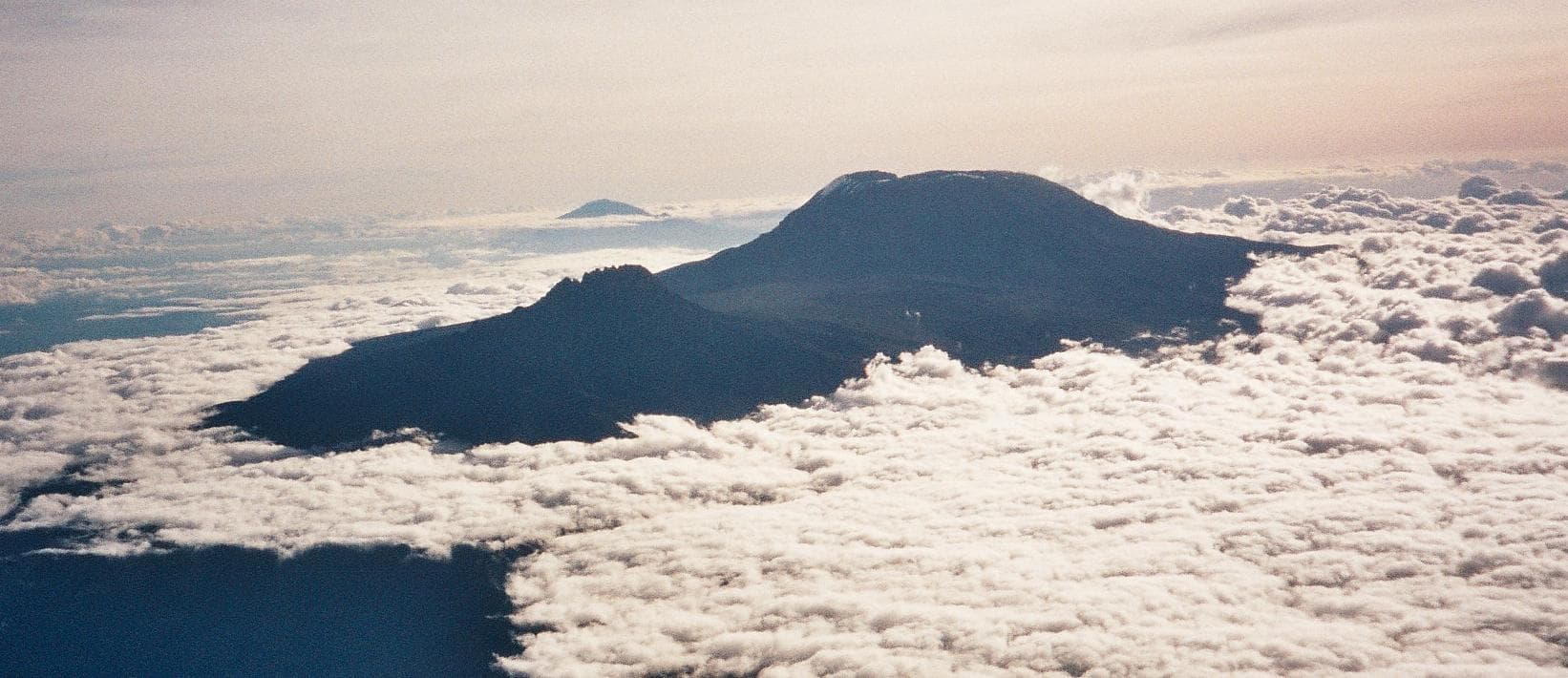
Six established routes lead to Uhuru Peak (5,895m). They share the same summit night, the same altitude, and the same thin air. What they do not share is acclimatization profile. That single variable -- how many days your body gets to adjust before summit night -- determines whether you stand on the roof of Africa or turn around at 5,200m with a splitting headache.
The only official KINAPA (Kilimanjaro National Park Authority) summit data ever published (2006) puts the overall success rate at roughly 65%. One in three climbers fails. But route choice swings that number from 27% to 98%. The spread is not subtle.
Sources: Ultimate Kilimanjaro -- KINAPA Success Rate Data, Climb Kilimanjaro Guide -- Success Rates
The factor that matters most
It is not fitness. A peer-reviewed study (Karinen et al., 2008) found 77% of Kilimanjaro climbers develop acute mountain sickness. The primary determinant of who summits is acclimatization time -- the number of days spent above 3,000m before the final push. A marathon runner on a 5-day route has worse odds than a moderately fit trekker on an 8-day route. The data is unambiguous.
The key mechanism: "climb high, sleep low." Routes that include significant altitude gains followed by descents to lower sleeping camps (like the Lava Tower detour on Machame and Lemosho) dramatically reduce AMS incidence. Routes that only go up -- like 5-day Marangu -- offer no such relief.
Sources: PubMed -- Karinen et al., 2008, Altezza Travel -- Acclimatization
Continue reading Kilimanjaro: What It Actually Costs in 2026 →
Before route selection: the crowd reality
Kilimanjaro hosted approximately 69,000 climbers in the 2024/2025 season -- a 46% increase in three years. The commonly cited 30,000-35,000 figure is outdated. During July and August, popular routes see 200+ climbers on the mountain simultaneously. Summit night on Machame or Marangu becomes a slow-moving line of headlamps. Route choice is also crowd management.
Source: Pan African Visions -- KINAPA Visitor Data, May 2025
1. Marangu Route ("Coca-Cola Route")
Days: 5 (standard) or 6 (recommended)
Distance: ~72 km
Start elevation: 1,860m (Marangu Gate)
Approach: Southeast
Crowd level: High
Success rate: 27-40% (5-day) / 50-70% (6-day)
The most popular route for first-timers, and the worst choice for most of them.
Marangu is the only route with dormitory huts instead of tents. That comfort factor -- plus the fact that it is slightly cheaper (hut fees vs. camping fees) and the shortest standard option -- makes it the default for budget-conscious climbers. It is marketed as the "easiest" route.
The KINAPA 2006 data tells a different story: 27% summit success on the 5-day itinerary. Nearly three out of four climbers fail. The 6-day version, which adds an acclimatization day at Horombo Huts (3,720m), improves odds to roughly 50-70%, but that still lags every other route at comparable duration.
The problem is structural. Marangu's profile ascends steadily with no "climb high, sleep low" opportunities. There is no Lava Tower detour. No Barranco Wall descent. The altitude gain is relentless and one-directional.
Daily stages (5-day)
| Day | Stage | Distance | Start | End | Gain |
|---|---|---|---|---|---|
| 1 | Marangu Gate to Mandara Hut | 8 km | 1,860m | 2,720m | +860m |
| 2 | Mandara Hut to Horombo Hut | 11 km | 2,720m | 3,720m | +1,000m |
| 3 | Horombo Hut to Kibo Hut | 10 km | 3,720m | 4,700m | +980m |
| 4 | Kibo Hut to Uhuru Peak, descend to Horombo | 21 km | 4,700m | 5,895m / 3,720m | +1,195m / -2,175m |
| 5 | Horombo Hut to Marangu Gate | 22 km | 3,720m | 1,860m | -1,860m |
Pros:
- Only route with hut accommodation (beds, mattresses, communal dining)
- Slightly cheaper due to hut fee structure
- Well-maintained, clear path
- Same descent route -- less overall distance
Cons:
- Worst success rate of any standard route
- No "climb high, sleep low" acclimatization profile
- Dormitory huts are shared (noise, illness exposure)
- High traffic year-round
- Same up-and-down path offers less scenic variety
Sources: Ultimate Kilimanjaro -- Marangu Route, Climb Kilimanjaro Guide -- Success Rates, Tranquil Kilimanjaro -- Route Comparison
2. Machame Route ("Whiskey Route")
Days: 6 (standard) or 7 (recommended)
Distance: ~62 km
Start elevation: 1,640m (Machame Gate)
Approach: Southwest
Crowd level: High
Success rate: ~50% (6-day) / ~70% (7-day)
The most popular route overall, and a significant upgrade over Marangu for one reason: the Lava Tower acclimatization profile.
On day 3, Machame climbers ascend to Lava Tower at 4,630m, then descend to Barranco Camp at 3,960m. That 670m drop is the single most important acclimatization event on the mountain. The body spends hours at high altitude, then recovers overnight at a lower camp. This is the textbook "climb high, sleep low" protocol.
Day 4 includes the Barranco Wall -- a scramble (not a technical climb, but hands-on-rock scrambling) up a 257m cliff face. It is the most physically dramatic section of any standard route. Exposure is real but the path is well-worn. Vertigo-prone climbers should note this.
Daily stages (7-day)
| Day | Stage | Distance | Start | End | Gain |
|---|---|---|---|---|---|
| 1 | Machame Gate to Machame Camp | 11 km | 1,640m | 3,020m | +1,380m |
| 2 | Machame Camp to Shira Camp | 5 km | 3,020m | 3,840m | +820m |
| 3 | Shira Camp to Lava Tower to Barranco Camp | 10 km | 3,840m | 4,630m / 3,960m | +790m / -670m |
| 4 | Barranco Camp to Karanga Camp (via Barranco Wall) | 5 km | 3,960m | 3,995m | +35m |
| 5 | Karanga Camp to Barafu Camp | 4 km | 3,995m | 4,673m | +678m |
| 6 | Barafu to Uhuru Peak, descend to Millennium Camp | 17 km | 4,673m | 5,895m / 3,820m | +1,222m / -2,075m |
| 7 | Millennium Camp to Mweka Gate | 10 km | 3,820m | 1,640m | -2,180m |
Pros:
- Lava Tower "climb high, sleep low" profile significantly aids acclimatization
- Scenic variety: rainforest, moorland, alpine desert, glaciers
- Barranco Wall is a memorable experience
- Strong infrastructure (popular = well-maintained campsites)
Cons:
- High traffic, especially July-August (expect crowded campsites)
- Barranco Wall bottleneck -- long waits during peak season
- Steeper than Marangu; more physically demanding daily stages
- No huts -- tent camping only
- Descent via Mweka (different from ascent) is steep on the knees
Sources: Ultimate Kilimanjaro -- Machame Route, Altezza Travel -- Machame Route
3. Lemosho Route
Days: 7 (standard) or 8 (recommended)
Distance: ~70 km
Start elevation: 2,100m (Londorossi Gate)
Approach: West
Crowd level: Moderate (low on first 2 days, merges with Machame from day 4)
Success rate: ~85% (7-day) / ~90% (8-day)
The route most experienced guides recommend privately.
Lemosho starts on the western side with two quiet days through undisturbed rainforest before reaching the Shira Plateau. From Shira onward, it shares the same path as Machame -- including the Lava Tower acclimatization detour and the Barranco Wall. The difference is the extra day or two at the front end, spent at moderate altitude (2,100-3,500m), which provides a gentler introduction before the critical high-altitude stages.
The 8-day version adds a rest/acclimatization day at Shira or Karanga, pushing success rates to approximately 90%.
Daily stages (8-day)
| Day | Stage | Distance | Start | End | Gain |
|---|---|---|---|---|---|
| 1 | Londorossi Gate to Mti Mkubwa (Big Tree Camp) | 6 km | 2,100m | 2,895m | +795m |
| 2 | Mti Mkubwa to Shira 1 Camp | 8 km | 2,895m | 3,505m | +610m |
| 3 | Shira 1 to Shira 2 Camp | 6 km | 3,505m | 3,840m | +335m |
| 4 | Shira 2 to Lava Tower to Barranco Camp | 10 km | 3,840m | 4,630m / 3,960m | +790m / -670m |
| 5 | Barranco Camp to Karanga Camp (via Barranco Wall) | 5 km | 3,960m | 3,995m | +35m |
| 6 | Karanga Camp to Barafu Camp | 4 km | 3,995m | 4,673m | +678m |
| 7 | Barafu to Uhuru Peak, descend to Millennium Camp | 17 km | 4,673m | 5,895m / 3,820m | +1,222m / -2,075m |
| 8 | Millennium Camp to Mweka Gate | 10 km | 3,820m | 1,640m | -2,180m |
Pros:
- Best balance of success rate, scenery, and duration
- Quiet first two days through pristine western rainforest
- Same Lava Tower acclimatization as Machame
- Lower crowd density at entry (western approach is less accessible)
- Gentle altitude build on days 1-3
Cons:
- Longer drive to trailhead (Londorossi Gate is remote)
- Higher cost than Marangu or Machame (more days = more park fees)
- Merges with Machame traffic from Shira onward
- Still includes the Barranco Wall (same bottleneck as Machame)
Sources: Ultimate Kilimanjaro -- Lemosho Route, Climbing Kilimanjaro -- Lemosho
4. Rongai Route
Days: 6 (standard) or 7 (recommended)
Distance: ~73 km
Start elevation: 1,950m (Rongai Gate, near Kenyan border)
Approach: North
Crowd level: Low
Success rate: ~65% (6-day) / ~75-80% (7-day)
The only route approaching from the north, near the Kenyan border. Rongai sees a fraction of the traffic of Machame or Marangu. The north slope is drier, making it the best option during rainy seasons (March-May, November).
The tradeoff: Rongai has a straightforward ascent profile with limited "climb high, sleep low" opportunities. It gains altitude steadily, similar to Marangu, but the extra distance and gentler gradient offer marginally better acclimatization. The 7-day version adds a day at Third Cave or School Hut that meaningfully improves summit odds.
Daily stages (7-day)
| Day | Stage | Distance | Start | End | Gain |
|---|---|---|---|---|---|
| 1 | Rongai Gate to Simba Camp | 8 km | 1,950m | 2,635m | +685m |
| 2 | Simba Camp to Second Cave | 8 km | 2,635m | 3,450m | +815m |
| 3 | Second Cave to Third Cave | 5 km | 3,450m | 3,800m | +350m |
| 4 | Third Cave to School Hut (via Mawenzi) | 5 km | 3,800m | 4,750m | +950m |
| 5 | School Hut to Uhuru Peak, descend to Horombo | 21 km | 4,750m | 5,895m / 3,720m | +1,145m / -2,175m |
| 6 | Horombo to Marangu Gate | 22 km | 3,720m | 1,860m | -1,860m |
| 7 | Buffer/acclimatization day (scheduled between days 3-4) | -- | -- | -- | -- |
Pros:
- Low traffic -- often feels like a private expedition
- Best option during rain seasons (north slope is drier)
- Views of Mawenzi Peak from the approach
- Gradual altitude gain on first three days
- Descends via Marangu, offering two different landscapes
Cons:
- No Lava Tower-type "climb high, sleep low" profile
- Less scenic variety than western/southern routes
- Longer drive to trailhead (3-4 hours from Moshi)
- Fewer operators offer it, reducing booking options
Sources: Ultimate Kilimanjaro -- Rongai Route, Altezza Travel -- Rongai Route
5. Northern Circuit
Days: 9 (standard)
Distance: ~98 km
Start elevation: 2,100m (Londorossi Gate)
Approach: West, traversing north
Crowd level: Lowest of all routes
Success rate: 90-98%
The longest route. The most expensive. The highest success rate. The least known.
Northern Circuit starts at the same western trailhead as Lemosho and shares its first three days. After the Shira Plateau, instead of heading south toward Lava Tower, it wraps around the mountain's northern face -- a traverse that no other route offers. This adds two full acclimatization days at moderate altitude (3,500-4,200m) before the final push.
The result is a success rate that operators and KINAPA data place at 90-98%. The body has had nine days to adapt. By summit night, most climbers have spent six full days above 3,500m. The altitude is still dangerous, but the odds are radically shifted.
The trade-off is cost. Two extra days on the mountain means roughly $280 more in park fees (at current rates) compared to a 7-day Machame. Total operator packages for 9-day Northern Circuit typically run $500-1,000 more than equivalent-quality 7-day options. Whether an extra $500-1,000 is worth a 20-30 percentage point increase in summit probability is arithmetic, not opinion.
Daily stages (9-day)
| Day | Stage | Distance | Start | End | Gain |
|---|---|---|---|---|---|
| 1 | Londorossi Gate to Mti Mkubwa | 6 km | 2,100m | 2,895m | +795m |
| 2 | Mti Mkubwa to Shira 1 Camp | 8 km | 2,895m | 3,505m | +610m |
| 3 | Shira 1 to Shira 2 Camp | 6 km | 3,505m | 3,840m | +335m |
| 4 | Shira 2 to Lava Tower to Moir Hut | 12 km | 3,840m | 4,630m / 4,200m | +790m / -430m |
| 5 | Moir Hut to Buffalo Camp (northern traverse) | 9 km | 4,200m | 3,960m | -240m |
| 6 | Buffalo Camp to Third Cave (northern traverse) | 9 km | 3,960m | 3,800m | -160m |
| 7 | Third Cave to School Hut | 5 km | 3,800m | 4,750m | +950m |
| 8 | School Hut to Uhuru Peak, descend to Millennium Camp | 17 km | 4,750m | 5,895m / 3,820m | +1,145m / -2,075m |
| 9 | Millennium Camp to Mweka Gate | 10 km | 3,820m | 1,640m | -2,180m |
Pros:
- Highest summit success rate of any route (90-98%)
- Longest acclimatization period
- Lowest traffic -- genuine wilderness experience on northern traverse
- 360-degree views of Kilimanjaro (only route to circumnavigate the peak)
- Lava Tower "climb high, sleep low" profile plus extended moderate-altitude days
- Best option for climbers with altitude sensitivity
Cons:
- Most expensive (9 days of park fees)
- Longest trek -- requires more total fitness endurance
- Fewer operators offer it
- Remote northern sections mean longer evacuation times if needed
- Limited campsite infrastructure on northern traverse
Sources: Ultimate Kilimanjaro -- Northern Circuit, Tranquil Kilimanjaro -- Success Rates
6. Umbwe Route
Days: 6 (standard) or 7 (with acclimatization day)
Distance: ~53 km
Start elevation: 1,450m (Umbwe Gate)
Approach: South
Crowd level: Very low
Success rate: ~50-60% (6-day) / ~70% (7-day)
The steepest and most direct route. Umbwe gains altitude faster than any other option, which makes it simultaneously the most challenging and the worst for acclimatization.
Umbwe is sometimes described as a route for experienced trekkers. The ascent through dense forest on the first day is steep and root-tangled. By day 2, climbers reach Barranco Camp at 3,960m -- a camp that Machame and Lemosho climbers don't reach until day 3 or 4. From Barranco, Umbwe joins the southern routes for the remainder of the climb, including the Barranco Wall.
The rapid altitude gain is the defining risk. Climbers sleep at 3,960m on night 2, having started below 1,500m. This aggressive profile gives the body minimal time to adapt and explains the lower success rates despite the route's shorter distance.
Daily stages (6-day)
| Day | Stage | Distance | Start | End | Gain |
|---|---|---|---|---|---|
| 1 | Umbwe Gate to Umbwe Cave Camp | 11 km | 1,450m | 2,940m | +1,490m |
| 2 | Umbwe Cave to Barranco Camp | 6 km | 2,940m | 3,960m | +1,020m |
| 3 | Barranco to Karanga Camp (via Barranco Wall) | 5 km | 3,960m | 3,995m | +35m |
| 4 | Karanga Camp to Barafu Camp | 4 km | 3,995m | 4,673m | +678m |
| 5 | Barafu to Uhuru Peak, descend to Millennium Camp | 17 km | 4,673m | 5,895m / 3,820m | +1,222m / -2,075m |
| 6 | Millennium Camp to Mweka Gate | 10 km | 3,820m | 1,640m | -2,180m |
Pros:
- Steepest, most direct -- appeals to experienced trekkers seeking challenge
- Very low traffic (quiet forest camps)
- Dramatic rainforest approach
- Joins Machame/Lemosho route at Barranco (proven summit path)
Cons:
- Rapid altitude gain = higher AMS risk
- Lower success rate than Lemosho, Machame (7-day), or Northern Circuit
- No "climb high, sleep low" opportunities before Barranco
- Steep descent through forest is hard on joints
- Not recommended for first-time high-altitude trekkers
Sources: Ultimate Kilimanjaro -- Umbwe Route, Climbing Kilimanjaro -- Umbwe
Western Breach (Arrow Glacier Route) -- closed
The Western Breach was the most direct path from the west side to the crater rim via the Arrow Glacier. It involved scrambling over loose volcanic rock at extreme altitude and was the only standard route with genuine rockfall hazard.
KINAPA closed the Western Breach to all climbers in January 2024 following rockfall incidents. As of April 2026, it remains closed with no announced reopening date. Operators still listing it as an option are advertising a route that cannot be legally climbed.
Source: Climb Mount Kilimanjaro -- Western Breach Closure
Route comparison summary
| Route | Days | Distance | Success rate | Crowd level | Climb high/sleep low? | Barranco Wall? |
|---|---|---|---|---|---|---|
| Marangu | 5-6 | ~72 km | 27-70% | High | No | No |
| Machame | 6-7 | ~62 km | 50-70% | High | Yes (Lava Tower) | Yes |
| Lemosho | 7-8 | ~70 km | 85-90% | Moderate | Yes (Lava Tower) | Yes |
| Rongai | 6-7 | ~73 km | 65-80% | Low | No | No |
| Northern Circuit | 9 | ~98 km | 90-98% | Lowest | Yes (Lava Tower) | No |
| Umbwe | 6-7 | ~53 km | 50-70% | Very low | No | Yes |
Sources: Ultimate Kilimanjaro -- Route Comparison, Climb Kilimanjaro Guide -- Success Rates
The per-day fee trap
TANAPA charges $70/day conservation + $50/night camping, plus 18% VAT. The difference between a 5-day Marangu and a 9-day Northern Circuit is roughly $500-600 in park fees alone. Budget-conscious climbers choose shorter routes to save on fees, which directly causes worse acclimatization and lower summit success.
This is the single most under-discussed dynamic on Kilimanjaro. The per-day fee structure creates an economic incentive to rush acclimatization. The "cheapest" route (5-day Marangu) has the worst success rate (27%). The most expensive route (9-day Northern Circuit) has the best (90-98%). The extra $500-600 in fees is not a luxury -- it is the price of acclimatization days that nearly triple summit probability.
If you can only afford a 5-day route, the recommendation is to wait until you can afford a 7- or 8-day route.
Sources: Altezza Travel -- Park Fees 2026, Tristan Balme -- Fee Calculation
How to pick
First-time high-altitude trekker, budget-conscious: 7-day Machame. The Lava Tower acclimatization profile is critical and the route is well-supported.
First-timer who can spend more: 8-day Lemosho. The gentler western approach and extra day push success rates above 85%.
Maximizing summit odds above all else: 9-day Northern Circuit. Pay the extra park fees. The success rate speaks for itself.
Rainy season (March-May, November): 7-day Rongai. The drier north slope is a material advantage in wet conditions.
Experienced trekker seeking solitude and challenge: 7-day Umbwe with an acclimatization day added. Steep, direct, and quiet -- but only if you have prior altitude experience.
Avoid: 5-day Marangu. A 27% success rate is not a route recommendation -- it is a warning.
The mountain is the same at the top. The question is how you get there, and whether you gave your body enough time to keep going when the oxygen runs out.
7 Sources
- tanzaniaparks.go.tzTANAPA — Kilimanjaro National Park (official park page)
- tanzaniaparks.go.tzTANAPA — Tanzania National Parks Tariffs 2023/2024 (official fee schedule PDF)
- pubmed.ncbi.nlm.nih.govKarinen, Peltonen & Tikkanen (2008), 'Prevalence of Acute Mountain Sickness among Finnish Trekkers on Mount Kilimanjaro' — PubMed
- ultimatekilimanjaro.comUltimate Kilimanjaro — Kilimanjaro Success Rates (KINAPA 2006 data)
- dailynews.co.tzDaily News (Tanzania) — Kilimanjaro climber numbers, KINAPA Chief Conservator (headline: 'Kilimanjaro ice triples amid conservation push')
- climbing-kilimanjaro.comClimbing Kilimanjaro — Western Breach Route (closure status)
- ultimatekilimanjaro.comUltimate Kilimanjaro — Kilimanjaro Routes (overview)