Elevation and Setting
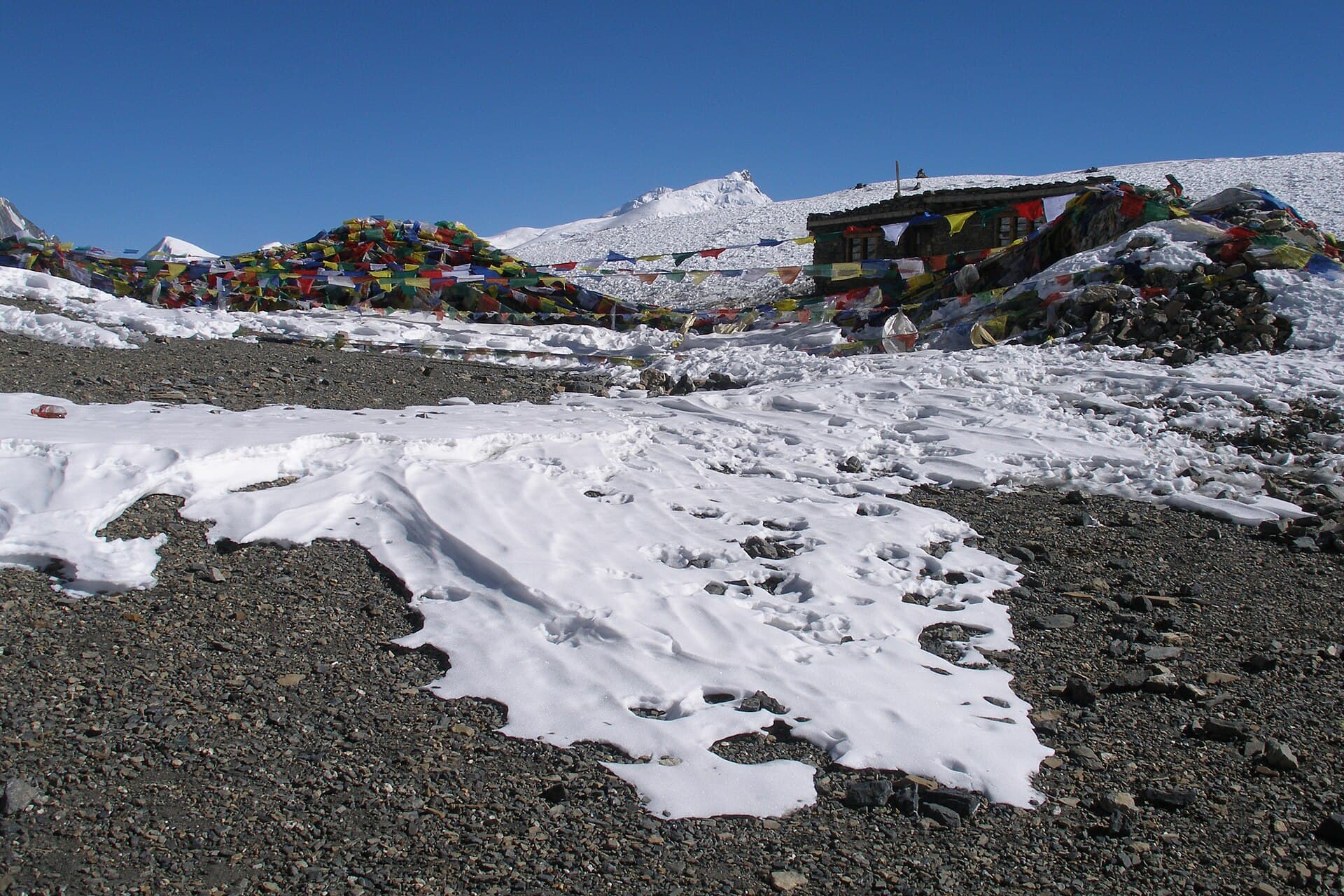
Gorak Shep sits at 5,164 metres (16,942 feet) on a frozen, sandy lakebed at the edge of the Khumbu Glacier — the largest glacier in Nepal and one of the highest glacial systems on earth. The name means "dead crows" in Sherpa, a nod to the punishing altitude. Pumori (7,161 m) towers directly above to the west, and the rubble-covered surface of the glacier stretches north toward the Everest Base Camp site, just 3.5 kilometres away. The settlement is effectively uninhabited for most of the year, with lodges opening only during the spring and autumn trekking seasons.
The Village
"Village" is generous. Gorak Shep consists of about five tea houses huddled together on the sandy flat, with no permanent residents. There are no shops, no medical facilities, and no ATMs. Everything — food, fuel, bedding — is carried in by porters and yaks from lower settlements, which is why prices here are the highest on the trail. The air contains roughly half the oxygen of sea level, and even walking between lodges feels like effort. Despite all this, the atmosphere is electric: this is the staging ground for both Everest Base Camp and the Kala Patthar sunrise hike, and the communal dining rooms buzz with trekkers swapping stories of the final push.
Continue reading Dingboche — The Second Acclimatization Stop on the EBC Trek →
Tea Houses and Prices
The five lodges at Gorak Shep are basic but functional. Rooms cost USD 10 to 25 per night for a thin-mattress twin. Attached bathrooms do not exist here; all facilities are shared. Meals run USD 10 to 18 each, with dal bhat and noodle soup being the staples. A pot of tea costs USD 4 to 6. Hot showers, where available, cost USD 5 or more and rely on solar heating that is unreliable in cold weather. Expect to spend USD 45 to 65 per day. Charge your devices before arriving, as electricity fees are steep and outlets are scarce.
Acclimatization Advice
By the time you reach Gorak Shep, your body has been acclimatizing for over a week. But at 5,164 metres, you are firmly in the "high altitude danger zone" where the risk of High Altitude Pulmonary Edema (HAPE) and High Altitude Cerebral Edema (HACE) becomes real. Symptoms to watch for go beyond simple AMS: persistent cough with frothy sputum, severe breathlessness at rest, confusion, or inability to walk in a straight line all demand immediate descent.
Most trekkers arrive at Gorak Shep from Lobuche (4,940 m) in four to five hours, drop their packs, eat lunch, and walk to Everest Base Camp the same afternoon — returning to sleep at Gorak Shep. The following pre-dawn morning, they hike Kala Patthar for sunrise before descending. This schedule minimizes time spent at extreme altitude. Do not plan extra nights here unless you feel strong. The body deteriorates rather than acclimatizes above 5,000 metres during extended stays.
Drink water aggressively (four-plus litres per day), eat even when you have no appetite, and move slowly. Sleep will likely be poor — this is normal at this altitude.
What to See
- Everest Base Camp (5,364 m), a 3.5 km walk across the glacier moraine. During climbing season (April-May), the tent city of expeditions is visible and the Khumbu Icefall looms above.
- The Khumbu Glacier itself, a vast river of ice covered in rocky debris, stretching from the base of the Western Cwm.
- Pumori and Kala Patthar rising steeply to the west.
How Long Trekkers Stay
One night is standard. Arrive in the early afternoon, walk to EBC, sleep, hike Kala Patthar at dawn, then descend to Pheriche or Dingboche the same day.
Tips
- Fill your water bottles at Lobuche before arriving. Boiled water at Gorak Shep is expensive and sometimes lukewarm.
- Bring a headlamp with fresh batteries for the pre-dawn Kala Patthar start.
- Sleep in all your layers. Nighttime temperatures routinely drop below minus 15 Celsius in spring and autumn.
- If you feel symptoms of HAPE or HACE, descend immediately — even at night. Do not wait until morning.
- Pack light for the EBC walk. Leave your main bag at the lodge and carry only water, snacks, camera, and warm layers.
5 Sources
- adventurevisiontreks.comAdventure Vision Treks — Gorakshep
- missionsummittreks.comMission Summit Treks — Gorakshep
- peregrinetreks.comPeregrine Treks — Gorak Shep
- en.wikipedia.orgWikipedia — Gorakshep
- cdc.govCDC — High-Altitude Travel