Elevation and Setting
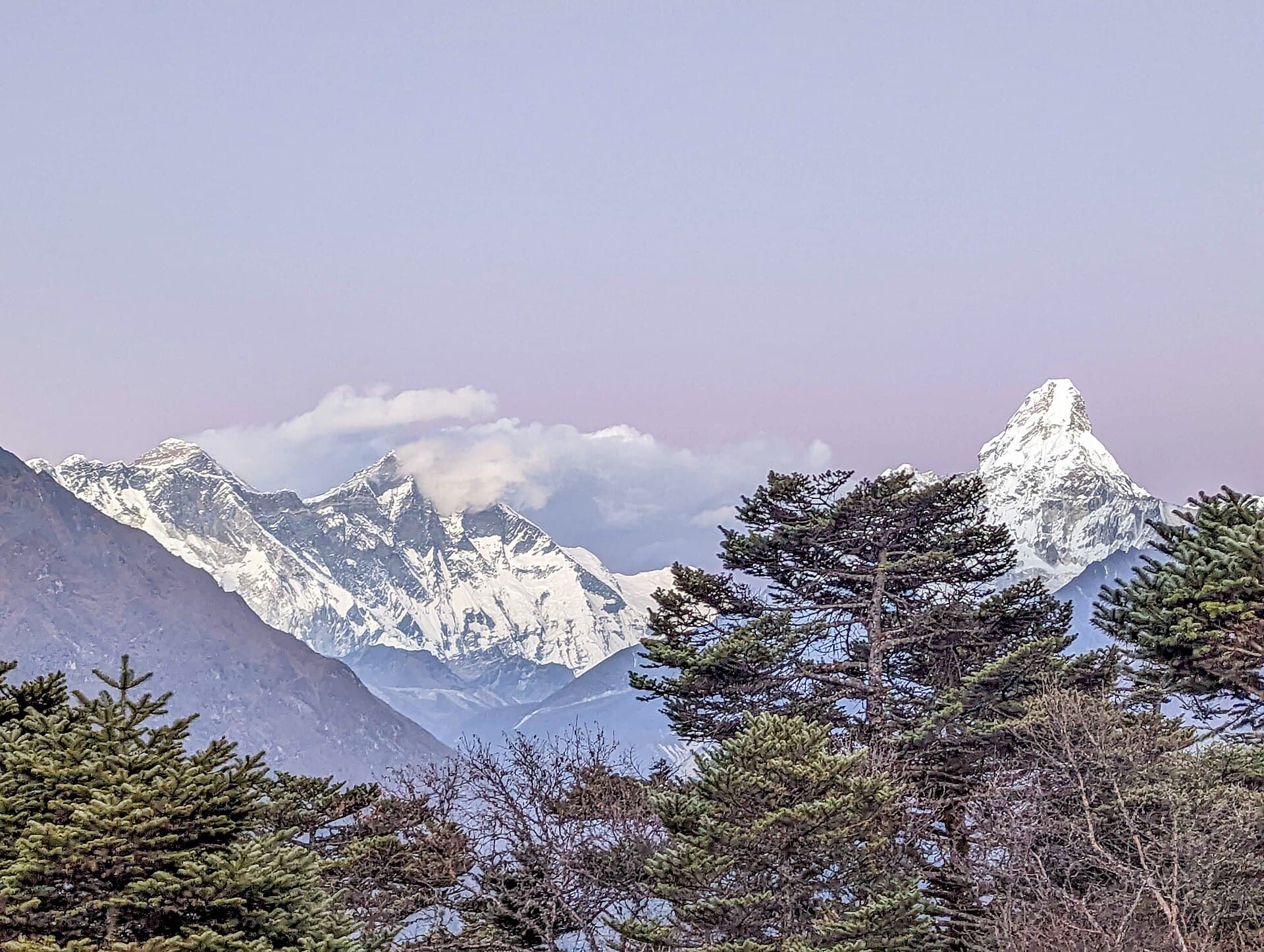
Kala Patthar — "Black Rock" in Nepali — is a barren, dark-coloured ridge on the southern shoulder of Pumori (7,161 m), reaching 5,644 metres (18,514 feet) at its summit cairn. It is not a separate mountain but rather a prominent rocky bump on Pumori's flank. What makes it legendary is the view: Kala Patthar is the single best accessible viewpoint for Mount Everest. From Everest Base Camp itself, the summit of Everest is hidden behind the Nuptse-Lhotse ridge. From Kala Patthar, the entire upper pyramid of Everest stands fully exposed, flanked by the Khumbu Icefall below, Nuptse to the right, and Changtse across the border in Tibet.
The Hike
The climb begins from Gorak Shep (5,164 m), typically between 4:00 and 4:30 AM, in complete darkness with headlamps. The trail is steep, rocky, and unmarked in places, gaining approximately 480 metres of elevation over roughly 2.5 kilometres. At this altitude, every step demands effort. The thin air holds barely half the oxygen of sea level, and most trekkers need 90 minutes to two hours to reach the top. The cold is fierce — temperatures at the summit before dawn frequently plunge below minus 20 Celsius in the spring season, with wind chill making it far worse.
There is no tea house, no shelter, and no water on the ascent. You carry everything you need and come back down the same way.
Continue reading Dingboche — The Second Acclimatization Stop on the EBC Trek →
The Sunrise
The reason for the punishing pre-dawn start is the sunrise. As the first light strikes the upper face of Everest, the summit pyramid turns from steel grey to gold to blazing orange. The surrounding peaks — Nuptse, Lhotse, Makalu, Cho Oyu, Ama Dablam, and dozens of smaller summits — catch the light in sequence across the vast panorama. On a clear morning, the Khumbu Glacier shimmers below and the Tibetan Plateau stretches to the northern horizon. This is widely considered the defining visual moment of the entire Everest Base Camp trek.
Acclimatization Advice
At 5,644 metres, you are at the absolute ceiling of the trek and well into the zone where the body cannot acclimatize further with prolonged exposure. Speed matters here — get up, take your photographs, and descend. Most trekkers spend 20 to 45 minutes at the summit before heading down. Do not linger if you feel symptoms of severe AMS, HAPE, or HACE (confusion, breathlessness at rest, cough with pink froth, loss of coordination). The descent to Gorak Shep takes 45 minutes to an hour, and most trekkers continue descending to Pheriche (4,371 m) or Dingboche (4,410 m) the same day, which provides significant physiological relief.
If you struggled on the ascent and could not reach the top, do not be discouraged. Many trekkers turn around at the false summit or at various points along the ridge and still get outstanding views of Everest. There is no shame in altitude.
What to See
- The full upper pyramid of Mount Everest (8,849 m), unobstructed.
- The Khumbu Icefall cascading from the Western Cwm.
- Nuptse's massive south face, Lhotse's summit ridge, and Changtse across the Nepal-Tibet border.
- Pumori's ice-clad summit looming directly above.
- The Khumbu Glacier snaking through the valley below.
How Long Trekkers Stay
This is not an overnight stop. The hike is a round trip from Gorak Shep, taking three to four hours total. Most trekkers are back at their lodge by 7:00 or 8:00 AM, eat breakfast, pack up, and begin the long descent toward lower altitude the same morning.
Tips
- Prepare everything the night before: headlamp, gloves, balaclava, down jacket, water bottles inside your jacket to prevent freezing, camera with a fully charged battery kept warm in an inside pocket.
- Wear your warmest layers from the start. There is no opportunity to shed clothing comfortably on the exposed ridge.
- Walk at a measured pace. Rushing at this altitude leads to exhaustion and increases the risk of stumbling on the rocky trail in the dark.
- If the weather is poor at 4:00 AM, consider waiting 30 minutes. Conditions can change fast. But if a storm is building, do not attempt the summit.
- Take a thermos of hot tea or soup from the lodge. A warm drink at the summit transforms the experience.
- Bring trekking poles. The descent on loose rock with fatigued legs is where most injuries happen.
5 Sources
- boundlessadventure.comBoundless Adventure — Kala Patthar
- acethehimalaya.comAce the Himalaya — Kalapatthar
- magicalnepal.comMagical Nepal — Kala Patthar Guide
- en.wikipedia.orgWikipedia — Kala Patthar
- boldhimalaya.comBold Himalaya — Kala Patthar Viewpoint