Why K2 Base Camp
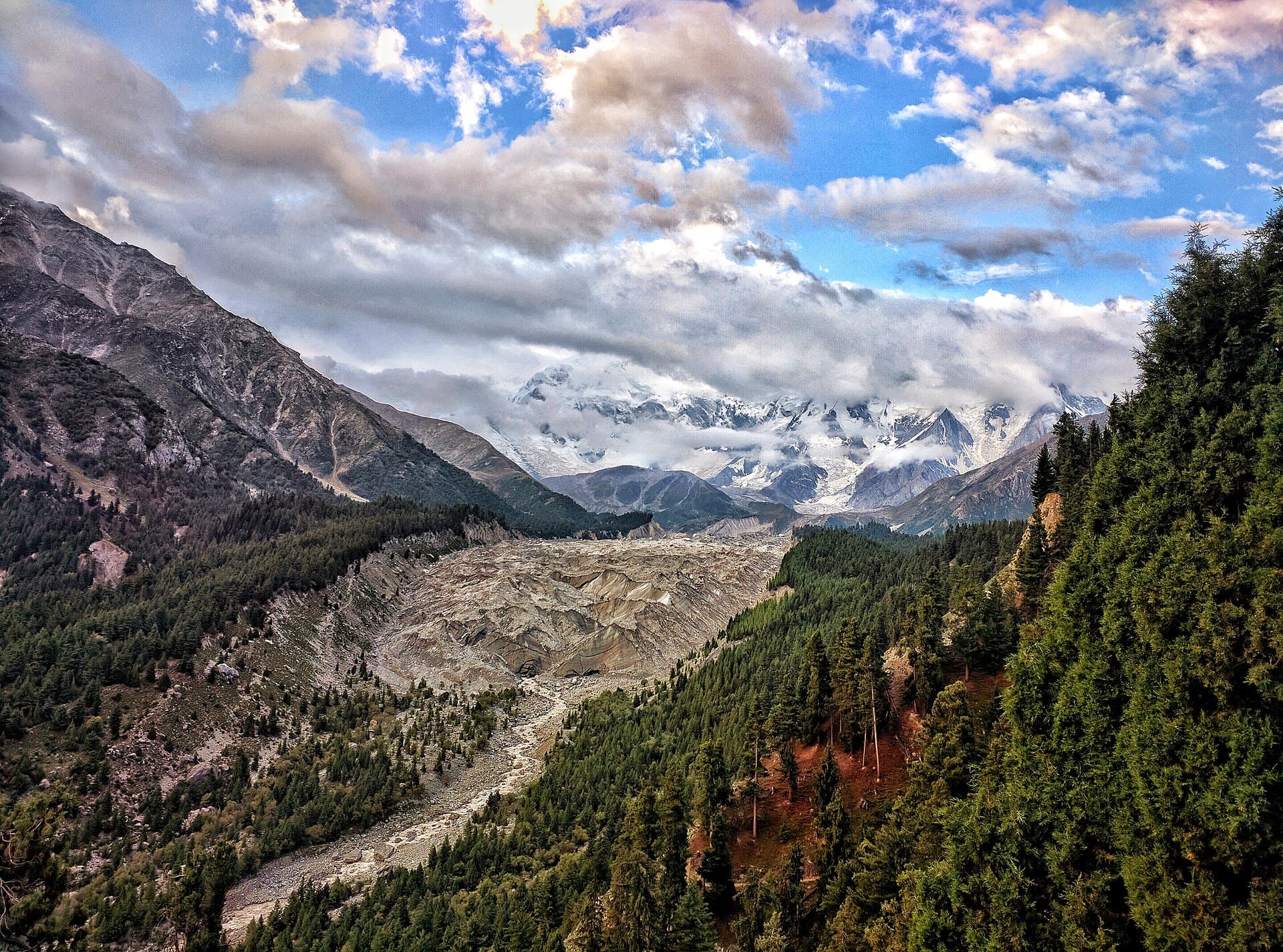
Concordia sits at 4,600 m where the Baltoro and Godwin-Austen glaciers meet. From a single campsite you can see four eight-thousanders: K2 (8,611 m), Broad Peak (8,051 m), Gasherbrum I (8,080 m), and Gasherbrum II (8,035 m). No other place on Earth puts four of the world's fourteen highest mountains in one panoramic sweep. Masherbrum (7,821 m) and the Trango Towers complete the frame.
The walk to get there is 90-100 km of glacial moraine from Askole through the Baltoro Glacier corridor in Central Karakoram National Park. The return is the same route, or — for those with the fitness and nerve — a one-way crossing of the Gondogoro La (5,585 m) exiting through the Hushe Valley. Either way, this is not a teahouse trek. There are no lodges, no resupply points, and no mobile coverage past Askole. Everything goes in on porters' backs, and everything comes out the same way.
This article reflects 2026 permit fees, the Jhola road extension completed in 2024-2025, and the permit-fee overhaul that most English-language guides have not yet updated for.
The itinerary
The standard K2 Base Camp trek runs Askole to Concordia and back, with a day-trip from Concordia to K2 BC at 5,150 m. The full circuit is 180-200 km round trip over 14-16 trekking days. Most operators add 5-7 days for Islamabad buffer, Skardu transit, and weather contingency, making the total trip 20-25 days from your home airport.
A note on Askole vs Jhola: A bridge over the Dumordo River was completed in 2024-2025, extending jeep access from Askole to Jhola. This eliminates the first trekking day listed in every guide published before 2024. Most operators now drive clients to Jhola and start walking from there. The itinerary below reflects the traditional stages (starting from Askole) because some groups still walk the first stage and because the road extension's reliability in early season has not been fully tested. Ask your operator which trailhead they use. (AllTrails; Wikivoyage)
Continue reading Gondogoro La — the technical reality of the K2 trek crossing →
Stage-by-stage breakdown
| Day | Stage | Elevation | Distance | Hours | Key terrain |
|---|---|---|---|---|---|
| 1 | Askole to Jhula | 3,040 m to 3,150 m | 17.7 km | 6-7 h | Braldu River crossing; sandy river flats. Now driveable — see note above. |
| 2 | Jhula to Paiju | 3,150 m to 3,450 m | 20.5 km | 7-8 h | Rock walls, river terraces. Established campsite with toilet facilities. |
| 3 | Paiju — rest day | 3,450 m | — | — | Acclimatization. Last trees on the route. |
| 4 | Paiju to Khoburtse | 3,450 m to 3,930 m | 14.7 km | 5-6 h | Enter Baltoro Glacier moraine. First views of Trango Towers. |
| 5 | Khoburtse to Urdukas | 3,930 m to 4,130 m | 6.2 km | 4-5 h | First views of Broad Peak. Grassy campsite, medical station. |
| 6 | Urdukas to Goro II | 4,130 m to 4,350 m | ~12 km | 7-9 h | Full glacial terrain. Masherbrum dominates the south. |
| 7 | Goro II to Concordia | 4,350 m to 4,600 m | 11.8 km | 4-5 h | The amphitheater opens — K2, Broad Peak, Gasherbrums. |
| 8 | Concordia to K2 BC and back | 5,150 m (BC) | ~20 km RT | 9-11 h | Day trip. Gilkey Memorial. Crevasse crossings. Return to sleep at Concordia. |
| 9-12/13 | Return Concordia to Askole | — | — | — | Reverse route. Faster descent; 3-4 days. |
Total elevation gain: ~2,100 m from Askole (3,040 m) to K2 BC (5,150 m).
K2 BC is a day trip, not an overnight. 5,150 m is too high for most trekkers to sleep comfortably. Standard practice is to walk from Concordia to base camp and back in a single long day, sleeping at Concordia (4,600 m). (Ian Taylor Trekking; We Seek Travel)
Altitude sickness: Roughly 80% of trekkers experience mild AMS symptoms (headache, disrupted sleep) above Concordia. Severe AMS is rare with proper acclimatization — no more than 400 m of sleeping-elevation gain per day. Medical stations now operate seasonally at Urdukas and Concordia. (Epic Expeditions)
Permits and costs
The 2024-2025 fee overhaul
Between September 2024 and May 2025, Pakistan's permit system went through three price regimes: a proposed 6x increase, a court injunction by the Pakistan Association of Tour Operators (PATO), and a final compromise. Most English-language guides still quote the pre-2024 rate of $50 for a trekking permit. That figure is dead. Here is what you actually pay in 2026:
| Item | Cost (USD) | Notes |
|---|---|---|
| Trekking permit (restricted zone, summer) | $150/person | Via Alpine Club of Pakistan / GB Council |
| Trekking permit (autumn, Oct-Nov) | $75/person | |
| CKNP environmental/waste fee | $190/person | Applies to entire Baltoro corridor |
| Total permit cost (summer) | ~$340/person |
The Gilgit-Baltistan government had proposed raising the trekking permit to $300 and tripling climbing fees. The GB High Court froze fees at the May 2025 compromise levels through at least 2026. Future hikes remain legally possible. (Explorersweb; Explorersweb; Trango Adventure)
You cannot self-permit. The Baltoro corridor is a restricted zone. Permit applications must go through a licensed Pakistani tour operator to the GB Council Secretariat — seven document sets submitted 4-6 weeks before departure. There is no self-service portal for foreign trekkers as of May 2026.
Total trip cost
| Line item | Budget | Mid-range | Premium |
|---|---|---|---|
| International flights (round-trip to Islamabad) | $700 | $900-1,200 | $1,500+ |
| Islamabad-Skardu (flight or bus) | $14-150 | $110-150 | $150-200 |
| Permits (trekking + CKNP) | $340 | $340 | $340 |
| Operator package (Skardu onward, all-inclusive) | $1,550-2,100 | $2,300-2,500 | $3,500-5,000 |
| Islamabad hotel (2-3 buffer nights) | $30-50 | $80-120 | $200+ |
| Travel insurance (high-altitude cover) | $150-250 | $250-400 | $495+ |
| Tips (guide + porters + cook) | $80-100 | $150-200 | $300+ |
| Visa (e-Visa) | $35-60 | $35-60 | $35-60 |
| Miscellaneous | $50-100 | $100-200 | $200+ |
| Total | $3,050-3,300 | $4,300-5,200 | $6,500-8,000+ |
The operator package is where the money concentrates. Local Pakistani operators (Skardu Trekkers, Hunza Guides, K2 Base Camp Trekking, Chogori Adventure, Jasmine Tours) quote $1,550-4,000 all-inclusive from Skardu. International operators (Jagged Globe, KE Adventure) charge $4,500-6,500 for the same trek routed through a local partner — a 100-200% markup on the ground cost. (K2 Base Camp Trekking; Adventure Pakistan; Jagged Globe; Hunza Guides)
The Gondogoro La exit option
Instead of retracing the Baltoro back to Askole, you can cross Gondogoro La (5,585 m) and exit via the Hushe Valley. This adds 4-5 days and turns the trek into an 18-21 day expedition.
Additional stages after Concordia
| Day | Stage | Elevation | Distance | Hours | Notes |
|---|---|---|---|---|---|
| Post-K2 BC | Concordia to Ali Camp | 4,800 m | 12.1 km | 5-6 h | West Vigne Glacier. Rope practice session at camp. |
| Pass day | Ali Camp to Gondogoro La to Khuspang | 5,585 m (pass) to 4,700 m | 8.1 km | 9-12 h | Alpine start 00:00-02:00. Fixed ropes, crampons, harness, jumar required. |
| Descent | Khuspang to Dalsampa | 4,150 m | 6.1 km | 4 h | Moraine descent into pastoral valley. |
| Descent | Dalsampa to Saicho | 3,350 m | 11.9 km | 5-6 h | Two route options (cliff or glacier path). |
| Final | Saicho to Hushe to Skardu | 3,050 m to 2,228 m | 7.2 km + jeep | 3-4 h + drive | Jeep via Khaplu to Skardu. |
The pass itself
Gondogoro La is not a walk-over pass. The northeast ascent from the Baltoro side is a 55-degree snow slope with approximately 200 m of vertical on fixed ropes. The southwest descent is a 45-degree slope with rockfall and mudslide risk after sunrise. In June and July the pass is snow-covered, which is actually easier — crampons bite well. By August the snow melts to rock, making it slippery and more technical.
The midnight crossing: Most operators start at midnight, summit the pass before dawn, and descend before solar warming destabilizes the south face. This is not optional timing — it is the standard safety practice. Expect 9-12 hours from Ali Camp to Khuspang. (Chogori Adventure; We Seek Travel)
Equipment required: Crampons, ice axe, climbing harness, jumar (ascending device), helmet. Bring your own or rent quality-tested gear in Islamabad (Outdoor Gear Shop at outdoorgear.pk). Do not rely on second-hand gear from Skardu bazaar for the pass crossing.
Who should cross: Fit trekkers with no prior alpine experience have crossed successfully with guides — fitness matters more than technical skill. Who should not: anyone with unresolved AMS symptoms, anyone who struggled on the Concordia approach, or anyone whose operator does not provide fixed-rope guides and a rope practice session at Ali Camp.
Weather windows
The rain-shadow truth
The Karakoram lies in a rain shadow. Unlike the Nepal Himalaya, which gets hammered by the Indian monsoon from June through September, the Karakoram receives its precipitation primarily from westerly disturbances in winter and spring. Summer is the dry season. This is the single most important weather fact for K2 BC — and the most commonly misunderstood by trekkers applying Nepal-season logic.
Month by month
| Month | Conditions | Suitability | Notes |
|---|---|---|---|
| May | Cold. Significant snow above 4,500 m. Passes often closed. | Poor to marginal | Askole road may not be open. |
| June | Warming. Snow on upper Baltoro. Cold nights. Snowmelt swells river crossings. | Good (experienced trekkers) | Fewer crowds. More route-finding on snow. |
| July | Peak season. Warmest, driest month. ~8 C mean high at 5,000 m, ~-1.5 C lows. 5-6 precipitation days. | Optimal | Most crowded. Late July coincides with K2 climbing-expedition traffic at Concordia. |
| August | Warm and stable at high altitude. Slight monsoon influence at lower elevations — Islamabad flights affected, not the glacier itself. | Very good | Fewer crowds than July. Gondogoro La may be rock instead of snow. |
| September | Crisp and clear but colder. Increased snowfall risk on high passes. Shorter days. | Marginal to good | Early winter storms possible. |
| Oct-Apr | Winter. Passes closed. Approaches snowed in. | Not viable |
The last two weeks of July are statistically optimal — the polar jet stream shifts north and the monsoon slides to the Tibetan highlands. But between 1986 and 2016, 39% of years featured no K2 summits due to poor weather in late July. The window is real but not guaranteed. (Explorersweb; Moving Mountains)
Contrarian angle: For trekkers who want fewer crowds and accept colder conditions, early-to-mid June may be a better choice than peak July. You miss the climbing-season congestion at Concordia, get the glacier largely to yourself, and some operators discount early-season departures. The trade-off is more snow, colder camps, and less-established fixed ropes on Gondogoro La.
Getting there — Islamabad to Askole
Islamabad to Skardu
Option A — Fly (PIA / Airblue). One hour, $43-145 one-way. 14 flights per week in peak season. The catch: flights are VFR-only (Visual Flight Rules) and cancelled in anything less than completely clear weather. Industry consensus puts shoulder-season cancellation rates at 30-50%. Even in summer, multi-day delays are documented. Always book with 2+ buffer days. (Northern Discover)
Option B — Overland (bus or private vehicle). 18-26 hours via KKH. NATCO government bus: ~$14 (PKR 3,760). K2 Movers luxury service: ~$19 (PKR 5,200). The Babusar Pass shortcut (open June-October) cuts travel time. Landslides and GLOF events periodically close sections — in July-August 2025, the KKH was blocked for 23+ days. (NATCO; Dawn)
The contrarian verdict: For a 25-day trip, a 24-hour bus ride is better risk management than a 50-minute flight with a 20-50% chance of not operating on your scheduled day. The smartest approach: book the flight, have a bus backup, and build 2 buffer days into Islamabad.
Skardu to Askole
120 km by 4WD jeep, 6-8 hours. Unpaved road with hairpin turns, wooden bridges over the Braldu River, and stream crossings that swell with afternoon snowmelt. Early-morning departure is critical — passengers must exit the vehicle at several stream crossings while drivers navigate through. (Madison Mountaineering)
What to bring and what rents in Skardu
Non-negotiable personal gear
- Broken-in trekking boots with ankle support for moraine walking.
- Layering system. Temperatures range from +20 C at Askole to -15 C at Concordia overnight.
- Sleeping bag rated to -15 C minimum. Rentable in Islamabad but bring your own if possible.
- Category 4 glacier glasses. Glacier glare on the Baltoro is extreme.
- Sun protection. High SPF, lip balm, neck gaiter. Reflective glacier UV is not optional.
For Gondogoro La
Crampons, ice axe, climbing harness, jumar, helmet. Rent quality-tested gear from Outdoor Gear Shop in Islamabad (outdoorgear.pk) or bring your own. Skardu bazaar has second-hand mountaineering equipment, but sizes are not guaranteed, reliability varies, and prices require negotiation. Do not stake a 5,585 m pass crossing on bazaar-rented crampons. (Adventure Club Pakistan)
What your operator provides
Most organized operator packages include group camping gear — tents, kitchen equipment, mess tents, and all food on trek. Confirm what is included before packing doubles.
Cash
Skardu ATMs exist but are unreliable for foreign cards. Standard Chartered ATMs are not present in northern Pakistan. Withdraw PKR in Islamabad and carry sufficient cash for the entire trek. Budget PKR 50,000-100,000 ($180-360) in cash for incidentals beyond your operator package. USD is not directly spendable — exchange before you leave Islamabad. (Wise)
Rescue reality
Askari Aviation — the only helicopter operator
Askari Aviation, operating under Pakistan Army Aviation authority from Skardu military base, is the sole permitted helicopter rescue provider for northern Pakistan. There is no private-sector alternative.
| Parameter | Detail |
|---|---|
| Aircraft | Ecureuil (single-engine) and Mi-17 (heavy) |
| Hourly rate | Ecureuil: $3,023/hr; Mi-17: $10,680/hr |
| Dual-helicopter policy | Single-engine aircraft fly in pairs over glaciated terrain. You pay for both. |
| Max landing altitude | 5,000 m. K2 BC at 5,150 m is above the limit. |
| Operating hours | Sunrise to 30 min before sunset. No night operations. |
| Security deposit | $12,000 (refundable minus $300 if unused) |
The real cost: A single Baltoro evacuation from Concordia using paired Ecureuils runs $12,000+ minimum. Complex or multi-sortie rescues can reach $25,000-50,000. The $12,000 deposit is a retainer, not a cap. (Askari Aviation; Gypsy Tours; UKC)
Insurance that covers Pakistan: Global Rescue (high-altitude package, $495/year, no altitude limit) is the only international provider with on-ground Pakistan presence. Austrian Alpine Club insurance has a 6,000 m altitude cap — marginally sufficient for K2 BC but with documented claim-refusal cases. Verify that your policy explicitly covers military helicopter rescue in Pakistan above 4,000 m. Even with Global Rescue, you still need to pre-deposit $12,000 with Askari Aviation — Global Rescue reimburses after the fact.
Communication
Mobile coverage (SCOM, Jazz, Zong) works in Skardu and disappears past Askole. Satellite phone is recommended for all Baltoro treks. As of May 2026, Starlink is not legally operational in Gilgit-Baltistan — the PTA license explicitly excludes GB from the current framework. Do not plan on Starlink for the Baltoro. (ProPakistani; Balti.pk)
The porter question
A single K2 BC trekking group of 8 clients requires 30-50 porters. At peak season, hundreds of porters are moving up and down the Baltoro simultaneously. This is not a backcountry trek — it is an expedition logistics operation, and porters are its foundation.
The numbers
- Standard porter wage: $12/day (trekking, below 5,000 m).
- High-altitude porter: $16/day (above 5,000 m).
- Government-set load limit: 25 kg per porter (15 kg for Gondogoro La crossings).
- Full K2 BC trek earnings per porter: $168-350 for a 12-14 day engagement.
The protection vacuum
The International Porter Protection Group (IPPG) — the primary international watchdog for porter welfare — ceased operations in January 2020. Its website exists as a static archive. No replacement organization monitors Baltoro porter conditions in 2026. The standards IPPG established (minimum wage, load limits, equipment provision) remain as guidelines with no external enforcement mechanism. (IPPG archived; Visit In Pakistan)
CKNP rangers at checkpoints can theoretically inspect porter loads, but the park covers 13,000+ km2 with limited staff and systematic enforcement is not documented.
What you can do
Since there is no third-party audit, trekkers must do their own due diligence:
- Ask your operator for their written porter policy — load limits, equipment provision, wage rates, and return transportation.
- Confirm porters receive food, medical supplies, trekking boots, and a uniform allowance for any Gondogoro La crossing.
- Check whether the operator is registered with the GB Tourism Department.
- Tip generously. $100+ per porter is recommended. The $190 CKNP waste fee that one trekker pays exceeds what one porter earns for the entire trek.
What has changed recently
- "Trekking permit costs $50." Dead since May 2025. The summer trekking permit is $150. Combined with the CKNP waste fee ($190), total permits are $340/person — a 188% increase from the pre-2024 rate. (Explorersweb)
- "Day 1: Trek from Askole to Jhola (6-7 hours)." Driveable by jeep since 2024-2025 thanks to the Dumordo River bridge. This trekking stage no longer exists for most groups. (AllTrails)
- "CKNP waste fee is $50-68." Now $190/person. Nearly tripled. (Trango Adventure)
- "Pakistan offers visa-on-arrival for most nationalities." The VPA (Visa Prior to Arrival) program was suspended on January 1, 2026. All travelers now use the standard e-Visa system at visa.nadra.gov.pk, $35-60, with 7-10 business day processing. (Adventure Tours Pakistan)
- "You need a liaison officer." Liaison officers are required for climbing expeditions on peaks above 6,500 m, not for trekking. The K2 BC trek does not require one. Guides conflating climbing and trekking permit requirements have propagated this error for years.
- "Fly to Skardu — it's an hour." Technically true, practically misleading. The Islamabad-Skardu route has a chronic cancellation problem (VFR-only approaches) and multi-day delays are routine. Many experienced operators now default to the 20-hour overland bus as the more reliable option.
Typical failure modes
These are the ways K2 BC treks go wrong, in roughly descending order of frequency:
- PIA flight cancellation eats into the trekking window. Build 2+ buffer days into Islamabad.
- Skardu-Askole jeep road washout. River crossings become impassable after heavy rain. Early-morning departure helps; sometimes you simply wait.
- AMS above Goro II. Forces turnaround. Stick to the acclimatization schedule.
- Storm at Concordia. Can strand groups 2-3 days. You need food buffer in the plan.
- Gondogoro La weather window closure. The pass is crossable on perhaps 60-70% of days in peak season. If it does not go, you return via Askole. Accept this before you commit to the pass option.
Quick reference
| Item | Answer |
|---|---|
| Trek type | Expedition-style; camping only, no lodges |
| Trekking days | 14-16 (Askole return) or 18-21 (Gondogoro La exit) |
| Total distance | ~180-200 km round trip |
| Max elevation | 5,150 m (K2 BC, day trip) / 5,585 m (Gondogoro La) |
| Permits required | Trekking permit $150 + CKNP fee $190 = $340/person (summer 2026) |
| Total trip cost | $3,050-8,000+ depending on operator tier |
| Operator required? | Yes, legally mandatory for the restricted Baltoro zone |
| Best months | Late June through mid-August; July optimal |
| Visa | e-Visa at visa.nadra.gov.pk, $35-60, 7-10 business days |
| Gateway | Skardu (flight or 20h bus from Islamabad) |
| Trailhead | Askole (3,040 m) or Jhola (3,150 m, road extension) |
| Rescue provider | Askari Aviation (sole operator), $12,000+ per evacuation |
| Insurance | Global Rescue high-altitude package ($495/yr) recommended |
| Communication | None past Askole. Bring satellite phone. No Starlink in GB. |
15 Sources
- iantaylortrekking.comIan Taylor Trekking — daily distances on the K2 Base Camp trek. Stage distances and elevation data.
- weseektravel.comWe Seek Travel — K2 Base Camp itinerary. Itinerary structure and BC day-trip logistics.
- explorersweb.comExplorersweb — fees and paperwork for a Karakorum trek. Permit application process and fee breakdown.
- explorersweb.comExplorersweb — Pakistan climbing fees won't increase until at least 2026. GB High Court fee freeze.
- trangoadventure.comTrango Adventure — trekking and mountain royalty fees 2025. CKNP fee and permit schedule.
- explorersweb.comExplorersweb — understanding summer weather in the Karakorum. Rain-shadow meteorology, historical summit-window data.
- movingmntns.comMoving Mountains — best time to trek K2 BC 2026. Month-by-month weather assessment.
- chogoriadventure.comChogori Adventure — Gondogoro Pass difficulty. Technical crux, crossing timing, fixed-rope details.
- weseektravel.comWe Seek Travel — Gondogoro La. Pass crossing logistics and grade data.
- askariaviation.comAskari Aviation — FAQs. Helicopter rescue rates, deposit, and dual-aircraft policy.
- gypsytours.pkGypsy Tours — heli rescue in Pakistan. Rescue cost analysis.
- k2basecamptrekking.comK2 Base Camp Trekking — cost page. Budget operator pricing 2026.
- adventurepakistan.comAdventure Pakistan — K2 BC 2026 guide. Mid-range operator pricing and logistics.
- visitinpakistan.comVisit In Pakistan — hiring porters in Baltistan. Porter wages, load limits, welfare context.
- epicexpeditions.coEpic Expeditions — K2 Base Camp height. AMS statistics and medical station locations.