The Mountain That Earned Its Name
Nanga Parbat (8,126m) killed 31 people before anyone stood on its summit. In 1937, an avalanche buried sixteen men alive at Camp IV -- seven Germans and nine Sherpas -- in what remained the single worst Himalayan disaster for decades. In 1953, the Austrian climber Hermann Buhl took methamphetamine at 6,900m and continued alone for 1,300 vertical meters, reaching the summit at 7:00 PM, bivouacking upright on a narrow ledge through the night, and losing two toes to frostbite. It was the only first ascent of an 8,000m peak accomplished solo, without supplemental oxygen.
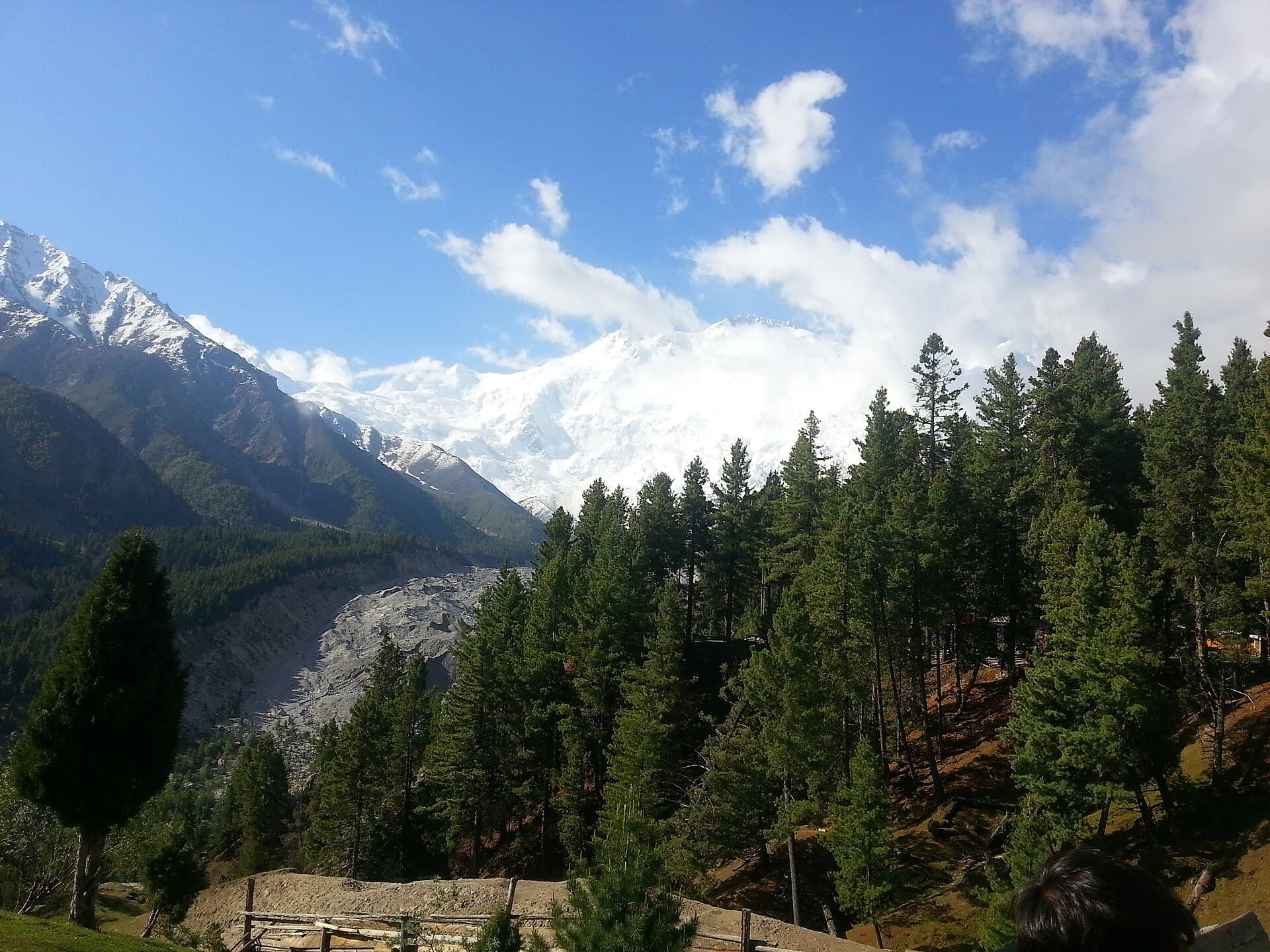
This is the mountain visible from Fairy Meadows. The trek to its base camp is one of the most accessible in the Karakoram -- two to three days of moderate walking, no technical skills required, wooden huts instead of tents. But the approach passes through the site of the worst terrorist attack on mountaineers in Pakistan's history. That context shapes the experience in 2026 in ways the tourism brochures gloss over.
The Route
Overview
| Detail | Value |
|---|---|
| Start | Raikot Bridge on the Karakoram Highway (80km south of Gilgit) |
| End | Nanga Parbat Base Camp (~3,967m) |
| Total trekking days | 2-3 (trekking only); 5-9 days total from Islamabad |
| Highest point | ~3,967m (NP Base Camp) |
| Difficulty | Moderate. No technical skills required |
| Permits required | None (open zone). Police registration at Raikot Bridge |
| Best season | June-September |
Source: Against the Compass, Apricot Tours
Day-by-Day
Day 1: Raikot Bridge to Fairy Meadows
The Karakoram Highway crosses the Raikot Bridge at approximately 1,500m elevation, 80km south of Gilgit and roughly 400km north of Islamabad. This is where motorized access to the Fairy Meadows approach begins.
From the bridge, a 4WD jeep covers 15km of unpaved switchbacks to Tato Village (~2,600m) in approximately one hour. This road has earned its reputation as one of the most dangerous in Pakistan -- narrow, unpaved, with sheer drops and no guardrails. Passengers routinely exit the vehicle at tight turns. The jeep ride is intense.
From Tato, the trek to Fairy Meadows (3,300m) is 5.5km through pine forest, gaining roughly 700m of elevation over 2-3 hours. The trail is well-established and clearly marked. No guide is strictly necessary for this section, though one is recommended for the continuation to base camp.
Day 2: Fairy Meadows to Beyal Camp
Fairy Meadows is a broad alpine meadow at 3,300m with direct views of Nanga Parbat's Rakhiot Face -- the same face where Merkl's 1934 expedition perished and the 1937 avalanche killed sixteen. The meadow itself has wooden huts and cottages (see Accommodation below).
The trail continues from Fairy Meadows to Beyal Camp (approximately 3,600m), a 3-4 hour walk through increasingly sparse vegetation. Beyal Camp sits at the edge of the Rakhiot Glacier moraine with unobstructed views of Nanga Parbat's north face.
Day 3: Beyal Camp to Nanga Parbat Base Camp and Return
From Beyal Camp, the route follows the moraine to Nanga Parbat Base Camp at approximately 3,967m. This is a day-trip for most trekkers -- 4-6 hours round trip from Beyal Camp. The terrain is rougher than the lower sections (loose rock, glacial moraine) but requires no technical skills.
Most trekkers return to Fairy Meadows the same day and descend to Raikot Bridge the following morning.
Continue reading Gondogoro La — the technical reality of the K2 trek crossing →
The 2013 Massacre
On the night of June 22-23, 2013, sixteen gunmen dressed as Gilgit-Baltistan Scouts stormed the Nanga Parbat base camp at approximately 4,200m. They abducted two Pakistani guides to gain access, collected the climbers' passports, photographed them, then tied them up and shot them.
The Victims
Eleven people were killed:
- 3 Ukrainian mountaineers
- 2 Slovak climbers
- 2 Chinese mountaineers
- 1 Chinese-American dual citizen
- 1 Lithuanian climber
- 1 Nepalese Sherpa guide
- 1 Pakistani cook
Two survivors escaped: one Chinese climber who fled during the attack, and one Latvian climber who was outside camp.
The Tehrik-i-Taliban Pakistan (TTP) claimed responsibility, stating the attack was retaliation for a US drone strike that killed Taliban commander Wali-ur-Rehman on May 29, 2013. The attackers were from Diamer, Mansehra, and Kohistan districts, trained in the Federally Administered Tribal Areas.
By August 2013, approximately 20 suspects had been arrested. By June 2014, most had been released. Only five of eighteen suspects remained in custody, and the credibility of the convictions was questioned publicly.
Source: Wikipedia -- 2013 Nanga Parbat massacre
This was the first attack on mountaineers in Gilgit-Baltistan's history. German expedition organizers immediately cancelled all Nanga Parbat trips. The incident devastated Pakistan's already fragile mountaineering tourism sector and reinforced the embassy travel advisories that had been cautious since 9/11.
Security in 2026
The Military Escort Regime
After the 2013 massacre, Pakistan implemented enhanced military escort protocols for foreign nationals in Diamer District (which includes Fairy Meadows and Nanga Parbat). At the Raikot Bridge police checkpoint, foreign trekkers register their passports and may be assigned armed police escorts.
The operative word is "may." Reports from 2024 suggest enforcement is inconsistent -- some trekkers receive escorts, others register and proceed without one. The UK FCDO notes that local authorities "sometimes arrange police escorts for your own protection" but does not describe this as mandatory across all areas. Whether you receive an escort appears to depend on the current threat assessment, staffing availability, and the political climate at the time of your visit.
The Advisory Picture
| Authority | Level | Pakistan-Specific Notes |
|---|---|---|
| US State Department (March 2026) | Level 3: Reconsider Travel | Level 4 for Balochistan, KP, LoC vicinity. GB not specifically Level 4 but not exempted from Level 3 |
| UK FCDO (April 2026) | Advises against all travel on KKH between Mansehra and Chilas | Notes flights to Gilgit/Skardu "may be unreliable"; recommends reputable agencies |
| Canada (May 2026) | "Do not travel by road to Gilgit-Baltistan" | Specifically cites KKH transit disruption risk |
Sources: US Embassy advisory, Canada advisory
The current reality
The Fairy Meadows trek sits in a specific security context. Diamer District -- which the trail passes through -- is historically the most volatile part of Gilgit-Baltistan. The 2013 massacre originated here. The sectarian dynamics (Diamer is predominantly Sunni, unlike Shia-majority Baltistan or Ismaili-majority Hunza) create a different profile from the Baltoro or Hunza corridors.
That said, there has been no attack on trekkers in GB since 2013. The military presence along the KKH and at Raikot Bridge is substantial. Operators including Apricot Tours and local cottage operators were actively booking Fairy Meadows trips for the 2026 season as of spring.
The advisories lag operational reality by 3-5 years in normal times. However, the May 2025 India-Pakistan military crisis and the ongoing Afghanistan-Pakistan border conflict mean 2026 is not normal times. The gap between advisory language and ground reality may be narrower than usual.
Accommodation
Fairy Meadows
Unlike the Baltoro corridor (expedition camps only), Fairy Meadows has wooden huts and cottages. This is a significant logistical advantage -- no tent, no cook team, no porter army required.
| Property | Type | Booking | Contact |
|---|---|---|---|
| Fairy Meadows Cottages | Wooden huts, attached washrooms, dining hall | Call 2-3 days ahead during peak season. Online booking unreliable | +92-301-4493725 |
| Fairy Meadows Ibex Lodge | More upscale wooden accommodation | Call ahead | [source: SummitPost] |
Camping with personal equipment is also possible at Fairy Meadows and Beyal Camp.
Critical note on booking: Online reservation systems for Fairy Meadows properties are not reliable. Phone calls in Urdu or English, placed 2-3 days before arrival during peak season (June-August), are the functional booking method.
Source: Fairy Meadows Cottage, SummitPost
Beyond Fairy Meadows
At Beyal Camp and Nanga Parbat Base Camp, there are no permanent structures. Camping equipment is required. Most organized operators provide tents and cooking arrangements for the upper portion of the trek.
Logistics
Getting to Raikot Bridge
Option 1: Gilgit approach. Fly Islamabad to Gilgit (PIA, ~1 hour, weather-dependent), then drive 80km south on the KKH to Raikot Bridge. This is the shorter approach but inherits PIA's chronic cancellation problem.
Option 2: KKH overland from Islamabad. 10-12 hours by private vehicle. The route passes through the Mansehra-Chilas section that the FCDO advises against. In practice, this section has been routinely traveled by trekking groups with local operators for years. The KKH is subject to landslide closures, particularly during monsoon months -- multiple closures were documented in March-April 2026.
Option 3: Fly to Skardu, drive to Raikot Bridge. Less common but possible. Skardu is further from Raikot Bridge than Gilgit but has more flight options (PIA, Airblue, and new Dubai-Skardu direct flights starting May 2026).
Raikot Bridge to Tato (Jeep)
The 15km jeep road from Raikot Bridge to Tato Village costs approximately PKR 3,000-5,000 per seat in a shared jeep, more for private hire. The road is genuinely dangerous -- narrow, unpaved, with unprotected drops. Early morning departures are standard to avoid afternoon heat and traffic.
No Permit Required
Fairy Meadows and the Nanga Parbat Base Camp trek fall in the open access zone of Gilgit-Baltistan. No trekking permit from the GB Council or Alpine Club of Pakistan is required. The only bureaucratic step is police registration at the Raikot Bridge checkpoint.
Source: Trango Adventure
Weather
The Fairy Meadows area shares the Karakoram's rain-shadow advantage -- it receives less monsoon precipitation than the Nepal Himalaya. However, at lower elevations (3,300-4,000m), afternoon cloud and occasional rain are more common than on the higher Baltoro.
| Month | Conditions | Suitability |
|---|---|---|
| May | Cold nights, possible snow above 3,500m | Marginal |
| June | Warming, wildflowers, fewer trekkers | Good |
| July | Peak season, warmest, clearest | Optimal |
| August | Warm, stable, slight monsoon influence at lower elevations | Very good |
| September | Cooler, shorter days, storm risk increases | Marginal-good |
| October-April | Cold to severe. Accommodation may close | Not recommended |
Source: Explorersweb
What to Bring
Fairy Meadows is not an expedition. The gear list is closer to an Alpine hut trek than a Baltoro expedition.
| Item | Notes |
|---|---|
| Trekking boots (ankle support) | Moraine sections above Beyal Camp require proper footwear |
| Warm layers | Temperatures at 3,300m drop to near freezing at night, even in July |
| Rain jacket | Afternoon showers are possible |
| Sleeping bag | Cottages provide blankets, but quality varies. A light sleeping bag (comfort rating 0C) is insurance |
| Sun protection | Hat, sunscreen, sunglasses (UV at 3,300-4,000m is significant) |
| Headlamp | No electricity at Beyal Camp or NP BC |
| Cash (PKR) | No ATMs beyond Gilgit. Bring sufficient rupees for accommodation, food, jeep, and tips |
What You Do Not Need
Crampons, ice axes, harnesses, glacier glasses -- none of the expedition gear required for the Baltoro/K2 corridor. The Fairy Meadows trek stays below 4,000m on established trails.
Cost Estimate (2026)
| Item | Budget | Mid-Range |
|---|---|---|
| Islamabad to Raikot Bridge (bus/private) | $15-80 | $80-150 |
| Jeep Raikot Bridge to Tato | $10-20 | $20-40 |
| Fairy Meadows accommodation (2 nights) | $15-30 | $30-60 |
| Food (3-4 days) | $20-40 | $40-80 |
| Local guide (if hired) | $20-30/day | $30-50/day |
| Total (trek only, from Raikot Bridge) | $80-200 | $200-380 |
These figures exclude international flights and Islamabad accommodation. The Fairy Meadows trek is dramatically cheaper than the Baltoro -- no permit fees, no porter army, no expedition logistics.
Who This Trek Is For
The Fairy Meadows to Nanga Parbat Base Camp trek occupies a specific niche: accessible enough for a fit trekker with no high-altitude experience, dramatic enough to justify the logistical effort of reaching northern Pakistan. The views of Nanga Parbat's Rakhiot Face from Fairy Meadows are among the most iconic in the Karakoram. The continuation to Beyal Camp and base camp adds genuine mountain terrain without requiring technical skills.
The security context is real and should be evaluated honestly. The 2013 massacre happened here, not on the Baltoro. The military escort regime exists because of that event. Trekkers who are uncomfortable with that history should read it fully before deciding. The mountain's name -- Nanga Parbat, "Naked Mountain" in Sanskrit, or as climbers came to call it, "Killer Mountain" -- was not chosen for marketing purposes.
Source for historical context: Reinhold Messner, The Naked Mountain (2002)