What Kamikōchi is
Kamikōchi (上高地, 36°14'49"N 137°38'00"E) is an 18 km river valley at approximately 1,500 m elevation along the Azusa River, within Chubu Sangaku National Park. It is designated both a Special Natural Monument and a Special Place of Scenic Beauty. It is the primary gateway to the Northern Alps (Hida Mountains).
It is not a town. There are no permanent residents. There are lodges, a bus terminal, a visitor center, and trailheads. Private vehicles have been banned beyond the Kama Tunnel since 1994 — you arrive by shuttle bus or taxi from parking areas at Sawando (east approach) or Hirayu Onsen (west approach).
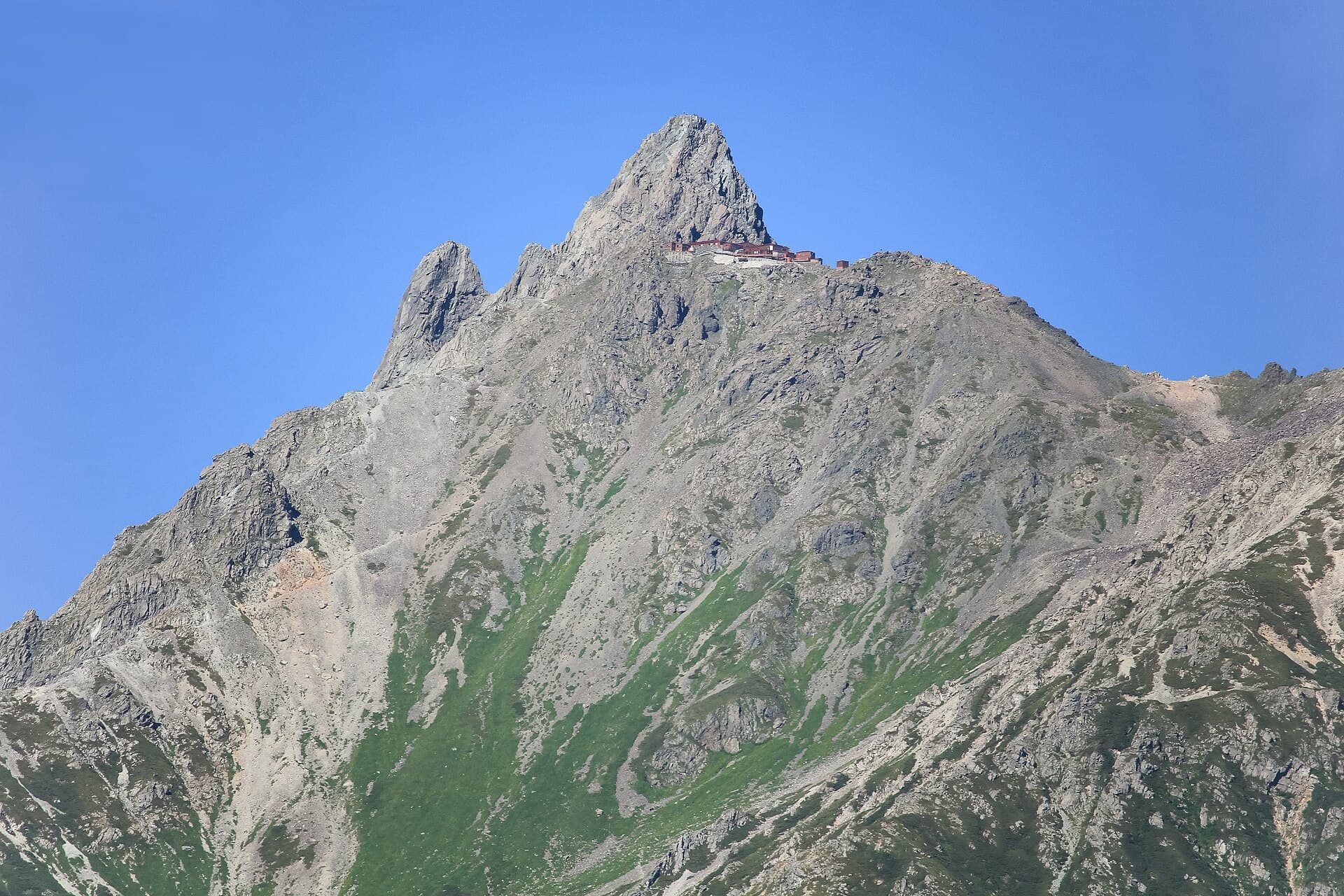
The valley sits at the foot of the Hotaka massif. Oku-Hotaka-dake (3,190 m), the highest peak in the Northern Alps, rises directly above. Yari-ga-take (3,180 m) — "the Matterhorn of Japan" — is a two-day walk up the Yarisawa valley from Kamikōchi Bus Terminal.
Season: Mid-April to mid-November (officially April 17 to November 15 in most years). Outside this window, the road is closed and the valley is uninhabited.
Getting to Kamikōchi
From Matsumoto (east approach — most common)
- Matsumoto Station → Shin-Shimashima: Kamikōchi Line (Alpico Transport), approximately 30 minutes, ¥700
- Shin-Shimashima → Kamikōchi: Shuttle bus, approximately 65 minutes, ¥2,000
- Total from Matsumoto: approximately 1 hour 50 minutes
Parking at Sawando: approximately ¥700/day. From the Sawando lot, you transfer to the shuttle bus. No private vehicles beyond this point.
From Takayama (west approach)
- Takayama → Hirayu Onsen: Bus, approximately 1 hour
- Hirayu Onsen → Kamikōchi: Shuttle bus, approximately 30 minutes
Parking at Hirayu: approximately ¥600/day.
Direct from Tokyo
- JR Azusa Limited Express: Shinjuku → Matsumoto, approximately 2.5 hours, ¥6,500
- Then the Matsumoto → Kamikōchi route above
- Total: approximately 4–4.5 hours door-to-door
- Highway bus alternative: Shinjuku → Kamikōchi direct (seasonal Sawayaka Shinshu-go service), approximately 5.5 hours
Direct from Nagoya
- JR Shinano Limited Express: Nagoya → Matsumoto, approximately 2 hours, then bus to Kamikōchi
- Alternative via Takayama: JR Hida Limited Express to Takayama (~2.5 hours), then bus via Hirayu to Kamikōchi
Bus reservations are recommended during peak season — Obon week in mid-August and autumn foliage weekends are the worst bottlenecks.
Continue reading Yari-Hotaka traverse — the Daikiretto knife-edge and Japan's most exposed ridge walk →
The valley: day hikes and landmarks
Kamikōchi's valley floor is flat and walkable. The main trail follows the Azusa River on well-maintained paths and boardwalks. These are day hikes accessible to anyone who can walk on flat ground.
Kappa-bashi (Kappa Bridge)
The symbolic center of Kamikōchi. A suspension bridge over the Azusa River with direct views of the Hotaka massif. Named after the kappa (water sprite) of Japanese folklore. This is where most visitors take their first photograph. The bus terminal is a 5-minute walk away.
Taisho-ike (Lake Taisho)
Formed by the 1915 eruption of Mount Yake — the active volcano at Kamikōchi's southern boundary. Submerged dead trees stand in turquoise water. The lake is approximately 30 minutes south of Kappa-bashi along the river trail. Mount Yake's volcanic plume is often visible from the lakeshore.
Myōjin-ike (Myōjin Pond)
Crystal-clear pond with the Hotaka Shrine on its shore. Approximately 1 hour upstream (north) from Kappa-bashi. The pond reflects the peaks above on calm days. Entrance fee: ¥300. The walk from Kappa-bashi follows the Azusa River through old-growth forest.
Tashiro-ike and Takezawa Marsh
Wetland areas with boardwalks, south of Kappa-bashi. Alpine flowers in summer, autumn foliage in October. Flat, easy walking.
Walter Weston Relief
A bronze memorial plaque honoring Walter Weston, the English missionary whose 1896 book introduced the "Japanese Alps" to international audiences. Located along the valley trail between Kappa-bashi and Taisho-ike. The June 11 Weston Festival is held here each year, marking the ceremonial opening of the climbing season.
Multi-day routes from Kamikōchi
Kamikōchi is a starting point, not a destination. The valley floor is where trekkers begin and end the major Northern Alps routes.
Yari-ga-take via Yarisawa (2–3 days)
The standard route to Japan's fifth-highest peak (3,180 m). The name means "spear peak" — the summit is an unmistakable rock spire visible from across the Northern Alps.
Route: Kamikōchi Bus Terminal (1,504 m) → Myōjinkan → Tokusawa → Yokoo → Yarisawa Lodge → Yari-ga-take summit (3,180 m)
Distance: approximately 22 km one way, 1,676 m elevation gain
Sansō along the route: Wasabidaira-goya, Tokusawa-en, Yokoo Sanso, Yarisawa Lodge, Yaridaira-goya, Sessho Hut, Hut Oyari, Yari-ga-take Sansō (at the summit). Six staffed huts service this single route — this is the sansō density that defines Northern Alps trekking.
Typical itinerary:
- Day 1: Kamikōchi → Yokoo or Yarisawa Lodge (flat valley walk, 5–6 hours)
- Day 2: → Yari-ga-take summit → Yari-ga-take Sansō (steep ascent, 5–7 hours)
- Day 3: Return to Kamikōchi via same route or continue to Hotaka traverse
The final summit push involves scrambling on rock with chains. The summit is a 360-degree viewpoint. On clear days, Fuji is visible 130 km to the southeast.
Karasawa Cirque (2 days, 30 km round trip)
Route: Kamikōchi Bus Terminal → Yokoo → Hontani Bridge → Karasawa Hyutte (2,300 m)
Elevation gain: approximately 800 m from Yokoo
Karasawa is a glacial cirque surrounded by the four Hotaka peaks — Oku-Hotaka (3,190 m), Karasawa-dake (3,110 m), Kita-Hotaka (3,106 m), and Mae-Hotaka (3,090 m). The cirque floor sits at 2,300 m. The autumn foliage here — nanakamado (rowan) turning crimson against grey rock walls — peaks in early October and is considered the finest in the Japanese Alps.
From Karasawa, the Oku-Hotaka summit is a further 3–4 hour scramble with chains and ladders.
Hotaka massif and the Yari-Hotaka traverse
From Kamikōchi, trekkers access the full Yari-Hotaka ridge traverse — the crown jewel of Japanese alpine trekking, crossing the Daikiretto knife-edge between Yari and Hotaka. This is a 3–4 day route requiring alpine scrambling experience.
Full route guide: Yari-Hotaka traverse.
Mount Yake: the active volcano
Mount Yake (焼岳, 2,455 m) is the active stratovolcano at the southern boundary of Kamikōchi. Its 1915 eruption dammed the Azusa River and created Taisho-ike. Volcanic plumes are intermittently visible from the valley floor.
The Jigokudani ("Hell Valley") area on Yake's northern flank has sulfurous vents and fumaroles. Trail closures occur when volcanic gas concentrations spike — check conditions at the Kamikōchi visitor center before hiking the southern valley trail.
Mount Yake is monitored by the Japan Meteorological Agency. The volcano is classified as Level 1 (normal) in most years, but eruption alerts can elevate restrictions without warning. The volcanic context is worth understanding: Kamikōchi's flat valley floor, its hot springs, its turquoise lakes — all are volcanic features. The valley exists because of the same geology that makes it periodically hazardous.
The Mount Yake day hike (approximately 5–6 hours round trip from the Shinmura Bridge trailhead) is a popular route for strong hikers who want altitude without multi-day commitment. The trail crosses the volcanic zone near the summit. Helmets are recommended near the crater.
Walter Weston and the founding of Japanese alpinism
Walter Weston's connection to Kamikōchi goes deeper than a bronze plaque. His 1896 book, Mountaineering and Exploration in the Japanese Alps, was the first English-language work to present Japan's central mountains as a recreational trekking destination. Before Weston, these mountains were understood through two frames: sacred sites for Shugendō ascetics and hazards for travellers. Weston added a third: sport.
He arrived in Japan in 1888 as an Anglican missionary. Stationed at Kumamoto, then Kobe, he spent fifteen years across two stints exploring the Hida, Kiso, and Akaishi ranges. His advocacy directly led to the founding of the Japanese Alpine Club in 1905 — the oldest mountaineering club in Asia. He became its first honorary member. Emperor Hirohito awarded him the Order of the Sacred Treasures (Fourth Class) in 1937.
The bronze memorial relief at Kamikōchi was erected by the Japanese Alpine Club. The annual Weston Festival on June 11 marks the ceremonial opening of the climbing season. Before visiting Kamikōchi for trekking, Weston's book is worth reading — not as a practical guide (the logistics are 130 years out of date) but as a record of what the mountains meant before they became an industry.
Bears in the valley
The Asian black bear (tsukinowaguma) is present in and around Kamikōchi. The population on Honshu has grown from approximately 15,000 in 2012 to around 44,000 in 2023. Bear sightings in the Kamikōchi valley itself — not just on alpine trails — are reported regularly.
Bear bells (kumayoke suzu) are expected gear. Buy one in Matsumoto or at the Kamikōchi bus terminal shop before hitting the trail. Cost: ¥500–1,500. The bells clip to your pack and jingle continuously while walking.
On the valley floor, the risk is low — there are many people around, and bears tend to avoid crowds. On the approach trails to Yokoo and beyond — where trekker density drops — the bells matter more. Early morning and late afternoon are higher-risk periods.
Season and weather
Kamikōchi operates on a strict seasonal calendar:
- Opening: Mid-April (April 17 in most years). Snow remains on the valley floor. The bus road reopens.
- Tsuyu (rainy season): June 7 to July 20 approximately. Heavy rain, mud, poor visibility. Most trekkers avoid this window.
- Peak season: Mid-July to mid-August. All sansō open. Alpine flowers. Warmest weather. Worst crowds (especially Obon week, August 13–16).
- Autumn foliage: October. Nanakamado (rowan) turns crimson. Karasawa Cirque peaks early October. Valley floor peaks mid-to-late October.
- Closing: Mid-November (November 15 in most years). Road closes. Valley evacuated.
The 3 PM rule applies to any route above treeline from Kamikōchi: afternoon thunderstorms build over the ridgelines from July through September. Valley walks are unaffected, but anyone heading to Yari, Hotaka, or Karasawa should plan ridge sections for the morning.
Full seasonal guide: when to trek the Japanese Alps.
Practical information
Accommodation in Kamikōchi valley: Several lodges operate in the valley (Kamikōchi Imperial Hotel, Tokusawa-en, Konashidaira, Nishi-Itoya Sanso). These are not sansō — they are valley lodges with private rooms, showers, and restaurant dining. Prices are higher: ¥15,000–40,000+ per night.
Supplies: The bus terminal area has a small shop. Bring what you need from Matsumoto or Takayama. Do not rely on valley shops for trekking food.
Cell coverage: Intermittent in the valley. NTT Docomo has the best mountain coverage. Above treeline on the ridges, coverage is spotty to nonexistent.
Climbing notification (tozan todoke): Nagano Prefecture strongly encourages submission at trailhead registration boxes. Toyama Prefecture requires it for certain peaks (including Tsurugi-dake). The forms request name, emergency contact, itinerary, planned hut stays, and expected return date. Paper forms at trailhead boxes; some prefectures accept online submission.
Water: Available at most sansō but sometimes limited at high-altitude huts. Stream water in the Azusa River valley is generally clean but should be treated.
Last bus: The last shuttle bus from Kamikōchi to Sawando departs in late afternoon (typically 4:30–5:00 PM in peak season). Missing it means an expensive taxi or an unplanned night in the valley. Check the current timetable before your trip.
National park regulations: Kamikōchi lies within Chubu Sangaku National Park (established 1934). Rules: no collection of plants, rocks, or animals. No camping outside designated areas. Carry all rubbish out — there are no bins on trails. No open fires. Dogs permitted on leash but strongly discouraged on alpine routes. Drones prohibited without special permission.
Budget: Valley walks are free. The cost is access (bus + train from Matsumoto: approximately ¥2,700 each way) and accommodation if staying overnight (valley lodges ¥15,000–40,000+; sansō on multi-day routes ¥10,000–13,000). Full cost breakdown: budget calculator.
8 Sources
- kamikochi.orgKamikōchi Official Website — By Car (access & parking)
- visit-nagano.alpico.co.jpAlpico Group (transit operator) — Kamikōchi bus routes & timetable
- chubusangaku.jpChūbu Sangaku National Park (official) — Kamikōchi
- kamikochi-vc.or.jpKamikōchi Visitor Center (Ministry of the Environment) — Bear Sightings
- yarigatake.co.jpYarigatake Sansō hut group (official) — the huts themselves
- kamikochi.orgKamikōchi Official Website — Mt. Yake volcanic-activity advisory
- ndl.go.jpNational Diet Library of Japan — Dawn of Mountaineering (Walter Weston)
- kamikochi.orgKamikōchi Official Website — History & Culture