The route
The Yari-Hotaka traverse is the crown jewel of Japanese alpine trekking. It connects Yari-ga-take (3,180 m, "the Matterhorn of Japan") to Oku-Hotaka-dake (3,190 m, the highest peak in the Northern Alps) along a continuous ridgeline above 2,800 m. The route crosses the Daikiretto (大キレット, "great gap") — a deep notch in the ridge between Minami-dake and Kita-Hotaka-dake that requires hands-on scrambling, fixed chains, ladders, and comfort with significant exposure on both sides.
This is not a hiking trail in the conventional sense. It is described as "the most technically and physically challenging trail in Nagano." The Daikiretto section involves vertical rock steps, narrow ledges with drops on both sides, and metal fixtures bolted into the rock. It is closer to a Dolomites via ferrata (K3–K4) than to any marked trail in the Alps.
Grade: Advanced. Previous alpine scrambling experience required. Not suitable in rain, poor visibility, high winds, or during/after typhoons.
Typical itinerary (4 days, south-to-north from Kamikōchi)
Day 1: Kamikōchi → Yokoo or Yarisawa Lodge
Distance: 15–17 km | Elevation gain: minimal (valley walk) | Time: 5–6 hours
The first day is entirely flat — a valley walk along the Azusa River from Kamikōchi Bus Terminal (1,504 m) through Myōjinkan, Tokusawa, to Yokoo. This is approach walking, not alpine terrain. Sansō options at Tokusawa-en, Yokoo Sanso, and Yarisawa Lodge.
Most trekkers doing the full traverse continue to Yarisawa Lodge (1,815 m) to shorten Day 2.
Day 2: Yarisawa Lodge → Yari-ga-take summit → Yari-ga-take Sansō
Distance: approximately 7 km | Elevation gain: 1,365 m | Time: 6–8 hours
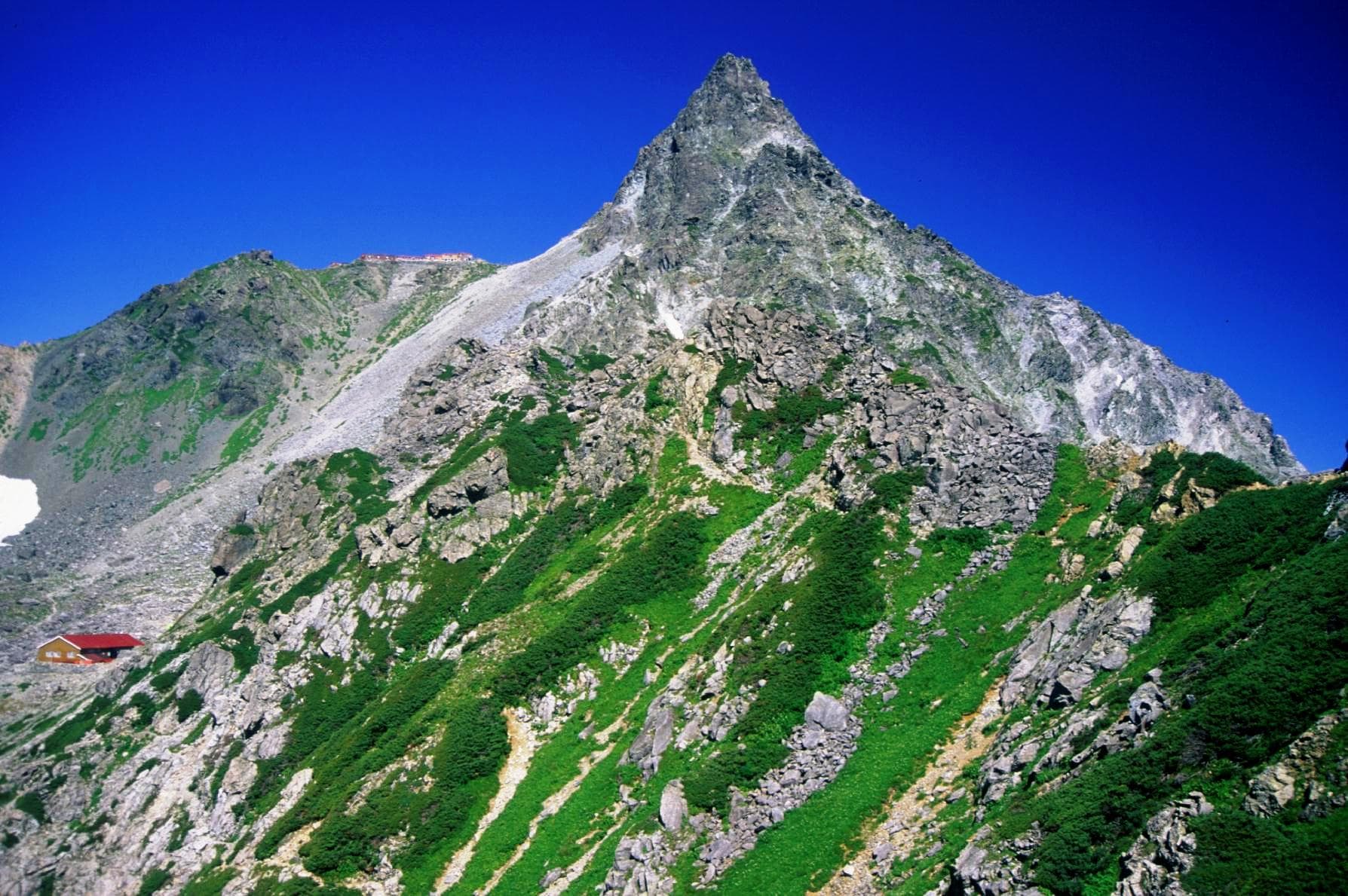
The trail climbs steeply out of the Yarisawa valley onto the ridge. The final summit push involves rock scrambling with chains. Yari-ga-take's summit is a narrow rock spire — the "spear peak" that gives it its name. Views on clear days extend to Fuji (130 km southeast).
Yari-ga-take Sansō sits just below the summit at approximately 3,080 m. It is one of the highest and most popular sansō in the Japanese Alps. Reserve well in advance during peak season.
Day 3: Yari-ga-take → Daikiretto → Kita-Hotaka-dake → Hotaka-dake Sansō
Distance: approximately 6 km | Elevation gain/loss: 500 m up, 600 m down, 400 m up | Time: 8–10 hours
This is the crux day.
From Yari-ga-take, the route follows the ridgeline south over Ō-Kiretto, descending to Minami-dake (3,033 m). Here the trail drops into the Daikiretto — a dramatic notch where the ridge narrows to a knife-edge. The Daikiretto crossing involves:
- Vertical descent: Fixed chains and ladders down steep rock faces (200+ m descent into the gap)
- Ledge traverses: Narrow paths cut into cliff faces with exposure on both sides
- Vertical ascent: Chains and iron rungs climbing the opposing wall to Kita-Hotaka-dake (3,106 m)
- Continuous exposure: Both sides of the ridge drop steeply throughout the crossing
The Daikiretto takes 3–5 hours depending on conditions, fitness, and crowding. On busy days, bottlenecks form at the chain sections — trekkers wait for others to ascend or descend. Start early. The 3 PM rule (be off exposed ridgelines before afternoon thunderstorms) is not optional here.
After Kita-Hotaka-dake, the route descends to Hotaka-dake Sansō (2,983 m) at Shirade Col. This hut, built in 1924, sits between the Hotaka peaks and is the staging point for the Oku-Hotaka summit.
Minami-dake Koya (hut at Minami-dake, before the Daikiretto) provides an overnight option for trekkers who want to split this day.
Day 4: Oku-Hotaka-dake summit → Karasawa → Kamikōchi
Distance: approximately 16 km | Elevation gain: 207 m (to summit) | Elevation loss: 1,686 m | Time: 7–9 hours
From Hotaka-dake Sansō, the summit of Oku-Hotaka-dake (3,190 m) is approximately 1 hour up — scrambling on rock with chains. This is the highest point in the Northern Alps and the third-highest in Japan.
Descend from the summit to Karasawa Cirque (2,300 m) via a steep trail with ladders. Karasawa Hyutte at the cirque floor is a possible overnight stop if you prefer a shorter final day. Otherwise, continue down the valley via Yokoo to Kamikōchi Bus Terminal — approximately 5 hours from Karasawa to the bus.
Continue reading Kamikōchi — Japan's Chamonix, bus-only since 1994, and the gateway to Yari-ga-take →
Which direction?
South-to-north (Kamikōchi → Yari first, then Daikiretto to Hotaka): The approach via Yarisawa is gradual. You climb Yari first, then traverse the Daikiretto heading south. The key chain sections are descended on the Yari side and ascended on the Hotaka side.
North-to-south (Hotaka first, then Daikiretto to Yari): Shorter approach via Karasawa to the ridge. The Daikiretto chain sections are descended on the Hotaka side and ascended on the Yari side.
Both directions are done regularly. The south-to-north direction (Yari first) is slightly more common because the Yarisawa approach is gentler and Yari-ga-take Sansō is well-positioned for the first ridge night. The critical factor is weather windows, not direction — pick the direction that gives you the best forecast for the Daikiretto day.
The Daikiretto: what it actually requires
The Daikiretto is graded as the most difficult section of trail in the Northern Alps. It is not a via ferrata in the European sense — there is no continuous cable for clipping in. The fixed aids (chains, ladders, iron stemples) are points of assistance, not a belay system. Falls are unprotected.
Required experience:
- Comfort with sustained exposure (Class 3–4 scrambling by Yosemite Decimal System standards)
- Ability to down-climb vertical rock using chains
- Head for heights — the ridge drops steeply on both sides for most of the crossing
- Route-finding in poor visibility (painted markers on rock, but fog reduces them to guesswork)
Required conditions:
- Dry rock. Wet rock on the chains and ladders is a different proposition entirely
- Clear visibility for route-finding
- No forecast for afternoon thunderstorms before your crossing window
- Wind calm enough to stand upright on exposed ridges
Helmets: Increasingly recommended by hut operators and available for rent at some sansō (Yari-ga-take Sansō, Hotaka-dake Sansō). Rockfall from climbers above is a real risk on the vertical sections.
Alternative for those not comfortable with the Daikiretto: Skip the ridge traverse. Climb Yari via Yarisawa, return the same way. Climb Hotaka via Karasawa, return the same way. Two separate out-and-back trips from Kamikōchi, each 2 days, without the exposed ridge crossing. The peaks are not diminished by avoiding the connecting ridge.
Sansō on the traverse
| Hut | Elevation | Position | Beds | Price (2025–2026) |
|---|---|---|---|---|
| Yarisawa Lodge | 1,815 m | Valley (Yarisawa confluence) | ~100 | ¥10,000–12,000 w/ 2 meals |
| Yari-ga-take Sansō | ~3,080 m | Below Yari summit | ~150 | ¥11,000–13,000 w/ 2 meals |
| Minami-dake Koya | ~3,020 m | Before Daikiretto (south end) | ~50 | ¥10,000–12,000 w/ 2 meals |
| Kita-Hotaka-goya | ~3,060 m | After Daikiretto (north end) | ~80 | ¥10,000–12,000 w/ 2 meals |
| Hotaka-dake Sansō | 2,983 m | Shirade Col (est. 1924) | ~120 | ¥11,000–13,000 w/ 2 meals |
| Karasawa Hyutte | 2,300 m | Karasawa Cirque floor | ~100 | ¥10,000–12,000 w/ 2 meals |
All huts require reservations. Most accept phone reservations only (Japanese language). Some have introduced online booking since 2022. Book as early as possible for August weekends and Obon week (mid-August).
Sansō booking details: sansō guide.
Weather and timing
The traverse is feasible from mid-July to mid-October. The optimal window is late July through September, after tsuyu (rainy season) ends and before the first snow.
The 3 PM rule is non-negotiable on this route. Afternoon convective storms build rapidly over the Northern Alps ridgeline from July through September. The Daikiretto offers zero shelter from lightning. The Yari-Hotaka ridge is the most exposed terrain in the Japanese Alps. Plan the Daikiretto crossing for early morning — departure from the previous night's sansō by 5 AM is standard.
Typhoon risk: August through October. If a typhoon approaches, the traverse is cancelled. Wait it out at a hut or descend. Huts will close or restrict service during severe storms.
Snow: Persistent patches on the ridge above 2,800 m into early August. The Daikiretto chain sections should be snow-free before attempting the crossing.
Full seasonal guide: when to trek the Japanese Alps.
Karasawa Cirque: the glacial amphitheater
The traverse passes through — or ends at — Karasawa (涸沢), a glacial cirque at 2,300 m surrounded by the four Hotaka peaks. The cirque floor is a flat bowl of moraine, dotted with tent sites and the Karasawa Hyutte.
Karasawa is the single most photographed autumn location in the Japanese Alps. In early October, nanakamado (rowan/mountain ash) covering the cirque walls turns crimson against grey rock and green conifers. The color contrast — red, grey, green — is the defining visual of Japanese Alps autumn.
For trekkers doing the full traverse, Karasawa is the descent route from the Hotaka ridge back to Yokoo and Kamikōchi. The trail from Hotaka-dake Sansō drops steeply via ladders to the cirque floor. From Karasawa, it is approximately 5 hours to Kamikōchi Bus Terminal via Yokoo — flat valley walking after a steep initial descent.
Gear considerations
The Yari-Hotaka traverse is not a standard hiking trail. Gear requirements reflect the scrambling terrain:
Required:
- Helmet (rent at Yari-ga-take Sansō or Hotaka-dake Sansō if you do not bring one — rockfall is a real risk on the vertical sections)
- Sturdy approach shoes or light mountaineering boots with stiff soles (the chain sections require edging on small footholds)
- Gloves for chain and ladder sections
- Rain gear (waterproof shell jacket and pants — non-negotiable)
- Warm layers (temperatures can drop below freezing at 3,000 m even in August)
- Headlamp with spare batteries (3–4 AM starts require navigation in darkness)
- Bear bell (clipped to pack at all times below treeline)
Recommended:
- Trekking poles (collapsible — stow them for the chain sections)
- Satellite communicator (Garmin inReach or similar — cell coverage is unreliable on the ridge)
- Crampons/microspikes (early season only, July — check snow conditions before departure)
- Japanese mountain insurance (sangaku hoken) — available at trailheads and convenience stores, ¥1,500, covers rescue helicopter up to ¥3M–5M
Not needed:
- Rope or harness (the fixed aids are the protection system — there is no belay)
- Via ferrata kit (unlike the Dolomites, there is no continuous cable to clip into)
- Tent (sansō at every stage make camping unnecessary, and tent sites near the ridge are limited)
Rescue and emergency
Mountain rescue in the Northern Alps is handled by prefectural police mountain rescue teams (sangaku keibitai). Nagano and Gifu prefectures maintain dedicated alpine rescue squads with helicopter capability.
Critical note: Rescue helicopter costs are not always free. Police-dispatched helicopters may be free; private helicopters can cost ¥500,000–1,000,000+. Japanese mountain insurance (sangaku hoken) covers this.
Cell coverage on the Yari-Hotaka ridge is intermittent at best. Some ridge points have NTT Docomo signal; most of the Daikiretto does not. Sansō have satellite phones or emergency communication equipment. If you need rescue, the nearest hut is always the first point of contact.
The Daikiretto section has a reputation for accidents — falls from wet chains, rockfall injuries, and hypothermia from afternoon storms. The accident rate drops dramatically when trekkers follow the basics: start early, cross in dry conditions, carry warm layers, and respect the 3 PM rule.
9 Sources
- pref.nagano.lg.jpNagano Prefecture — Nagano Trail Guide by Grade (official route grading)
- pref.nagano.lg.jpNagano Prefecture — Enjoy Safe Mountain Trekking in NAGANO! (safety guidelines)
- db.go-nagano.netGo! NAGANO (Nagano Prefecture) — Submission of Trekking Itineraries
- chubusangaku.jpChubusangaku National Park — Getting Here
- kamikochi.orgKamikochi Official Website — Access
- yarigatake.co.jpYarigatake Sanso Group — official hut site (English)
- hotakadakesanso.comHotakadake Sanso — official hut site (English)
- karasawa-hyutte.comKarasawa Hyutte — official mountain hut site
- jma.go.jpJapan Meteorological Agency — Nowcasts (Precipitation, Thunder, Tornados)