
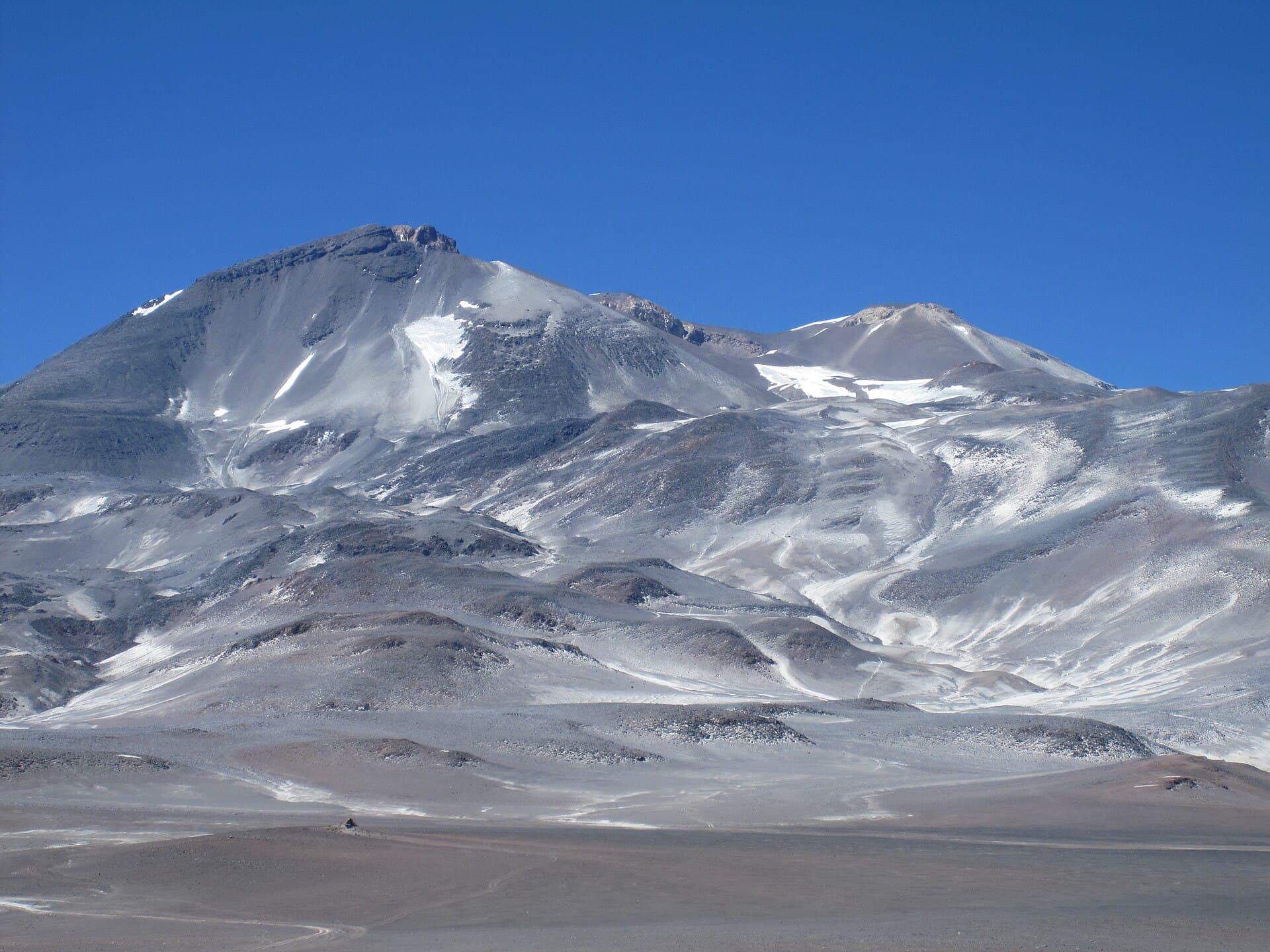
Getting to the Puna 6Ks
The Puna de Atacama has 39 peaks above 6,000 metres, the highest density of extreme-altitude summits outside the Himalaya. Getting to any of them requires understanding one fundamental reality: everything beyond the paved Ruta Nacional 60 requires a 4x4, and everything above Fiambala has zero cell coverage.
This guide covers both the Argentine approach (through Catamarca province) and the Chilean approach (through Copiapo), including the Paso de San Francisco border crossing and its chronic reliability problems.
Buenos Aires to Catamarca
| Segment | Mode | Time | Cost (USD) | Notes |
|---|---|---|---|---|
| Buenos Aires (EZE/AEP) to Catamarca (CTC) | Flight (Aerolineas Argentinas) | 1h 40min | $60-175 one-way | Limited daily flights. Book early for the lower end |
| Buenos Aires to Fiambala | Drive | ~14h 30min | — | 848 miles / 1,365km. Only for those bringing their own 4x4 |
Source: Google Flights, rome2rio
The flight from Buenos Aires to San Fernando del Valle de Catamarca (airport code CTC) is the standard entry point. Limited daily service on Aerolineas Argentinas. Catamarca is not a hub — there are no direct international flights. All foreign climbers route through Buenos Aires.
Continue reading Monte Pissis — The Forgotten Second-Highest Volcano →
Catamarca City to Fiambala
| Segment | Mode | Time | Cost (USD) | Notes |
|---|---|---|---|---|
| Catamarca (CTC) to Fiambala | Bus | 4h 40min-5.5hrs | $23-30 one-way | 320km. Paved road |
| Catamarca (CTC) to Fiambala | Private car/taxi | 4h 40min | ~$60 | Faster, flexible schedule |
Fiambala (population ~2,400-5,000, depending on source) is the staging town for the Argentine approach to all three Puna 6Ks: Ojos del Salado, Monte Pissis, and Volcan San Francisco. Founded in 1702, it sits at 1,505m in the Abaucan valley. The town has a handful of hotels, a hospital inaugurated in 2023, thermal baths (Termas de Fiambala), and limited services.
Most guided expedition operators include transport from Fiambala to the trailheads. Independent climbers arrange 4x4 transport through local contacts — Jonson Reynoso is cited on SummitPost as a known local transport provider.
Fiambala to the Trailheads (4x4 Required)
Every trailhead access point beyond Ruta Nacional 60 requires a 4x4. No exceptions.
| Destination | Distance from Fiambala | Drive Time | Road Condition | Notes |
|---|---|---|---|---|
| Cazadero Grande (Ojos Argentine route) | ~113km via RN 60 | 2-3hrs | Paved to turnoff, then rough | Near Refugio Vial #3 |
| Paso de San Francisco (Volcan San Francisco) | ~180km via RN 60 | 3-4hrs | Fully paved | Gendarmeria at 4,748m |
| Cortaderas (Pissis staging) | ~50km | 1-2hrs | Paved | 3,300m, hotel available |
| Pissis Base Camp (from Cortaderas) | ~120km via Pastos Largos | 5-7hrs | Rough 4x4 track, river fording | No trail markings. No services |
The Ruta de los Seismiles — the ~180km stretch of RN 60 from Fiambala to the Paso de San Francisco — is fully paved and passes between nearly 20 peaks exceeding 6,000m. As a scenic drive it is world-class. As a logistics corridor, it is the backbone of all Puna mountaineering.
The roads beyond RN 60 are a different story. The track to Monte Pissis base camp is described by one operator as requiring "14 hours of travel with no trail to follow" from Fiambala. River fording is required. There are no services, no fuel, and no cell coverage.
4x4 transfer cost: approximately $100 per vehicle from Fiambala to Refugio Quemaditos (Ojos Argentine trailhead). Higher for Pissis base camp due to distance and difficulty.
Source: SummitPost, Explore-Share, La Ruta Natural
The Chilean Approach: Copiapo to Laguna Verde
The majority of commercial Ojos del Salado expeditions operate from the Chilean side because 4x4 road access extends to 5,800m (Refugio Tejos) and three refugios exist on the route.
| Segment | Distance | Time | Road | Notes |
|---|---|---|---|---|
| Copiapo to Murray Hut | ~200km | 3hrs | Ruta 31, paved | Murray hut is car-accessible |
| Murray to Laguna Verde | ~70km | 2hrs | Paved to gravel | Carabineros checkpoint at Laguna Verde |
| Laguna Verde to Refugio Atacama | ~38km | 1-2hrs | 4x4 mandatory, sand + rock | Sandy sections can trap 2WD vehicles |
Copiapo is a significantly larger city than Fiambala, with commercial flights from Santiago, hotels, outdoor gear shops, and Chile Montana offering gear rental. For climbers who want to minimize logistics and maximize infrastructure, the Chilean approach is objectively easier.
Source: Madison Mountaineering, SummitPost
Paso de San Francisco: The Chronically Unreliable Border
The Paso de San Francisco (4,748m) on Ruta 60 / Chile Route CH-31 is the only road crossing between the Argentine and Chilean sides of the Puna 6Ks. It is also chronically unreliable.
Closure History (2025-2026 Season)
| Date | Event |
|---|---|
| Late December 2025 | Closed for road safety and landslide risk in Las Angosturas gorge. Did not reopen until at least January 2, 2026 |
| February 25, 2026 | Closed "until further notice" — adverse weather on Chilean CH-31 |
| April 14-15, 2026 | Closed again — snow accumulation on CH-31, described as impassable |
New Operating Hours (Effective May 4, 2026)
| Control Point | Hours | Last Vehicle |
|---|---|---|
| La Gruta (Argentine control) | 09:00-18:00 | Last vehicle toward Chile at 16:30 |
| Maricunga (Chilean control) | 09:00-18:00 | Last vehicle toward Argentina at 15:30 |
The pass is impassable in winter (roughly May through October). Even within the nominal open season (November-April), snow events and landslides on both sides cause unplanned multi-day closures. Chile's Pasos Fronterizos agency had a stated goal to complete full paving by 2026, but no confirmation that this has been achieved. The Argentine side (RN 60) is fully paved; the Chilean side (CH-31) remains the weak link.
Planning implication: Any itinerary that depends on crossing the Paso de San Francisco needs a buffer day. The Chilean approach via Copiapo avoids this bottleneck entirely. Climbers starting from the Argentine side who plan to cross into Chile should have a contingency plan.
Source: Catamarca Actual — April 2026 closure, Catamarca Actual — schedule changes, trans-americas.com
Money and Cards in Catamarca (2026)
The Cepo Is Dead
Argentina's monetary landscape has changed dramatically. Most capital controls ("cepo cambiario") were lifted in April 2025. The blue dollar arbitrage that defined Argentine travel from 2020-2024 — carrying USD cash and exchanging at a 50-100% premium — is over. As of early 2026, the gap between official and parallel exchange rates is marginal.
| Factor | 2023 | 2026 |
|---|---|---|
| Official rate | ~350 ARS/USD | ~1,400-1,450 ARS/USD |
| Blue dollar premium | 50-100% | Minimal |
| Best strategy | Carry USD cash, exchange at cuevas | Use credit/debit cards at official rate |
Credit and debit cards at the official rate are now competitive. The incentive to carry large amounts of USD cash has largely evaporated.
Card Acceptance
- Catamarca city: Standard card acceptance at hotels, restaurants, shops
- Fiambala: Limited. Hotels accept cards, but smaller businesses and mountain transport providers likely require cash
- Mountain operators: Most accept bank transfer or credit card for expedition payments (priced in USD)
- Rule of thumb: Carry ARS cash equivalent of $200-300 USD for Fiambala incidentals and transport
Most international expedition operators price and collect in USD via bank wire or credit card, bypassing the peso question entirely.
Source: PBS — Argentina capital controls, Trade.gov, Funds Society
The Lithium Roads
The Puna de Atacama sits at the heart of the "lithium triangle" — the Argentina-Chile-Bolivia region holding over half the world's lithium reserves. Catamarca province is a major player, and the mining economy is building roads that directly benefit mountaineering access.
Provincial Route 43 (Antofagasta de la Sierra to Salta border) is under construction: 112km total, with the first 5km paved in April 2026. The project is funded by a combination of mining royalties and direct contributions from POSCO, Rio Tinto, Pan American Energy, and Galan Lithium — all of which operate lithium projects in the Salar del Hombre Muerto basin.
Antofagasta de la Sierra is the gateway town for Monte Pissis, Cerro Bonete, and the northern Puna 6Ks. The current unpaved Route 43 is a notorious bottleneck — washboard gravel, no services, seasonal closures. Paving will cut transit times and open the area to non-4WD vehicles.
The irony is tangible: the same extraction economy that is drawing down water reserves and drying up the Trapiche River is also building the roads that make the Puna's peaks accessible. The window is closing on the wild Puna — the remoteness that defines the experience is being eroded by industrial infrastructure.
Source: Panorama Minero — Route 43, Harvard International Review — The Lithium Triangle, Dialogue Earth — Argentina lithium mining
Gear Availability
| Item | Fiambala | Catamarca (city) | Copiapo (Chile) |
|---|---|---|---|
| 4x4 vehicle rental | Via operators | Limited | Available |
| Mountaineering boots | No | No | Limited (Chile Montana rents) |
| Crampons / ice axe | No | No | Chile Montana rents gear |
| Harness / helmet | No | No | Limited |
| Expedition tent | Via operators | No | Via operators |
| Sleeping bag (-20F) | No | No | No |
| Satellite phone | No | No | No |
| Fuel/gas canisters | Limited | Yes | Yes |
Summary: Bring everything mountaineering-specific. Fiambala has basic supplies (food, fuel, general stores) but zero mountaineering gear. Copiapo on the Chilean side has Chile Montana for gear rental. Catamarca city has nothing mountain-specific.
Mule support is available on the Argentine approach to Ojos del Salado — arrieros transport gear to El Arenal base camp (~5,400m). Not applicable to Pissis (4x4 access only) or San Francisco (day climb from vehicle).
Source: SummitPost, Chile Montana
Accommodation in Fiambala
| Property | Type | Notes |
|---|---|---|
| Hotel Cortaderas | Hotel | Used by operators as staging point at 3,200-3,300m (outside town) |
| Posada Las Canas | Hotel/Posada | Used by expedition companies |
| San Francisco Hotel Boutique | Hotel | Fiambala centre |
| Amaragua | Tourist lodging | Near thermal baths |
| Budget hostels/hospedajes | Various | From ~$23-49/night |
Termas de Fiambala (thermal baths) are a significant draw and recovery amenity for climbers. Located minutes from town, they are the standard post-expedition reward after days of sub-zero camping.
Source: Booking.com, TripAdvisor
Communication
| Device | Coverage | Notes |
|---|---|---|
| Cell phone | Zero above Fiambala (Argentine side). Zero beyond Copiapo (Chilean side) | — |
| VHF Radio | Limited range, line-of-sight | All guided expeditions carry these |
| Satellite phone | Full coverage | Essential for independent parties |
| Satellite emergency beacon (PLB/InReach) | Full coverage | Strongly recommended for all parties |
There is no cell coverage on the mountain, at the trailheads, or on the approach roads beyond Fiambala. A satellite communication device is not optional for independent climbers. All guided operators carry satellite phones and/or VHF radios as standard equipment.
The Quick Reference
| Scenario | Route | Time from Buenos Aires to Trailhead | Cost to Trailhead |
|---|---|---|---|
| Ojos del Salado, Chilean route | BUE > Santiago > Copiapo > Laguna Verde | ~1 day | $500-800 (flights + transfer) |
| Ojos del Salado, Argentine route | BUE > Catamarca > Fiambala > Cazadero Grande | ~10-12 hours | $200-400 (flight + bus + 4x4) |
| Monte Pissis | BUE > Catamarca > Fiambala > Cortaderas > Base Camp | ~1.5-2 days | $200-500 |
| Volcan San Francisco | BUE > Catamarca > Fiambala > Paso de San Francisco | ~10-12 hours | $200-350 |
12 Sources
- rome2rio.comrome2rio — Buenos Aires to Fiambala (Tier 3)
- busbud.comBusbud — Catamarca to Fiambala (Tier 3)
- summitpost.orgSummitPost — Ojos del Salado (Tier 2)
- trans-americas.comtrans-americas.com — Paso San Francisco (Tier 3)
- catamarcactual.com.arCatamarca Actual — Paso closures and schedule changes (Tier 2)
- catamarcactual.com.arCatamarca Actual — April 15 closure (Tier 2)
- pbs.govPBS — Argentina capital controls (Tier 1)
- trade.govTrade.gov — Argentina eliminates capital controls (Tier 1)
- panorama-minero.comPanorama Minero — Route 43 paving (Tier 2)
- larutanatural.gob.arLa Ruta Natural — Ruta de los Seismiles (Tier 2)
- booking.comBooking.com — Fiambala (Tier 3)
- madisonmountaineering.comMadison Mountaineering — Ojos del Salado (Tier 3)